Instant
01 · Ask
Which pest, how long?
Wasps, rats, fleas, bed bugs — different chemicals, different protocols. Describe the problem and the AI tells you scope.

Rats, mice, wasps, bedbugs and more — by BPCA or NPTA-registered domestic pest controllers.
Read the brief on BPCA registration, treatment plans and proofing — then let Three local controllers quote.
Wasps, rats, fleas, bed bugs — different chemicals, different protocols. Describe the problem and the AI tells you scope.
Approved chemicals, visit counts, proofing requirements, pet-safe alternatives. Know what's being applied.
Three local controllers quote on the same problem — visits, chemicals, guarantee — so you don't get re-infested.
Ready when you are
Enter your postcode and get free quotes from local pros.
Four moves that separate a smooth job from a nightmare.
BPCA (British Pest Control Association) registration means trained, certified and insured. Anyone using poisons or traps without BPCA training is risky.
Multi-visit treatments (rats, fleas, woodworm) need a documented plan: what's applied, where, when to expect results, when to re-treat.
Killing pests without sealing entry just creates a vacancy. Insist on proofing (block holes, gaps, vents) as part of the treatment — not an extra.
Tell the controller about pets and small children before they treat. Some chemicals require evacuation hours; some are pet-safe alternatives.
Indicative UK ranges and what affects price.
By job type
Quote spread is typically ± 18% — always get 3 quotes.
Pest Control quick-view
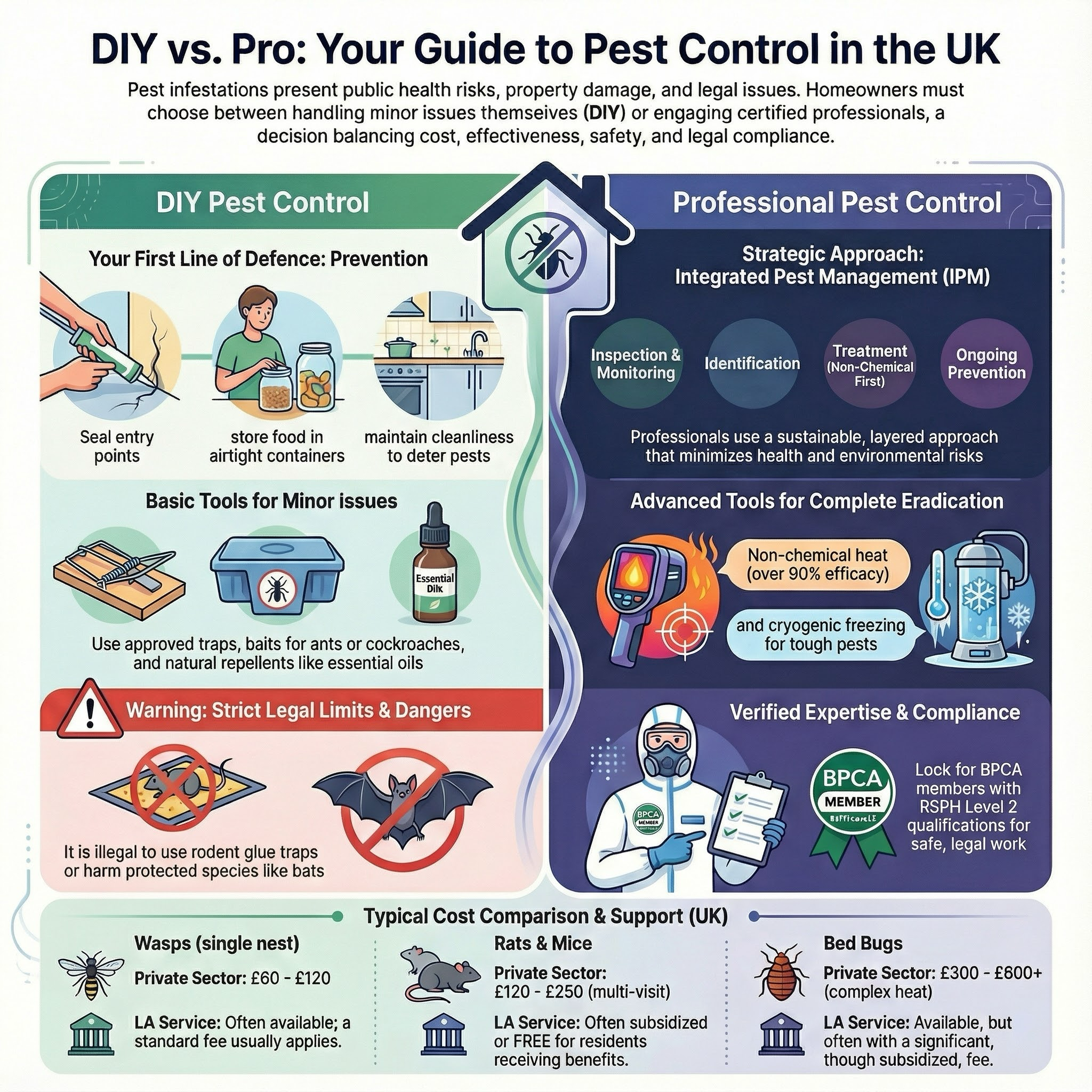
Pest Control explained
Domestic pest control in the UK typically costs £100–£600 per treatment depending on pest type and severity. Single-visit treatments (wasps, ants, single mouse) sit at the lower end; multi-visit programmes (rats, established bed bugs, large roach infestations) at the upper. Most local councils offer subsidised pest control for residents, particularly for rats and mice; private pest controllers offer broader services and faster response.
The economic logic: DIY treatment can work for ants and wasps, but anything where the source isn't visible (rats in cavities, roaches in walls, bed bugs in bedrooms) usually requires professional inspection and treatment for permanent resolution.
| Pest | Typical price |
|---|---|
| Rats (single visit + bait stations) | £150–£300 |
| Rats (multi-visit, established infestation) | £300–£700 |
| Mice (single property treatment) | £100–£250 |
| Wasps / hornets (single nest) | £60–£150 |
| Bees (relocation specialist) | £100–£300 |
| Bed bugs (whole property) | £250–£800 |
| Cockroaches (treatment programme) | £200–£600 |
| Fleas (treatment + follow-up) | £150–£300 |
| Ants (single visit) | £70–£180 |
| Squirrels (entry-point sealing + traps) | £200–£500 |
| Pigeons (deterrent installation) | £200–£800 |
| Annual pest contract (typical home) | £250–£500 |
Single visit (wasps, ants, single mouse): 30-90 minutes. Multi-visit programmes (rats, bed bugs, cockroaches): 3-6 weeks total with 2-4 visits. Don't expect immediate eradication for established infestations.
Yes for routine rat / mouse issues — councils typically charge £30-£80 per visit (or free in some boroughs). Private firms cost more but offer faster response, more pest types, and out-of-hours service.
Bed bugs by margin — multiple-visit treatments, often heat treatment of the whole property, and luggage/clothing washing protocols. £250-£800 typical. Cockroaches in established infestations are second-most.
Modern professional products are designed for residential use with appropriate precautions. Confirm re-entry times (typically 4-24 hours after treatment) and follow product-specific guidance. Cheap supermarket DIY products often have less clear safety information.
Block entry points, eliminate food sources, manage humidity (cockroaches prefer damp areas), seal external waste bins, and trim vegetation away from house. Annual pest control inspections catch incursions early.
Bats (all species), most birds (during breeding season), badgers, and protected species like dormice cannot be killed or disturbed without specific licences. Reputable pest controllers know the law and won't break it. If concerned about a species, ask before agreeing to treatment.
Want a local pro to handle this? A BPCA-member pest control specialist will identify the source, treat appropriately, and follow up to ensure resolution. For councils' free / subsidised services, contact your local environmental health department for routine rats and mice.
This guide was written with AI assistance and is intended for general information only. Prices are estimates based on UK averages and may vary by region. Always get at least three quotes and consult a qualified professional before starting any work.
Ask follow-ups in plain English. The AI explains options, sequencing and what to ask the pest control — so you walk in informed.
Discovering a rat problem in your UK home is more than just an unpleasant surprise; it is a genuine risk to your property’s integrity and your family’s health. ...
READ GUIDE →GuideA fly infestation in a UK home is more than just a seasonal nuisance; it is a significant hygiene risk. Flies are known carriers of bacteria such as Salmonella ...
READ GUIDE →GuideDiscovering signs of rats in your home is more than just a nuisance; it is a significant health and safety risk. Rats can gnaw through electrical cables, damage...
READ GUIDE →GuideGrey squirrels are more than just a garden nuisance; they are a significant threat to the structural integrity and safety of UK homes. Once they gain access to ...
READ GUIDE →GuideFinding maggots in your home is a distressing experience for any UK homeowner. These larvae, typically from houseflies or blowflies, are not just unsightly; the...
READ GUIDE →GuideMoth Infestation Treatment Guide Scope of Works Confirm species & extent – inspect wardrobes, carpets and loft insulation; place pheromone traps for activit...
READ GUIDE →