Instant
01 · Ask
Ask the AI a follow-up
Got more questions about rat control and prevention? Describe the bit you're unsure about — the AI explains options, sequencing and what to ask the pest control.

Active rat treatment plus long-term prevention — entry-point sealing, bait stations and yard hygiene advice.
You've read the brief on rat control and prevention. Now lean on us to find the right pest control — and stay in control of the job.
Got more questions about rat control and prevention? Describe the bit you're unsure about — the AI explains options, sequencing and what to ask the pest control.
Costs, timelines, pitfalls and the right questions to ask before any pest control starts on rat control and prevention.
Itemised quotes from up to 3 local pest controls on rat control and prevention — so you can compare like-for-like, not lump sums.
Ready when you are
Enter your postcode and get free quotes from local pros.
Four moves that separate a smooth job from a nightmare.
Simply killing the rats currently in your home without sealing the entry points or fixing broken drains will result in a new colony moving in within weeks.
If bait is not secured in stations, it can be taken by pets or wildlife. Always ensure "open baiting" is avoided.
If a rat dies in an inaccessible wall cavity or under floorboards, it can produce a foul smell for several weeks. Pros use deodorising bags to mitigate this.
Many UK infestations are sustained by fallen birdseed in gardens. Failure to remove this food source often causes treatment to fail.
Indicative UK ranges and what affects price.
By job type
Quote spread is typically ± 18% — always get 3 quotes.
Pest Control quick-view
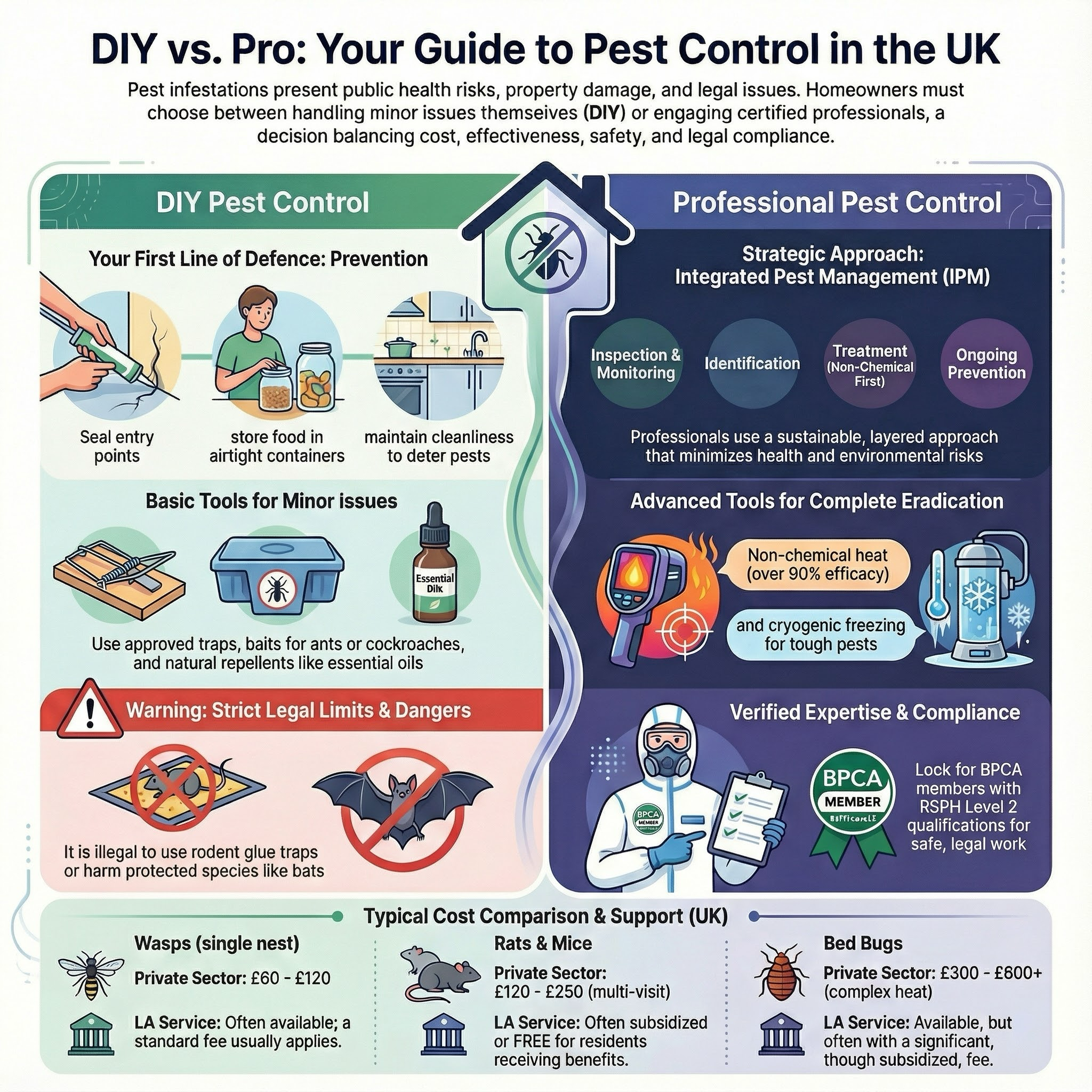
Pest Control explained
Effective rat control requires more than just a few supermarket traps. Professional pest controllers use a combination of biological knowledge, high-grade rodenticides, and physical proofing to ensure that once the infestation is cleared, it stays cleared.
The cost of rat control in the UK depends largely on the severity of the infestation and the number of visits required. Most professional contracts include a minimum of three visits to ensure the life cycle of the rodents is fully interrupted.
| Item | Low £ | High £ | Notes |
|---|---|---|---|
| Initial Survey & First Treatment | £90 | £150 | Includes site assessment and setup of bait/traps. |
| Follow-up Visits (per visit) | £60 | £90 | Checking traps, replenishing bait, and carcass removal. |
| Complete 3-Visit Package | £180 | £350 | The standard requirement for most domestic infestations. |
| Basic Proofing Work | £80 | £250 | Sealing small holes and installing vent covers. |
| Drainage CCTV Survey | £150 | £300 | Highly recommended if rats are entering via sewer pipes. |
Factors affecting the price include the size of the property, the level of "proofing" required (such as installing rat flaps in drains), and your location in the UK, with London and the South East typically seeing higher rates.
While DIY traps and baits are available in hardware stores, they are often insufficient for established infestations. Amateurs frequently place bait in the wrong areas, leading to "bait shyness" where rats learn to avoid the traps entirely.
Professional pest controllers have access to rodenticides with higher concentrations of active ingredients that are not available to the general public due to UK safety regulations.
If you have rats inside your wall cavities or coming up through the drains, a professional is essential. They have the specialist equipment, such as borescope cameras and drain bungs, to find the source that a DIY approach will likely miss.
Pest control is an unregulated industry in some aspects, so it is vital to verify the credentials of anyone you hire to use chemicals in your home.
Questions to ask:
Pest control in the UK is governed by several pieces of legislation designed to protect the environment and non-target species.
Professional pest controllers use lockable, tamper-resistant bait stations that are designed to keep pets and children out. However, you should always inform the technician about your pets so they can place stations in inaccessible areas like lofts or behind kitchen plinths.
In short, no. While they may cause temporary discomfort, rats quickly become habituated to the sound. There is no scientific evidence that these devices provide a long-term solution for an active infestation.
Generally, if the rats are entering due to structural defects (like a hole in the wall or broken pipe), it is the landlord's responsibility. If the infestation is caused by the tenant's lifestyle (e.g., leaving food waste out), the tenant may be liable. Check your tenancy agreement for specific clauses.
The technician will look for "clear" bait stations (where no more bait is being eaten), an absence of new droppings, and the lack of scratching noises at night. They may also use non-toxic "indicator blocks" to confirm zero activity.
While rare, it is possible. Rats are excellent swimmers and can navigate the "U-bend" of a toilet if there is a breach in the external sewage pipework. If you suspect this, a drain survey and the installation of a one-way rat valve are necessary.
This guide was written with AI assistance and is intended for general information only. Prices are estimates based on UK averages and may vary by region. Always get at least three quotes and consult a qualified professional before starting any work.
Ask follow-ups in plain English. The AI explains options, sequencing and what to ask the pest control — so you walk in informed.
A fly infestation in a UK home is more than just a seasonal nuisance; it is a significant hygiene risk. Flies are known carriers of bacteria such as Salmonella ...
READ GUIDE →GuideDiscovering signs of rats in your home is more than just a nuisance; it is a significant health and safety risk. Rats can gnaw through electrical cables, damage...
READ GUIDE →GuideGrey squirrels are more than just a garden nuisance; they are a significant threat to the structural integrity and safety of UK homes. Once they gain access to ...
READ GUIDE →GuideDomestic Pest and Vermin Control Guide Scope of Works Inspect lofts, sub‑floors, kitchens and exterior for signs, entry points and species identification . Prod...
READ GUIDE →GuideFinding maggots in your home is a distressing experience for any UK homeowner. These larvae, typically from houseflies or blowflies, are not just unsightly; the...
READ GUIDE →GuideMoth Infestation Treatment Guide Scope of Works Confirm species & extent – inspect wardrobes, carpets and loft insulation; place pheromone traps for activit...
READ GUIDE →