Instant
01 · Ask
Ask the AI a follow-up
Got more questions about fly infestation control? Describe the bit you're unsure about — the AI explains options, sequencing and what to ask the pest control.

Heavy fly problem — source identified, residual treatment applied, entry points sealed.
You've read the brief on fly infestation control. Now lean on us to find the right pest control — and stay in control of the job.
Got more questions about fly infestation control? Describe the bit you're unsure about — the AI explains options, sequencing and what to ask the pest control.
Costs, timelines, pitfalls and the right questions to ask before any pest control starts on fly infestation control.
Itemised quotes from up to 3 local pest controls on fly infestation control — so you can compare like-for-like, not lump sums.
Ready when you are
Enter your postcode and get free quotes from local pros.
Four moves that separate a smooth job from a nightmare.
Spraying flies in the kitchen while ignoring a leaking pipe under the floorboards where they are breeding.
Treating for house flies when the issue is actually "drain flies," which require specific enzymatic cleaners rather than standard insecticides.
Homeowners often scrub down walls immediately after treatment, effectively washing away the residual insecticide meant to kill the next generation.
Failing to secure bins or clean food waste during the treatment period, providing a "safe haven" for the infestation to continue.
Indicative UK ranges and what affects price.
By job type
Quote spread is typically ± 18% — always get 3 quotes.
Pest Control quick-view
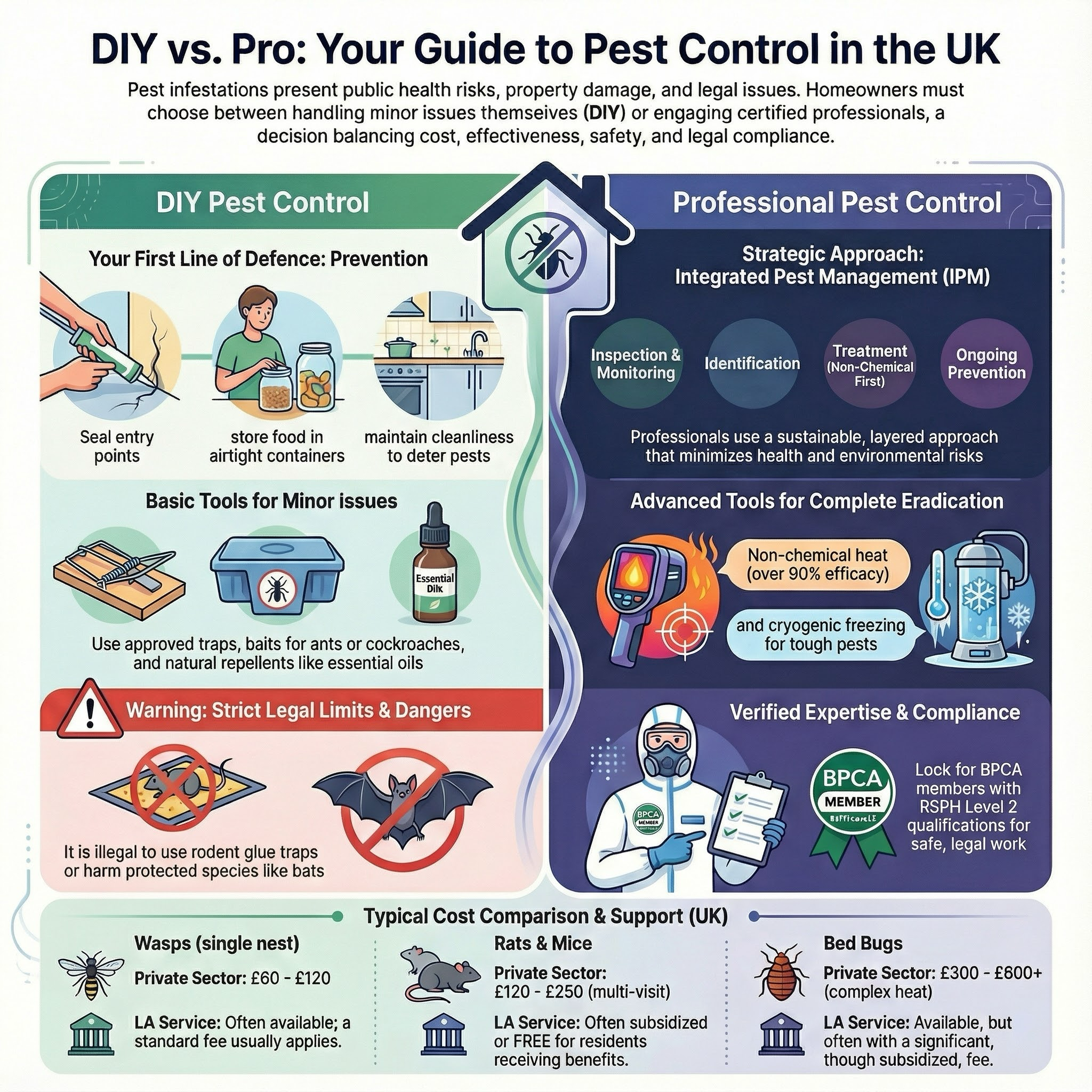
Pest Control explained
While a few flies are common in summer, a persistent swarm or a sudden hatch in a loft space usually indicates an underlying breeding site. Professional pest control identifies the specific species—whether it is common house flies, cluster flies, or drain flies—to ensure the treatment actually works rather than just providing a temporary fix.
The cost of fly control depends largely on the size of the property and the type of fly. Cluster flies in a large loft often require different equipment compared to a fruit fly issue in a kitchen.
| Item | Low £ | High £ | Notes |
|---|---|---|---|
| Initial Inspection & Call-out | £80 | £130 | Often deducted from treatment cost if booked. |
| Standard Domestic Treatment | £150 | £250 | Includes 1-2 visits and residual spray. |
| Loft Fogging (Cluster Flies) | £120 | £220 | Price varies by loft size and access. |
| Electric Fly Killer (Unit + Install) | £180 | £450 | Commercial grade units for kitchens/large homes. |
| Follow-up Visit | £60 | £90 | Required for severe or recurring infestations. |
Prices generally include VAT and professional-grade chemicals that are not available to the general public. Factors such as regional location (London and the SE are typically 20% higher) and the need for specialist access equipment will affect the final quote.
Small numbers of flies can be managed with supermarket sprays and fly papers. However, if you are seeing dozens of flies daily, DIY methods often fail because they only kill the adults, leaving the larvae to hatch in cycles.
Professional pest controllers have access to residual insecticides that remain active on surfaces for weeks, ensuring that any new flies hatching after the initial visit are also eliminated.
Furthermore, many UK fly issues involve Cluster Flies, which hibernate in lofts in the thousands. Treating these safely requires specialist fogging equipment and knowledge of protected species (like bats) that may be sharing the space.
Most professional insecticides are safe once they have dried. You will usually be asked to keep pets out of the treated rooms for 2 to 4 hours, and fish tanks must be tightly covered as many treatments are toxic to aquatic life.
These are likely Cluster Flies. They enter lofts in late autumn to hibernate and become active on sunny winter days or when the central heating is turned on, often appearing sluggish and confused.
Typically, you must vacate the treated area for 3 to 4 hours. After this, you should ventilate the rooms by opening windows for 30 minutes before reoccupying the space.
Flies don't cause structural damage like rodents or woodworm, but they do leave "fly spots" (excrement) which can stain wallpaper and paintwork. The primary risk remains the spread of disease.
If the breeding source is removed, they shouldn't. However, Cluster Flies often return to the same property year after year due to pheromone trails; an annual preventative treatment in early autumn is often recommended for these cases.
This guide was written with AI assistance and is intended for general information only. Prices are estimates based on UK averages and may vary by region. Always get at least three quotes and consult a qualified professional before starting any work.
Ask follow-ups in plain English. The AI explains options, sequencing and what to ask the pest control — so you walk in informed.
Discovering a rat problem in your UK home is more than just an unpleasant surprise; it is a genuine risk to your property’s integrity and your family’s health. ...
READ GUIDE →GuideDiscovering signs of rats in your home is more than just a nuisance; it is a significant health and safety risk. Rats can gnaw through electrical cables, damage...
READ GUIDE →GuideGrey squirrels are more than just a garden nuisance; they are a significant threat to the structural integrity and safety of UK homes. Once they gain access to ...
READ GUIDE →GuideDomestic Pest and Vermin Control Guide Scope of Works Inspect lofts, sub‑floors, kitchens and exterior for signs, entry points and species identification . Prod...
READ GUIDE →GuideFinding maggots in your home is a distressing experience for any UK homeowner. These larvae, typically from houseflies or blowflies, are not just unsightly; the...
READ GUIDE →GuideMoth Infestation Treatment Guide Scope of Works Confirm species & extent – inspect wardrobes, carpets and loft insulation; place pheromone traps for activit...
READ GUIDE →