Instant
01 · Ask
Ask the AI a follow-up
Got more questions about maggot control? Describe the bit you're unsure about — the AI explains options, sequencing and what to ask the pest control.

Maggot outbreak in bin, attic or void — source removed, area treated and follow-up advice given.
You've read the brief on maggot control. Now lean on us to find the right pest control — and stay in control of the job.
Got more questions about maggot control? Describe the bit you're unsure about — the AI explains options, sequencing and what to ask the pest control.
Costs, timelines, pitfalls and the right questions to ask before any pest control starts on maggot control.
Itemised quotes from up to 3 local pest controls on maggot control — so you can compare like-for-like, not lump sums.
Ready when you are
Enter your postcode and get free quotes from local pros.
Four moves that separate a smooth job from a nightmare.
Killing the maggots but leaving a dead squirrel in the loft will result in a fresh wave of larvae within days.
"Drain flies" can breed in the organic sludge of poorly maintained pipes; standard surface cleaning won't stop them.
Using harsh outdoor chemicals inside a kitchen can be toxic to residents and often fails to kill the larvae effectively.
Failing to seal food or clean bin residues after a professional visit often leads to immediate re-infestation.
Indicative UK ranges and what affects price.
By job type
Quote spread is typically ± 18% — always get 3 quotes.
Pest Control quick-view
Pest Control explained
Professional maggot control focuses on more than just killing the visible larvae. It involves identifying the source, sanitising the area to prevent re-infestation, and applying professional-grade residual treatments that are far more effective than supermarket sprays.
The cost of maggot control depends largely on the source of the infestation. A simple bin treatment is relatively inexpensive, whereas removing a dead animal from a hard-to-reach loft space requires more time and specialised equipment.
| Item | Low £ | High £ | Notes |
|---|---|---|---|
| Standard Call-out & Inspection | £80 | £130 | Includes initial assessment and basic advice. |
| Kitchen/Bin Sanitisation | £60 | £110 | Cleaning and insecticidal treatment of local areas. |
| Loft/Carcass Removal | £120 | £250 | Includes finding/removing dead pest and sanitising. |
| Professional Insecticide Materials | £20 | £60 | Residual sprays and growth regulators. |
| Waste Disposal Fee | £0 | £40 | Safe removal of contaminated organic waste. |
| Total Project Cost | £150 | £450 | Most domestic call-outs fall in this range. |
Prices generally include VAT. Costs may rise if the technician needs to lift floorboards, access high gutters, or perform multiple follow-up visits for severe infestations.
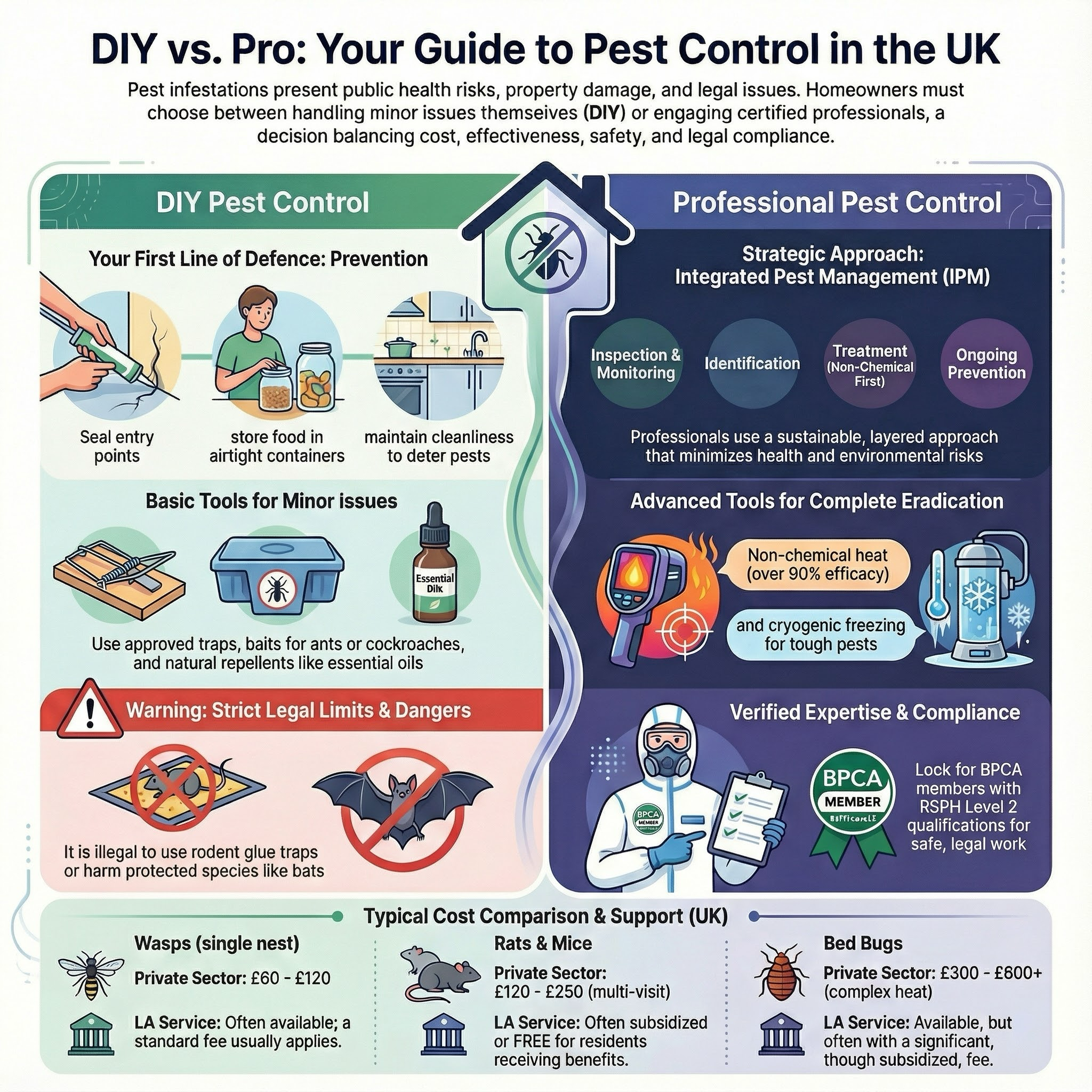
For a single wheelie bin issue, a DIY approach using boiling water and bleach is often sufficient. However, if maggots appear inside the home—particularly coming from ceilings, floorboards, or light fittings—professional intervention is essential.
Professional pest controllers have access to high-concentration residual insecticides and "Insect Growth Regulators" (IGRs) that are not available to the general public. These products break the life cycle of the fly, ensuring the problem doesn't return in a few days.
Furthermore, professionals are trained to handle hazardous waste and can safely remove dead animals that may be carrying diseases. In the UK, certain pesticides must only be applied by those with the correct certification to protect residents and pets.
Questions to ask:
Pest control in the UK is strictly governed to ensure safety and environmental protection. You should expect your tradesperson to adhere to the following:
Yes. While they don't bite, they live in filth and carry bacteria such as Salmonella and E. coli, which they can spread to food preparation surfaces.
This almost always indicates a dead animal (like a rodent or bird) in the loft or ceiling void. As the carcass decomposes, larvae emerge and fall through gaps around light fittings or coving.
Bleach will kill maggots on contact, but it doesn't provide a residual barrier. It won't stop more eggs from hatching or address the source of the infestation.
Ensure all food waste is double-bagged, keep the bin lid tightly closed, and try to keep the bin in the shade during summer months to slow decomposition.
Only if the infestation is suspected to be underneath. In most cases, targeted sprays and cleaning are sufficient, but "cluster fly" larvae or those from a dead rodent under the floor may require access.
Typically, you should stay out of the treated area for 2 to 4 hours until the insecticidal spray has completely dried. Your technician will provide specific guidance based on the product used.
This guide was written with AI assistance and is intended for general information only. Prices are estimates based on UK averages and may vary by region. Always get at least three quotes and consult a qualified professional before starting any work.
Ask follow-ups in plain English. The AI explains options, sequencing and what to ask the pest control — so you walk in informed.
Discovering a rat problem in your UK home is more than just an unpleasant surprise; it is a genuine risk to your property’s integrity and your family’s health. ...
READ GUIDE →GuideA fly infestation in a UK home is more than just a seasonal nuisance; it is a significant hygiene risk. Flies are known carriers of bacteria such as Salmonella ...
READ GUIDE →GuideDiscovering signs of rats in your home is more than just a nuisance; it is a significant health and safety risk. Rats can gnaw through electrical cables, damage...
READ GUIDE →GuideGrey squirrels are more than just a garden nuisance; they are a significant threat to the structural integrity and safety of UK homes. Once they gain access to ...
READ GUIDE →GuideDomestic Pest and Vermin Control Guide Scope of Works Inspect lofts, sub‑floors, kitchens and exterior for signs, entry points and species identification . Prod...
READ GUIDE →GuideMoth Infestation Treatment Guide Scope of Works Confirm species & extent – inspect wardrobes, carpets and loft insulation; place pheromone traps for activit...
READ GUIDE →