Instant
01 · Ask
Ask the AI a follow-up
Got more questions about bedbug Control? Describe the bit you're unsure about — the AI explains options, sequencing and what to ask the pest control.

How bedbug treatment works — what each method costs, how long it takes and what you have to do as the homeowner.
You've read the brief on bedbug Control. Now lean on us to find the right pest control — and stay in control of the job.
Got more questions about bedbug Control? Describe the bit you're unsure about — the AI explains options, sequencing and what to ask the pest control.
Costs, timelines, pitfalls and the right questions to ask before any pest control starts on bedbug Control.
Itemised quotes from up to 3 local pest controls on bedbug Control — so you can compare like-for-like, not lump sums.
Ready when you are
Enter your postcode and get free quotes from local pros.
Four moves that separate a smooth job from a nightmare.
If you don't follow the prep list (e.g., leaving laundry out), the treatment is likely to fail as bugs hide in the clutter.
Bedbugs hide in skirting boards, behind picture frames, and inside light switches; treating only the mattress is a common mistake.
Bringing back the original source (like an untreated suitcase) will immediately restart the cycle.
In terraced houses or flats, bedbugs can travel through floor voids. If your neighbour has them, your treatment may fail.
Indicative UK ranges and what affects price.
By job type
Quote spread is typically ± 18% — always get 3 quotes.
Pest Control quick-view
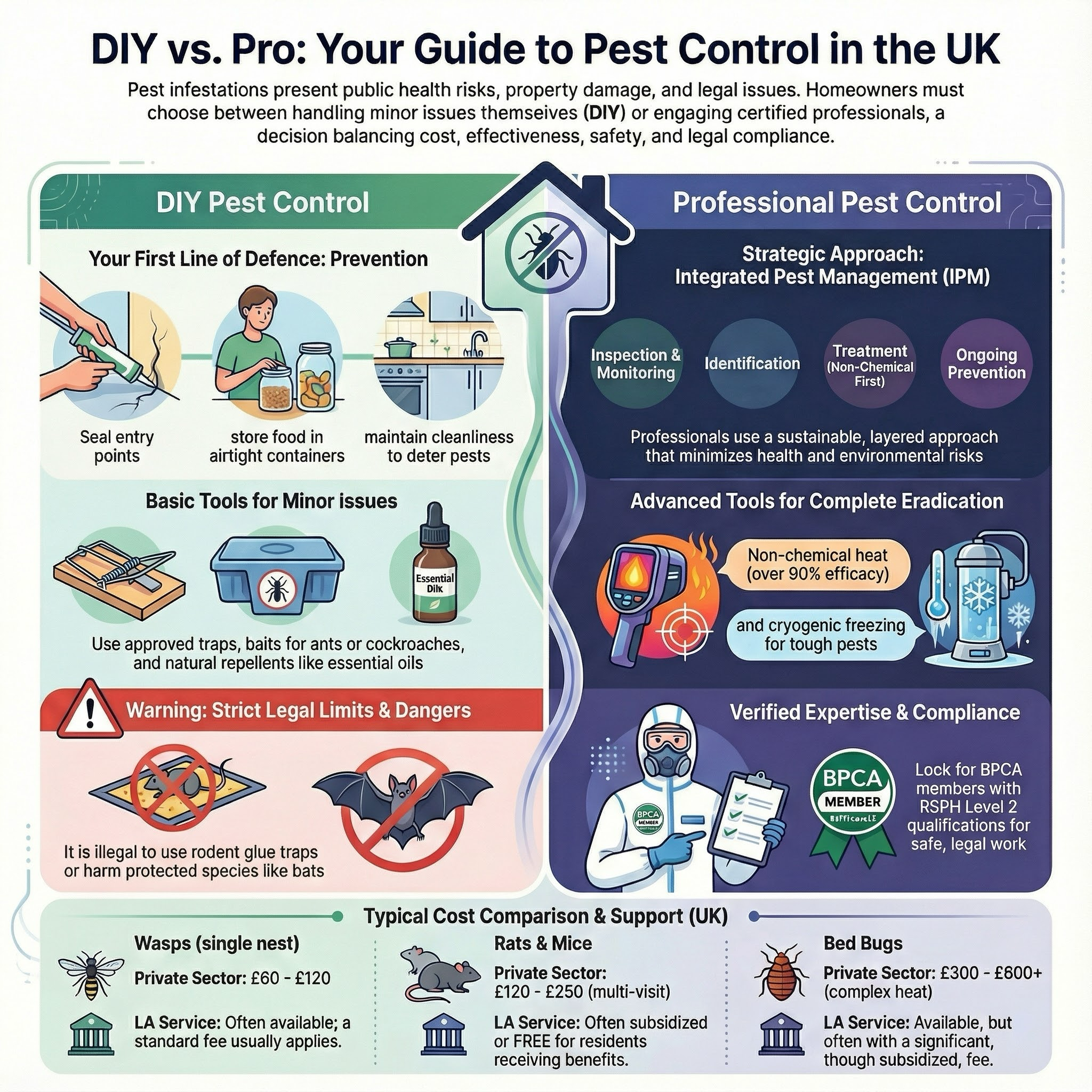
Pest Control explained
Attempting to tackle an infestation alone often leads to "dispersal," where the bugs scatter deeper into the building's structure. Professional eradication is the most effective way to ensure your home returns to a safe, bite-free environment.
The cost of bedbug control varies significantly based on the treatment method and the number of rooms affected. Heat treatments have a higher upfront cost but often require only one visit, whereas chemical treatments are cheaper initially but usually need multiple applications.
| Item | Low £ | High £ | Notes |
|---|---|---|---|
| Professional Inspection | £60 | £150 | Often waived if you book the treatment. |
| Chemical Treatment (per room) | £150 | £300 | Usually requires at least two visits. |
| Full Heat Treatment (3-bed house) | £800 | £2,500 | Single-day eradication of all life stages. |
| K-9 Scent Detection | £200 | £450 | Highly accurate for large or complex homes. |
| Mattress Encasements | £40 | £90 | Specialist covers to trap any remaining bugs. |
Prices include VAT and reflect 2025/26 UK averages. Factors such as your location (London and the South East typically command a 20% premium) and the level of clutter in the property will influence the final quote.
While DIY sprays are available in hardware stores, they are rarely effective against established infestations. UK bedbug populations have developed significant resistance to common pyrethroid insecticides found in over-the-counter products.
Professional pest controllers have access to restricted "professional use only" chemicals and industrial-grade heat equipment that DIY methods simply cannot replicate.
Furthermore, improper use of "bug bombs" can cause bedbugs to retreat into wall voids and neighbouring flats, making the problem significantly harder and more expensive to solve later.
In most cases, no. Professional steam or heat treatments can salvage even heavily infested mattresses. Using a high-quality bedbug-proof encasement after treatment is usually sufficient.
For chemical treatments, you must vacate for 4-6 hours until the spray is dry. For heat treatments, you must vacate for the entire day (usually 8-10 hours) as the house will be uncomfortably hot.
Bedbug bites often appear in lines or clusters of three (breakfast, lunch, and dinner). Bedbugs are nocturnal and leave small dark "ink spots" (faecal matter) on sheets, whereas fleas are usually found at ankle height and jump when disturbed.
They do not spread diseases to humans, unlike mosquitoes or ticks. However, they cause significant psychological distress, sleep deprivation, and potential secondary skin infections from scratching the bites.
Most insecticides do not kill bedbug eggs. The second visit is timed to kill the nymphs that hatch after the first treatment but before they are old enough to lay new eggs.
This guide was written with AI assistance and is intended for general information only. Prices are estimates based on UK averages and may vary by region. Always get at least three quotes and consult a qualified professional before starting any work.
Ask follow-ups in plain English. The AI explains options, sequencing and what to ask the pest control — so you walk in informed.
Discovering a rat problem in your UK home is more than just an unpleasant surprise; it is a genuine risk to your property’s integrity and your family’s health. ...
READ GUIDE →GuideA fly infestation in a UK home is more than just a seasonal nuisance; it is a significant hygiene risk. Flies are known carriers of bacteria such as Salmonella ...
READ GUIDE →GuideDiscovering signs of rats in your home is more than just a nuisance; it is a significant health and safety risk. Rats can gnaw through electrical cables, damage...
READ GUIDE →GuideGrey squirrels are more than just a garden nuisance; they are a significant threat to the structural integrity and safety of UK homes. Once they gain access to ...
READ GUIDE →GuideDomestic Pest and Vermin Control Guide Scope of Works Inspect lofts, sub‑floors, kitchens and exterior for signs, entry points and species identification . Prod...
READ GUIDE →GuideFinding maggots in your home is a distressing experience for any UK homeowner. These larvae, typically from houseflies or blowflies, are not just unsightly; the...
READ GUIDE →