Instant
01 · Ask
Ask the AI a follow-up
Got more questions about bee removal? Describe the bit you're unsure about — the AI explains options, sequencing and what to ask the pest control.

Bees are protected — by a beekeeper for relocation, not extermination. Where relocation isn't possible, treatment as last resort.
You've read the brief on bee removal. Now lean on us to find the right pest control — and stay in control of the job.
Got more questions about bee removal? Describe the bit you're unsure about — the AI explains options, sequencing and what to ask the pest control.
Costs, timelines, pitfalls and the right questions to ask before any pest control starts on bee removal.
Itemised quotes from up to 3 local pest controls on bee removal — so you can compare like-for-like, not lump sums.
Ready when you are
Enter your postcode and get free quotes from local pros.
Four moves that separate a smooth job from a nightmare.
If bees are killed but the honey is left behind, it will ferment, expand, and leak through ceilings, causing permanent staining and smells.
Abandoned hives attract wax moths, carpet beetles, and rodents.
Other bee colonies will smell the undefended honey and "rob" the site, leading to a constant cycle of bee activity around your home.
Failing to block every tiny entry point (some as small as 4mm) will almost certainly result in a new swarm arriving next spring.
Indicative UK ranges and what affects price.
By job type
Quote spread is typically ± 18% — always get 3 quotes.
Pest Control quick-view
Pest Control explained
Professional bee removal focuses on the safe extraction of the colony and the thorough cleaning of the site. This prevents structural damage from melting wax and ensures that the scent of the hive doesn't attract a new swarm to the same spot next season.
| Item | Low £ | High £ | Notes |
|---|---|---|---|
| Call-out & Inspection | £80 | £150 | Often deducted from total if work proceeds. |
| Standard Ground-Level Removal | £250 | £500 | Accessible hives in sheds or low branches. |
| Complex Structural Removal | £600 | £2,000+ | Requires removing bricks or roof tiles. |
| Chimney Bee Removal | £500 | £1,200 | Includes specialist vacuum equipment and cowls. |
| Scaffolding Hire | £350 | £800 | Required for high-level roof or chimney work. |
Prices vary significantly based on the height of the hive and how much of the building's fabric must be disturbed. Expect to pay more for "cut-outs" where brickwork or internal plasterboard must be removed to reach the colony.
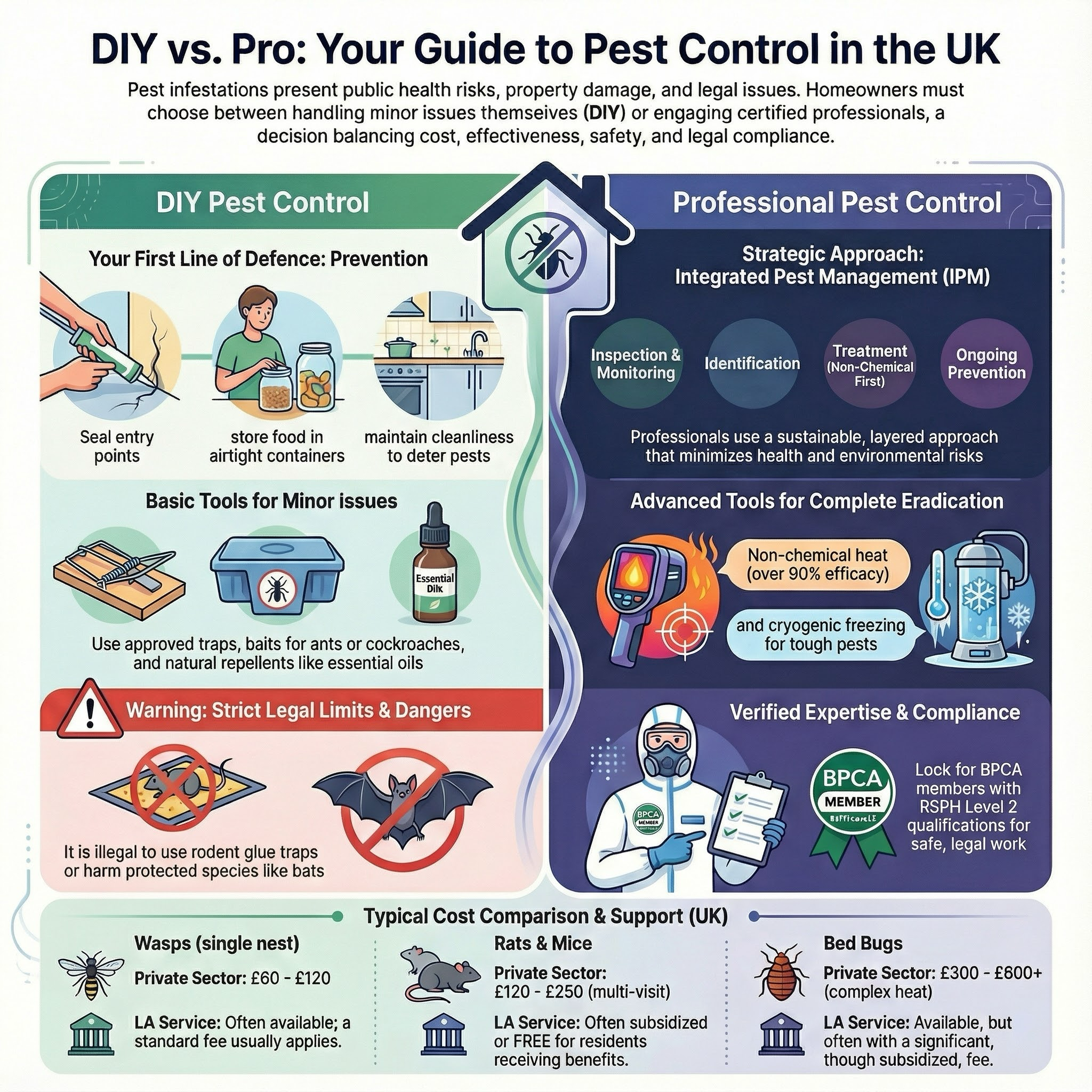
Bee removal is never a DIY job. Attempting to spray a hive with domestic insecticide often fails to reach the queen and can cause the bees to swarm into your living space in a panic.
Professional pest controllers and beekeepers have the equipment to ensure the colony is moved safely without leaving honey to rot inside your walls, which can cause thousands of pounds in structural damage.
No, honeybees are not legally protected, but they are of high conservation importance. Most reputable UK pest controllers will only use lethal treatments as a very last resort if the hive poses an immediate danger to life.
A swarm is a group of bees looking for a new home, often seen hanging from a branch in a large clump; these are usually easy to move. A colony is an established hive with honeycomb and larvae inside a structure, which is much more complex to remove.
Most standard UK home insurance policies view pest removal as a maintenance issue and will not cover the cost. However, some "Home Emergency" add-ons may cover the initial call-out if the bees are inside the living area.
Local beekeepers will often collect "swarms" for free if they are easily accessible (e.g., on a low branch). They will rarely perform "cut-outs" from walls or roofs for free due to the high insurance risks and equipment costs involved.
Most professional removers work with local apiaries. The bees are placed in a quarantine hive to check for diseases like European Foulbrood before being integrated into a managed bee farm.
This guide was written with AI assistance and is intended for general information only. Prices are estimates based on UK averages and may vary by region. Always get at least three quotes and consult a qualified professional before starting any work.
Ask follow-ups in plain English. The AI explains options, sequencing and what to ask the pest control — so you walk in informed.
Discovering a rat problem in your UK home is more than just an unpleasant surprise; it is a genuine risk to your property’s integrity and your family’s health. ...
READ GUIDE →GuideA fly infestation in a UK home is more than just a seasonal nuisance; it is a significant hygiene risk. Flies are known carriers of bacteria such as Salmonella ...
READ GUIDE →GuideDiscovering signs of rats in your home is more than just a nuisance; it is a significant health and safety risk. Rats can gnaw through electrical cables, damage...
READ GUIDE →GuideGrey squirrels are more than just a garden nuisance; they are a significant threat to the structural integrity and safety of UK homes. Once they gain access to ...
READ GUIDE →GuideDomestic Pest and Vermin Control Guide Scope of Works Inspect lofts, sub‑floors, kitchens and exterior for signs, entry points and species identification . Prod...
READ GUIDE →GuideFinding maggots in your home is a distressing experience for any UK homeowner. These larvae, typically from houseflies or blowflies, are not just unsightly; the...
READ GUIDE →