Instant
01 · Ask
Ask the AI a follow-up
Got more questions about bird mite removal? Describe the bit you're unsure about — the AI explains options, sequencing and what to ask the pest control.

Following bird nest removal — chemical treatment for residual mites that bite humans.
You've read the brief on bird mite removal. Now lean on us to find the right pest control — and stay in control of the job.
Got more questions about bird mite removal? Describe the bit you're unsure about — the AI explains options, sequencing and what to ask the pest control.
Costs, timelines, pitfalls and the right questions to ask before any pest control starts on bird mite removal.
Itemised quotes from up to 3 local pest controls on bird mite removal — so you can compare like-for-like, not lump sums.
Ready when you are
Enter your postcode and get free quotes from local pros.
Four moves that separate a smooth job from a nightmare.
If the nest isn't removed, new mites will continue to emerge every few days.
Bird mites are often confused with bed bugs. A professional will use a microscope or digital ID to ensure the correct treatment is applied.
If you remove the nest but don't block the entry hole, a new bird will likely move in within weeks, starting the cycle again.
Bird mites are tiny and hide in electrical sockets and behind wallpaper; missing these spots leads to treatment failure.
Indicative UK ranges and what affects price.
By job type
Quote spread is typically ± 18% — always get 3 quotes.
Pest Control quick-view
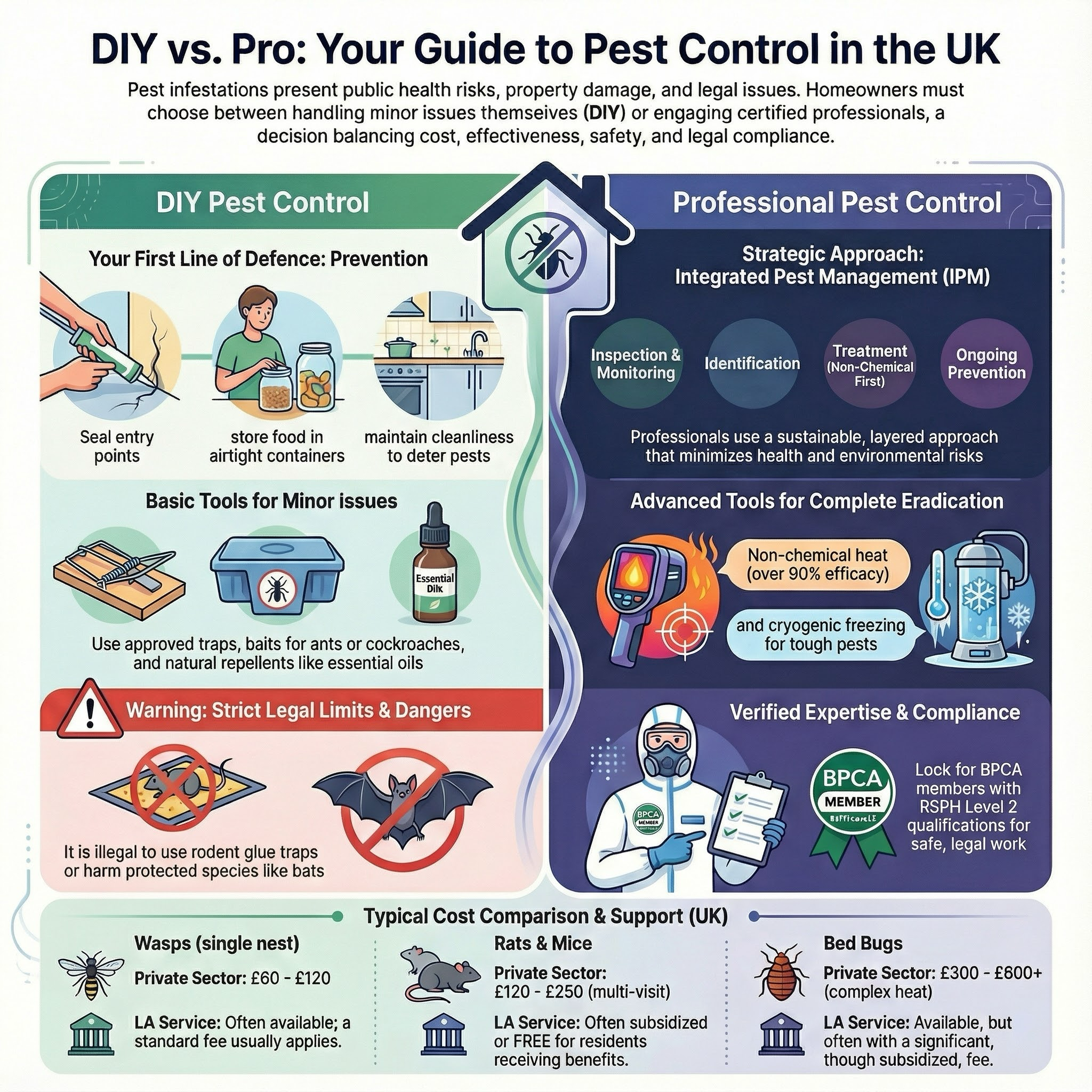
Pest Control explained
While bird mites cannot thrive or reproduce on human blood, their bites cause intense itching and significant distress for homeowners. Professional removal is essential because treating the mites without locating and removing the source nest will lead to repeated infestations.
The cost of bird mite removal depends on the accessibility of the nest and the extent of the migration into the living areas. Most standard domestic treatments include an initial visit and one follow-up.
| Item | Low £ | High £ | Notes |
|---|---|---|---|
| Call-out & Inspection | £80 | £150 | Often deducted from the final bill if work proceeds. |
| Standard Room Treatment | £120 | £250 | Insecticidal spray or ULV fogging for one bedroom. |
| Nest Removal & Loft Clean | £250 | £600 | Includes removal of waste and biocidal decontamination. |
| Bird Proofing (Spikes/Mesh) | £100 | £500+ | Prevents re-infestation; price varies by height. |
| Total Project Average | £250 | £950 | Most UK semi-detached homes fall in this range. |
Factors affecting the price include the need for scaffolding to reach high eaves, the volume of contaminated insulation that needs replacing, and the number of rooms requiring chemical treatment.
Bird mite removal is rarely a successful DIY project. Over-the-counter sprays lack the residual strength required to kill mites hiding in wall cavities, and many homeowners fail to locate the primary nest.
Professional pest controllers use regulated insecticides (not available to the public) and have the equipment to safely remove nests which may carry respiratory risks like Psittacosis.
Furthermore, removing certain bird nests during the breeding season without a licence is illegal in the UK. A professional will ensure you stay on the right side of the law.
No. Bird mites require bird blood to complete their life cycle. While they will bite humans and pets out of desperation, they cannot survive or breed on us. The infestation will eventually die out once the bird source is removed.
Bird mites are much smaller (about the size of a pinhead) and move very quickly. They are usually semi-transparent until they feed, turning reddish-brown. They are most active during the day, whereas bed bugs are primarily nocturnal.
Usually, no. Washing bedding and clothes at 60°C will kill the mites. Mattresses can be vacuumed and treated with a residual spray or steam by a professional. Disposal is only necessary in extreme, long-term infestations.
When chicks fledge and the birds leave the nest, the mites lose their food source. This is exactly when they migrate into the house to find a new host. You may have an old nest from months ago that has only just become a problem.
Professional pest controllers use approved insecticides that are safe for domestic use once dry. You will typically be asked to leave the house for 3–4 hours. If you have fish or reptiles, special precautions must be taken as they are more sensitive to these treatments.
This guide was written with AI assistance and is intended for general information only. Prices are estimates based on UK averages and may vary by region. Always get at least three quotes and consult a qualified professional before starting any work.
Ask follow-ups in plain English. The AI explains options, sequencing and what to ask the pest control — so you walk in informed.
Discovering a rat problem in your UK home is more than just an unpleasant surprise; it is a genuine risk to your property’s integrity and your family’s health. ...
READ GUIDE →GuideA fly infestation in a UK home is more than just a seasonal nuisance; it is a significant hygiene risk. Flies are known carriers of bacteria such as Salmonella ...
READ GUIDE →GuideDiscovering signs of rats in your home is more than just a nuisance; it is a significant health and safety risk. Rats can gnaw through electrical cables, damage...
READ GUIDE →GuideGrey squirrels are more than just a garden nuisance; they are a significant threat to the structural integrity and safety of UK homes. Once they gain access to ...
READ GUIDE →GuideDomestic Pest and Vermin Control Guide Scope of Works Inspect lofts, sub‑floors, kitchens and exterior for signs, entry points and species identification . Prod...
READ GUIDE →GuideFinding maggots in your home is a distressing experience for any UK homeowner. These larvae, typically from houseflies or blowflies, are not just unsightly; the...
READ GUIDE →