Instant
01 · Ask
Ask the AI a follow-up
Got more questions about carpet Beetle Removal? Describe the bit you're unsure about — the AI explains options, sequencing and what to ask the pest control.

Full property treatment for carpet beetle infestation — chemical spray plus heat treatment of soft furnishings.
You've read the brief on carpet Beetle Removal. Now lean on us to find the right pest control — and stay in control of the job.
Got more questions about carpet Beetle Removal? Describe the bit you're unsure about — the AI explains options, sequencing and what to ask the pest control.
Costs, timelines, pitfalls and the right questions to ask before any pest control starts on carpet Beetle Removal.
Itemised quotes from up to 3 local pest controls on carpet Beetle Removal — so you can compare like-for-like, not lump sums.
Ready when you are
Enter your postcode and get free quotes from local pros.
Four moves that separate a smooth job from a nightmare.
Treating the carpet but failing to remove an old wasp or bird nest in the loft, leading to immediate re-infestation.
Not vacuuming prior to treatment or failing to move heavy furniture, leaving "refuge" areas for larvae.
Carpet beetles often hide in air vents or under floorboards; localized "spot" treatments rarely work.
Vacuuming too soon after a chemical treatment (before it has dried or settled) can remove the residual insecticide.
Indicative UK ranges and what affects price.
By job type
Quote spread is typically ± 18% — always get 3 quotes.
Pest Control quick-view
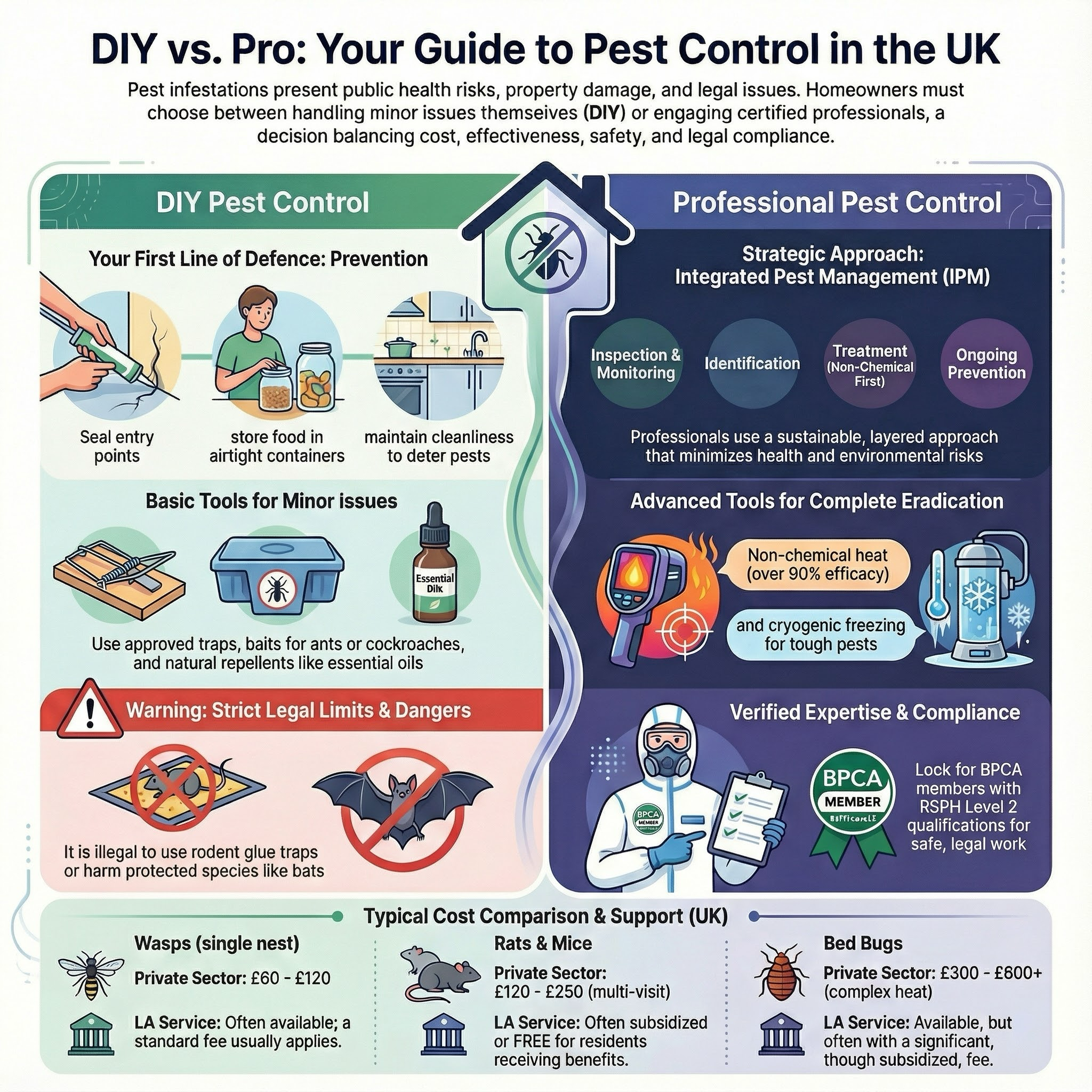
Pest Control explained
Professional removal is essential because these pests are experts at hiding in floor voids, lofts, and behind skirting boards. A specialist treatment not only kills the active larvae but also addresses the eggs and provides a residual barrier to prevent immediate re-infestation.
| Item | Low £ | High £ | Notes |
|---|---|---|---|
| Initial Survey & Call-out | £60 | £120 | Often deducted from the total if work proceeds. |
| Chemical Spray (2-3 Bed House) | £180 | £350 | Includes residual insecticide and IGR application. |
| Heat Treatment (Single Room) | £250 | £500 | Higher cost due to specialised equipment and energy. |
| Follow-up Visit | £80 | £150 | Recommended 14 days later to catch new hatchlings. |
| Loft Clearance/Proofing | £100 | £300 | Removal of bird nests and sealing entry points. |
Prices vary based on the size of your property, the severity of the infestation, and your location in the UK, with London and the South East typically seeing higher rates. The method of treatment—chemical versus heat—is the largest cost driver.
While DIY sprays are available in garden centres, they often lack the residual strength required to penetrate deep carpet piles or floor voids. Professionals have access to restricted-use insecticides and IGRs that stop larvae from reaching reproductive maturity.
Professional intervention is strongly advised for carpet beetles because their eggs are highly resistant to standard household cleaners and many over-the-counter sprays.
Once the insecticide has completely dried (usually 2-4 hours), it is safe for children and pets to return. However, fish tanks must be covered or removed, and cats should be kept away until the area is fully ventilated.
Not necessarily. Most textiles can be saved with professional steam cleaning or heat treatment. Only items with extreme structural damage or heavy soiling are usually discarded.
While both eat natural fibres, carpet beetle larvae (woolly bears) are hairy and leave distinct, jagged holes. Clothes moths are smaller, and their larvae are cream-coloured, often leaving silky webbing behind.
Infestations aren't caused by poor hygiene. They often enter through open windows or are brought in on cut flowers, or they migrate from bird nests in the eaves of the roof.
The adult beetles can fly and are often seen on windowsills in spring as they try to head outside to feed on pollen. It is the flightless larvae, however, that do the actual damage to your home.
This guide was written with AI assistance and is intended for general information only. Prices are estimates based on UK averages and may vary by region. Always get at least three quotes and consult a qualified professional before starting any work.
Ask follow-ups in plain English. The AI explains options, sequencing and what to ask the pest control — so you walk in informed.
Discovering a rat problem in your UK home is more than just an unpleasant surprise; it is a genuine risk to your property’s integrity and your family’s health. ...
READ GUIDE →GuideA fly infestation in a UK home is more than just a seasonal nuisance; it is a significant hygiene risk. Flies are known carriers of bacteria such as Salmonella ...
READ GUIDE →GuideDiscovering signs of rats in your home is more than just a nuisance; it is a significant health and safety risk. Rats can gnaw through electrical cables, damage...
READ GUIDE →GuideGrey squirrels are more than just a garden nuisance; they are a significant threat to the structural integrity and safety of UK homes. Once they gain access to ...
READ GUIDE →GuideDomestic Pest and Vermin Control Guide Scope of Works Inspect lofts, sub‑floors, kitchens and exterior for signs, entry points and species identification . Prod...
READ GUIDE →GuideFinding maggots in your home is a distressing experience for any UK homeowner. These larvae, typically from houseflies or blowflies, are not just unsightly; the...
READ GUIDE →