Instant
01 · Ask
Ask the AI a follow-up
Got more questions about flea infestation control? Describe the bit you're unsure about — the AI explains options, sequencing and what to ask the pest control.

Whole-property flea treatment — chemical spray and 2-3 follow-up visits over the flea cycle.
You've read the brief on flea infestation control. Now lean on us to find the right pest control — and stay in control of the job.
Got more questions about flea infestation control? Describe the bit you're unsure about — the AI explains options, sequencing and what to ask the pest control.
Costs, timelines, pitfalls and the right questions to ask before any pest control starts on flea infestation control.
Itemised quotes from up to 3 local pest controls on flea infestation control — so you can compare like-for-like, not lump sums.
Ready when you are
Enter your postcode and get free quotes from local pros.
Four moves that separate a smooth job from a nightmare.
Professional sprays need time to work. If you vacuum within 48 hours of treatment, you will remove the residual insecticide and the treatment will fail.
If your cat or dog isn't treated with a vet-approved flea product simultaneously, they will simply bring new fleas back into the "clean" environment.
Flea pupae are encased in a silk cocoon that is impervious to chemicals. You must wait for them to hatch (stimulated by vibrations) to be killed by the residual spray.
Leaving toys, clothes, or clutter on the floor prevents the technician from reaching the areas where larvae hide.
Indicative UK ranges and what affects price.
By job type
Quote spread is typically ± 18% — always get 3 quotes.
Pest Control quick-view
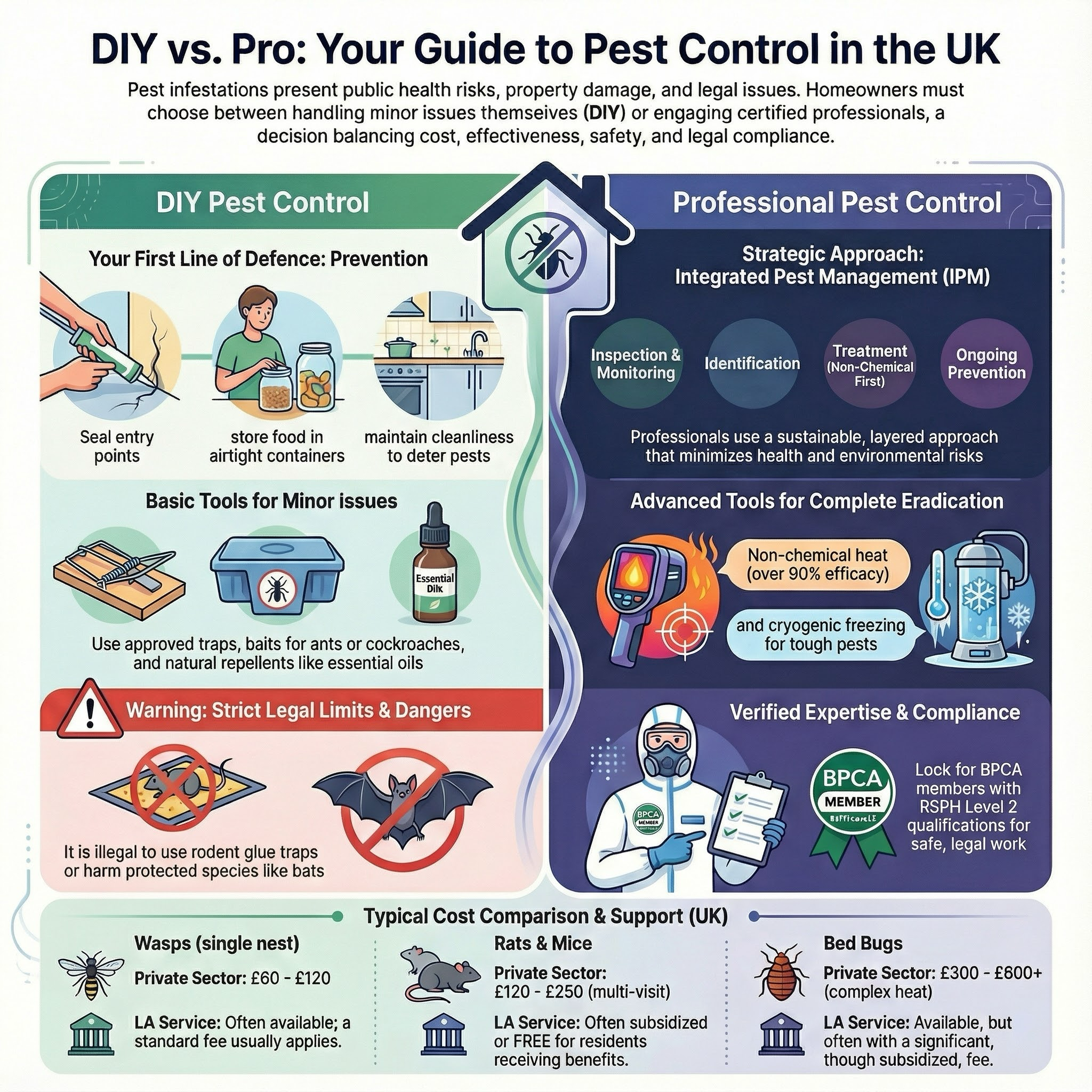
Pest Control explained
Professional flea control is more than just a quick spray; it is a systematic approach to breaking the flea life cycle. Because only 5% of a flea population lives on your pet, while the remaining 95% exists as eggs, larvae, and pupae in your floorboards and upholstery, expert intervention is often the only way to ensure total eradication.
The cost of flea treatment in the UK depends primarily on the number of rooms and the level of infestation. Most reputable companies offer a fixed-price package that includes a follow-up visit, as single treatments are rarely 100% effective.
| Service Item | Low £ | High £ | Notes |
|---|---|---|---|
| Studio / 1-Bed Flat | £150 | £220 | Includes initial spray and one follow-up. |
| 3-Bedroom Semi-Detached | £250 | £380 | Comprehensive treatment of all living areas. |
| 5-Bedroom Detached | £400 | £600+ | Higher material costs for large floor areas. |
| Emergency/Same-Day Surcharge | £50 | £100 | Additional fee for urgent weekend call-outs. |
| Additional Follow-up Visit | £70 | £120 | Required for exceptionally heavy infestations. |
Prices generally include VAT and professional-grade chemicals. Factors that increase the price include heavy clutter, which requires more time and material, and the geographic location (expect to pay 20-30% more in London and the South East).
While supermarket "flea bombs" and sprays are cheap, they rarely solve the problem. These products often lack Residual Insecticides and Growth Regulators, meaning they kill the jumping adults but leave the eggs and pupae untouched.
Professional pest controllers have access to chemicals that are not available to the general public. Furthermore, handling pesticides requires strict adherence to safety protocols. If you have a widespread infestation, DIY methods often prove to be a false economy, leading to months of frustration and multiple failed attempts.
Warning: Never use professional-grade insecticides yourself without training. Incorrect application can lead to chemical resistance in pests and health risks for your family.
Not all pest control services are equal. To ensure your home is treated safely and effectively, look for the following credentials:
Questions to ask:
Pest control in the UK is strictly governed to protect both the environment and public health. Your tradesperson must comply with:
Yes, once the treated surfaces are completely dry. You must remain out of the property for the duration specified by the technician (usually 4 hours). Aquariums should be covered and air pumps turned off, as many insecticides are toxic to fish.
This is normal and is known as the "pupal window." The treatment kills adults and larvae, but pupae are protected by their cocoons. They will hatch over the next 10 days, hit the residual insecticide on your carpet, and die shortly after.
Only items left on the floor or pet bedding. Anything stored in wardrobes or drawers is generally safe. Wash affected fabrics at 60°C to ensure eggs and larvae are destroyed.
Yes. Flea larvae hate light and will crawl into the microscopic gaps between floorboards or under skirting boards. A professional will treat these cracks specifically.
Most standard infestations are cleared in two visits spaced 2 weeks apart. Very heavy infestations or homes with many pets may require a third "top-up" treatment.
Yes, steam cleaning before treatment is excellent as the heat kills some life stages and opens up the carpet fibres. However, never steam clean after the treatment, as this will wash away the insecticide.
This guide was written with AI assistance and is intended for general information only. Prices are estimates based on UK averages and may vary by region. Always get at least three quotes and consult a qualified professional before starting any work.
Ask follow-ups in plain English. The AI explains options, sequencing and what to ask the pest control — so you walk in informed.
Discovering a rat problem in your UK home is more than just an unpleasant surprise; it is a genuine risk to your property’s integrity and your family’s health. ...
READ GUIDE →GuideA fly infestation in a UK home is more than just a seasonal nuisance; it is a significant hygiene risk. Flies are known carriers of bacteria such as Salmonella ...
READ GUIDE →GuideDiscovering signs of rats in your home is more than just a nuisance; it is a significant health and safety risk. Rats can gnaw through electrical cables, damage...
READ GUIDE →GuideGrey squirrels are more than just a garden nuisance; they are a significant threat to the structural integrity and safety of UK homes. Once they gain access to ...
READ GUIDE →GuideDomestic Pest and Vermin Control Guide Scope of Works Inspect lofts, sub‑floors, kitchens and exterior for signs, entry points and species identification . Prod...
READ GUIDE →GuideFinding maggots in your home is a distressing experience for any UK homeowner. These larvae, typically from houseflies or blowflies, are not just unsightly; the...
READ GUIDE →