Instant
01 · Ask
Ask the AI a follow-up
Got more questions about flea removal? Describe the bit you're unsure about — the AI explains options, sequencing and what to ask the pest control.

Flea removal — spray treatment for property, advice on pet treatment for the source.
You've read the brief on flea removal. Now lean on us to find the right pest control — and stay in control of the job.
Got more questions about flea removal? Describe the bit you're unsure about — the AI explains options, sequencing and what to ask the pest control.
Costs, timelines, pitfalls and the right questions to ask before any pest control starts on flea removal.
Itemised quotes from up to 3 local pest controls on flea removal — so you can compare like-for-like, not lump sums.
Ready when you are
Enter your postcode and get free quotes from local pros.
Four moves that separate a smooth job from a nightmare.
Vacuuming within 48 hours of treatment can remove the residual insecticide before it has finished off the newly hatched fleas.
If the pet isn't treated with a veterinary-grade product at the same time as the house, they will simply re-infest the clean carpets.
Fleas travel on clothing and pets; treating only the "problem room" usually results in the infestation migrating elsewhere.
It is normal to see a few "zombie" fleas for up to two weeks after treatment as they hatch and die; don't panic and wash the floors immediately.
Indicative UK ranges and what affects price.
By job type
Quote spread is typically ± 18% — always get 3 quotes.
Pest Control quick-view
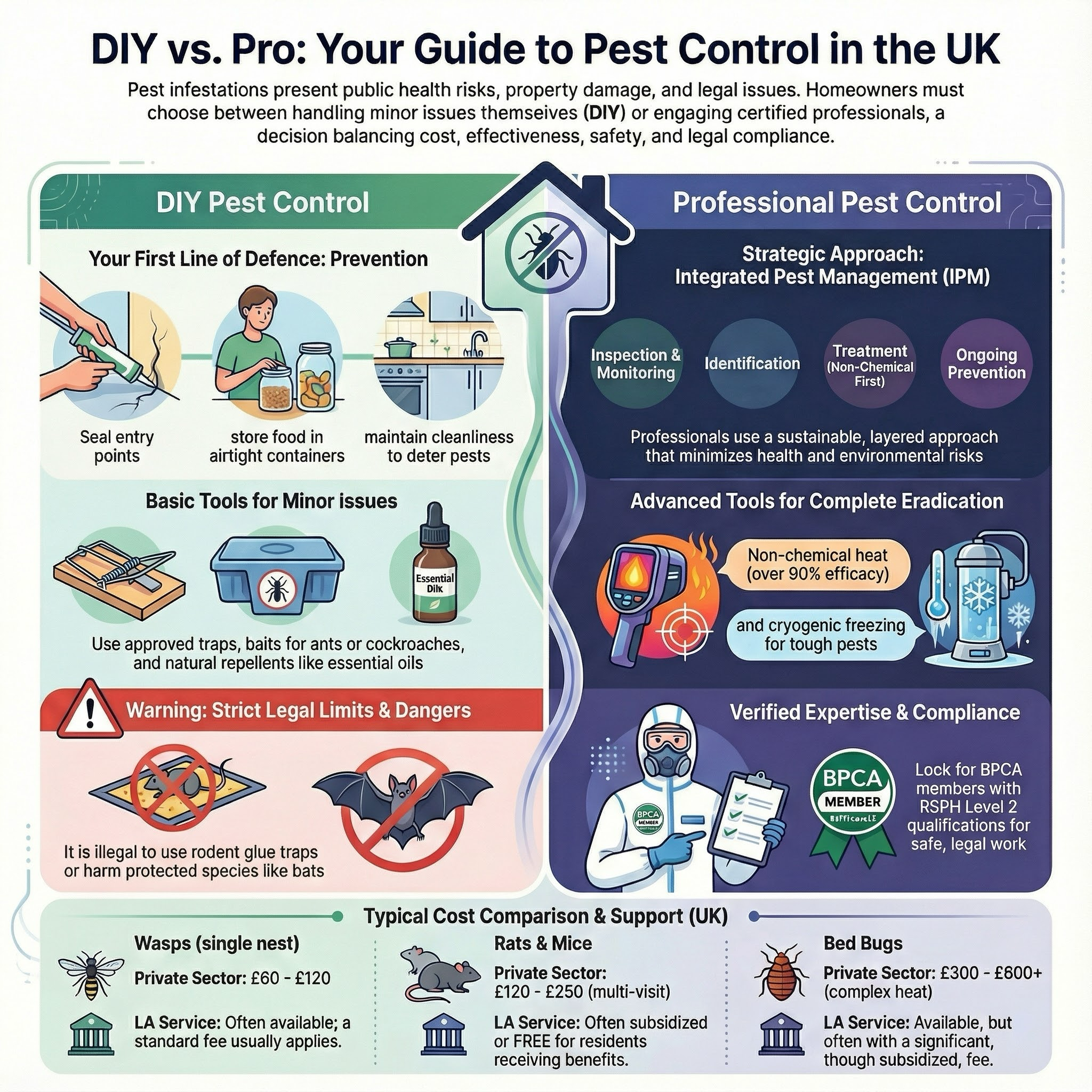
Pest Control explained
A professional flea treatment is the most effective way to break the life cycle. Professional pest controllers use industrial-grade insecticides and growth regulators that are far more potent than supermarket "foggers," ensuring your home returns to being a safe, bite-free environment.
| Item | Low £ | High £ | Notes |
|---|---|---|---|
| Standard 2-3 Bed House (Single Treatment) | £150 | £280 | Includes all materials and labour. |
| Large Detached / 5+ Bedrooms | £300 | £550 | Reflects increased chemical usage and time. |
| Follow-up Visit | £80 | £150 | Often discounted if booked as a package. |
| Emergency / Same-Day Call-out | £70 | £130 | Additional fee on top of treatment costs. |
Prices vary based on your location in the UK, with London and the South East typically seeing rates 20-30% higher than the national average. The severity of the infestation and the amount of furniture that needs moving will also impact the final quote.
While DIY sprays and powders are widely available, they rarely solve a deep-seated infestation. Most "off-the-shelf" products only kill adult fleas, leaving eggs and pupae untouched in the carpet pile.
Professional pest controllers have access to professional-use-only chemicals that include IGRs (Insect Growth Regulators). These are essential for breaking the reproductive cycle and ensuring the problem doesn't return in three weeks.
In the UK, using professional services ensures compliance with COSHH (Control of Substances Hazardous to Health) regulations, protecting your family and pets from improper chemical exposure.
Questions to ask:
Yes, provided you follow the technician's instructions. Pets must be removed during the spray and can only return once the surfaces are completely dry, usually after 4-5 hours. Fish tanks must be sealed or moved, as many insecticides are toxic to aquatic life.
This is actually a sign the treatment is working. The chemicals often stimulate the pupae to hatch. Once they emerge and hop onto the treated carpet, they will ingest the insecticide and die shortly after.
It is highly recommended to wash pet bedding, curtains, and any floor-length fabrics on a 60°C cycle. This heat kills fleas at all life stages, including the hard-to-kill eggs.
Yes. While they prefer carpets, flea larvae often hide in the cracks between floorboards or under skirting boards. A professional will treat these gaps specifically.
In most standard UK infestations, one thorough professional treatment is enough. However, in heavy infestations or homes with many pets, a second "booster" treatment 14 days later may be required to catch any late-hatching pupae.
This guide was written with AI assistance and is intended for general information only. Prices are estimates based on UK averages and may vary by region. Always get at least three quotes and consult a qualified professional before starting any work.
Ask follow-ups in plain English. The AI explains options, sequencing and what to ask the pest control — so you walk in informed.
Discovering a rat problem in your UK home is more than just an unpleasant surprise; it is a genuine risk to your property’s integrity and your family’s health. ...
READ GUIDE →GuideA fly infestation in a UK home is more than just a seasonal nuisance; it is a significant hygiene risk. Flies are known carriers of bacteria such as Salmonella ...
READ GUIDE →GuideDiscovering signs of rats in your home is more than just a nuisance; it is a significant health and safety risk. Rats can gnaw through electrical cables, damage...
READ GUIDE →GuideGrey squirrels are more than just a garden nuisance; they are a significant threat to the structural integrity and safety of UK homes. Once they gain access to ...
READ GUIDE →GuideDomestic Pest and Vermin Control Guide Scope of Works Inspect lofts, sub‑floors, kitchens and exterior for signs, entry points and species identification . Prod...
READ GUIDE →GuideFinding maggots in your home is a distressing experience for any UK homeowner. These larvae, typically from houseflies or blowflies, are not just unsightly; the...
READ GUIDE →