Instant
01 · Ask
Ask the AI a follow-up
Got more questions about fly control? Describe the bit you're unsure about — the AI explains options, sequencing and what to ask the pest control.

House fly or cluster fly infestation — treated with residual spray and entry-point sealing.
You've read the brief on fly control. Now lean on us to find the right pest control — and stay in control of the job.
Got more questions about fly control? Describe the bit you're unsure about — the AI explains options, sequencing and what to ask the pest control.
Costs, timelines, pitfalls and the right questions to ask before any pest control starts on fly control.
Itemised quotes from up to 3 local pest controls on fly control — so you can compare like-for-like, not lump sums.
Ready when you are
Enter your postcode and get free quotes from local pros.
Four moves that separate a smooth job from a nightmare.
Killing adult flies without finding the dead rodent or blocked drain where they are breeding.
Using house fly traps for cluster flies, which require entirely different entry-point management.
Failing to cover food or kitchenware before treatment, leading to chemical contamination.
Cluster flies often return to the same loft every year; failing to seal the eaves will lead to a repeat infestation.
Indicative UK ranges and what affects price.
By job type
Quote spread is typically ± 18% — always get 3 quotes.
Pest Control quick-view
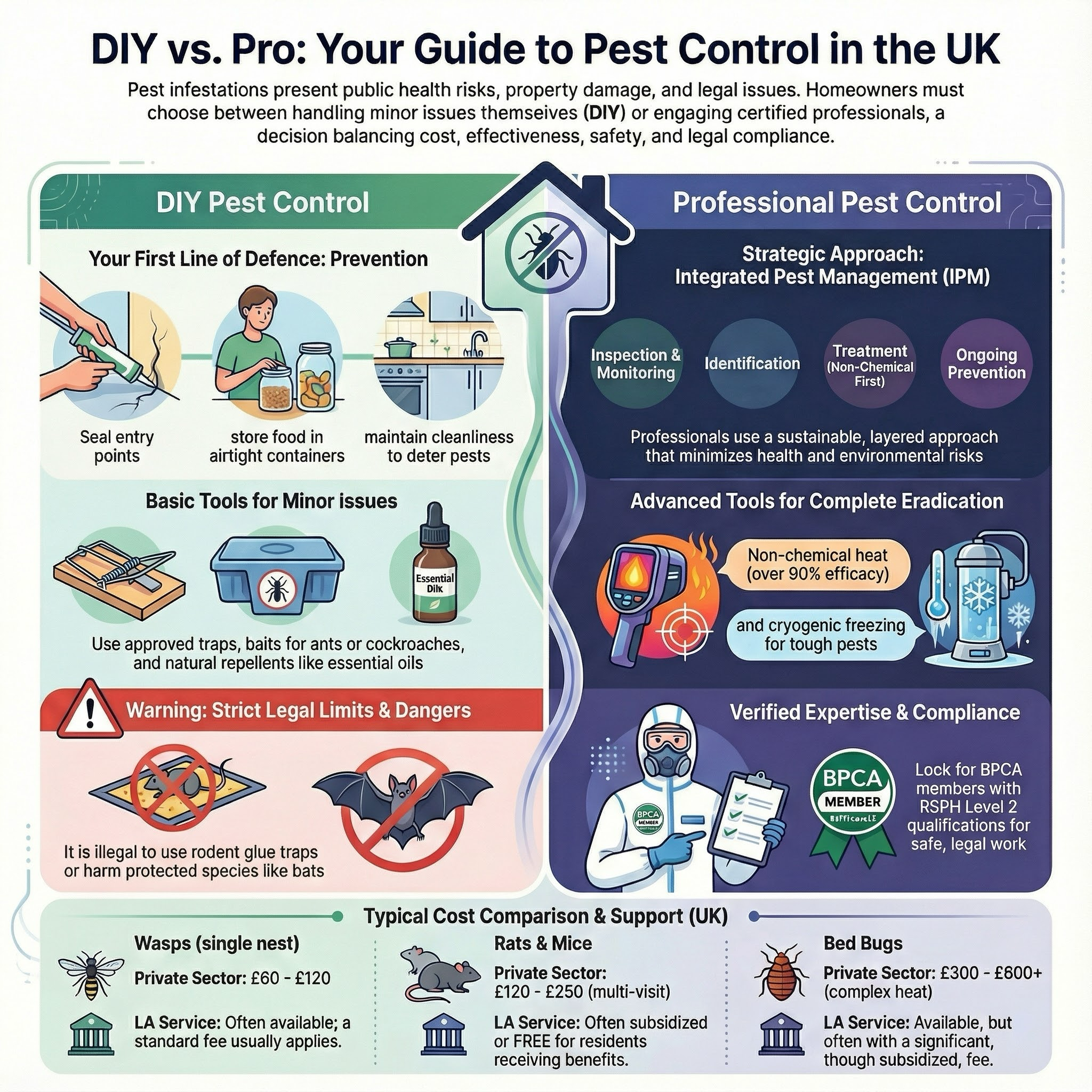
Pest Control explained
While a single fly is easily managed, a recurring or sudden swarm usually indicates a deeper issue, such as a localized breeding site or a seasonal cluster fly invasion. Professional fly control focuses on identifying the specific species and eliminating the source to prevent future outbreaks.
Prices for fly control vary based on the severity of the infestation and the size of the property. Most domestic call-outs include an initial survey and a primary treatment phase.
| Item | Low £ | High £ | Notes |
|---|---|---|---|
| Initial Survey / Call-out | £60 | £120 | Often deducted from treatment total. |
| Standard Domestic Treatment | £120 | £250 | Single visit for common house flies. |
| Cluster Fly Loft Treatment | £150 | £350 | Fogging/smoke generators for large lofts. |
| Electronic Fly Killer (EFK) | £80 | £400 | Supply and installation of professional units. |
| Proofing Works (per window/door) | £45 | £150 | Installation of bespoke mesh or screens. |
Factors affecting the final bill include the height of the property (if scaffolding is needed for loft access), the volume of insecticide required, and whether a follow-up visit is necessary to break the breeding cycle.
Small numbers of flies can usually be managed with shop-bought sprays and improved bin hygiene. However, if you are seeing "spikes" in numbers or finding maggots, a professional is required to handle the hazardous waste or apply restricted-use chemicals.
Professional pest controllers have access to residual insecticides that remain active on surfaces for weeks, something standard supermarket aerosols cannot achieve.
In the UK, using professional-grade biocides requires specific training. If the infestation is in a food preparation area, professional intervention is often a legal necessity for landlords or business owners to comply with health and safety standards.
Most modern insecticides are safe for mammals once dry. However, fish and reptiles are highly sensitive to these chemicals. You must inform your technician if you have an aquarium or vivarium so they can use alternative methods or ensure the area is sealed.
These are likely Cluster flies. They enter lofts and wall cavities in autumn to hibernate. On sunny winter days or when the heating is turned up, they "wake up" and find their way into living spaces through light fittings and skirting boards.
For standard spray treatments, you usually only need to stay out of the room until the spray has dried (about 1-2 hours). For fogging or misting, you may need to vacate the entire property for 4–6 hours to allow the air to clear.
They are effective for killing adult flies, but "zapping" units can cause insect fragments to explode into the air. In kitchens, glue-board units are preferred as they catch the fly whole, preventing food contamination.
If the infestation is caused by a structural defect (e.g., a broken drain or dampness), it is typically the landlord's responsibility. If it is caused by poor housekeeping or waste management by the tenant, the tenant usually covers the cost.
This guide was written with AI assistance and is intended for general information only. Prices are estimates based on UK averages and may vary by region. Always get at least three quotes and consult a qualified professional before starting any work.
Ask follow-ups in plain English. The AI explains options, sequencing and what to ask the pest control — so you walk in informed.
Discovering a rat problem in your UK home is more than just an unpleasant surprise; it is a genuine risk to your property’s integrity and your family’s health. ...
READ GUIDE →GuideA fly infestation in a UK home is more than just a seasonal nuisance; it is a significant hygiene risk. Flies are known carriers of bacteria such as Salmonella ...
READ GUIDE →GuideDiscovering signs of rats in your home is more than just a nuisance; it is a significant health and safety risk. Rats can gnaw through electrical cables, damage...
READ GUIDE →GuideGrey squirrels are more than just a garden nuisance; they are a significant threat to the structural integrity and safety of UK homes. Once they gain access to ...
READ GUIDE →GuideDomestic Pest and Vermin Control Guide Scope of Works Inspect lofts, sub‑floors, kitchens and exterior for signs, entry points and species identification . Prod...
READ GUIDE →GuideFinding maggots in your home is a distressing experience for any UK homeowner. These larvae, typically from houseflies or blowflies, are not just unsightly; the...
READ GUIDE →