Instant
01 · Ask
Which pest, how long?
Wasps, rats, fleas, bed bugs — different chemicals, different protocols. Describe the problem and the AI tells you scope.

What moth treatment costs in 2026 — by species (clothes vs pantry) and extent.
Read the brief on BPCA registration, treatment plans and proofing — then let Three local controllers quote.
Wasps, rats, fleas, bed bugs — different chemicals, different protocols. Describe the problem and the AI tells you scope.
Approved chemicals, visit counts, proofing requirements, pet-safe alternatives. Know what's being applied.
Three local controllers quote on the same problem — visits, chemicals, guarantee — so you don't get re-infested.
Ready when you are
Enter your postcode and get free quotes from local pros.
Four moves that separate a smooth job from a nightmare.
BPCA (British Pest Control Association) registration means trained, certified and insured. Anyone using poisons or traps without BPCA training is risky.
Multi-visit treatments (rats, fleas, woodworm) need a documented plan: what's applied, where, when to expect results, when to re-treat.
Killing pests without sealing entry just creates a vacancy. Insist on proofing (block holes, gaps, vents) as part of the treatment — not an extra.
Tell the controller about pets and small children before they treat. Some chemicals require evacuation hours; some are pet-safe alternatives.
Indicative UK ranges and what affects price.
By job type
Quote spread is typically ± 18% — always get 3 quotes.
Pest Control quick-view
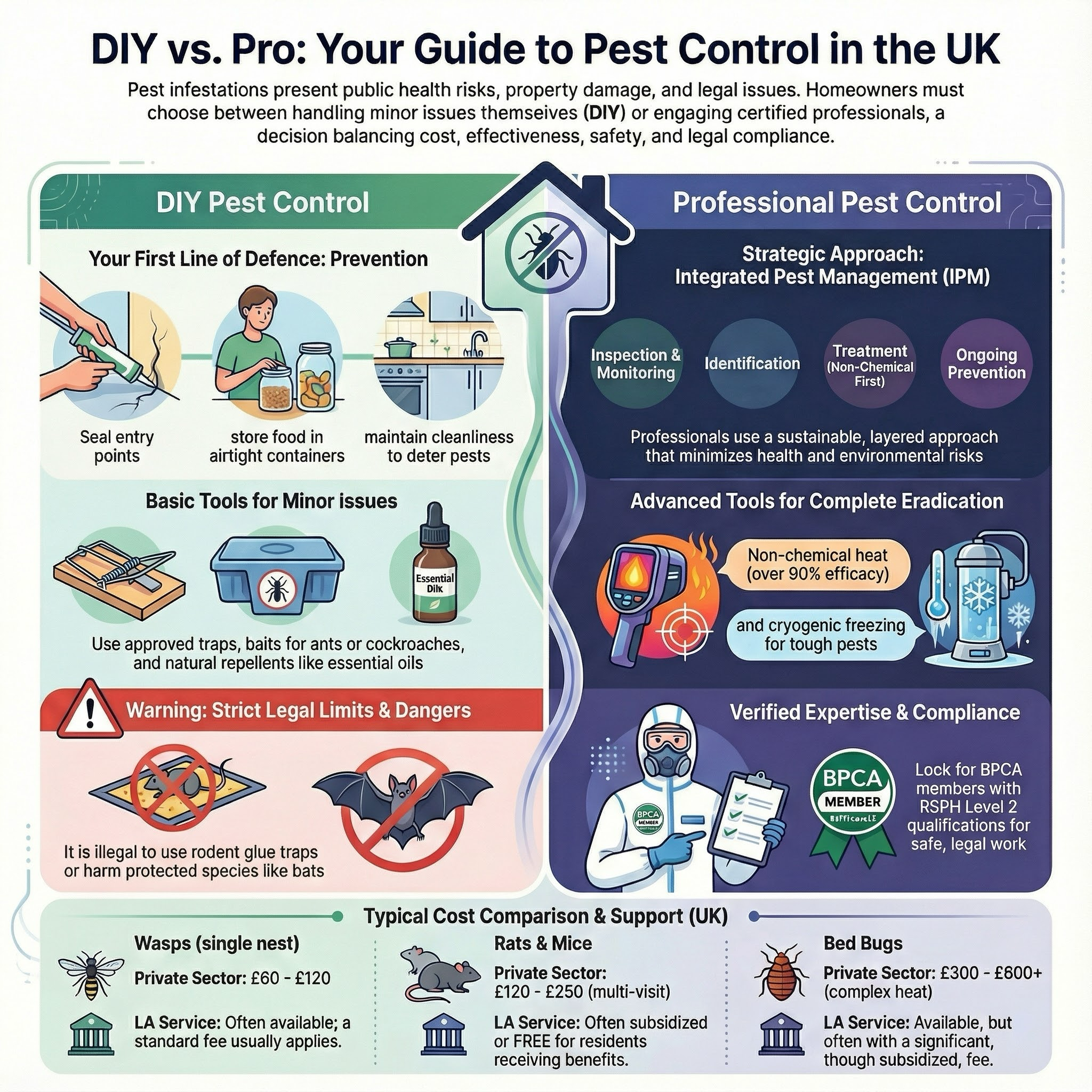
Pest Control explained
Treating an established moth infestation in a UK home typically costs £250–£700, depending on property size and infestation severity. Most cases need 2-3 professional visits over 6-12 weeks because moth life cycles run from egg through larva to adult over weeks-months — single treatments often leave eggs that hatch later.
The most damaging UK moth species is the common clothes moth (Tineola bisselliella). Combined with the case-bearing clothes moth and brown house moth, these account for nearly all UK clothing and carpet damage.
| Treatment scope | Typical cost |
|---|---|
| Single bedroom + adjacent | £200–£400 |
| Whole 1-bed flat | £250–£450 |
| Whole 3-bed home | £350–£700 |
| Larger / heritage property | £500–£1,200+ |
| Heat treatment (single room) | £200–£500 |
| Heat treatment (whole property) | £800–£2,500 |
| Pheromone monitoring (annual) | £100–£250 |
| Annual contract (whole property) | £200–£500 |
Moth life cycle:
Standard insecticides kill larvae and adults but not all eggs. Eggs that survive hatch into new larvae weeks later. A 2-3 visit programme over 6-8 weeks ensures repeated treatment hits each emerging hatch.
Modern residual insecticides have safe re-entry times of 2-8 hours typical. Confirm with technician. Heat treatment requires people and pets out of treated area for 6-12 hours.
Adult moths typically gone within 2-4 weeks. Damage stops within similar timeframe (after larvae killed). Full confirmation that infestation is eliminated typically 8-12 weeks after final treatment.
Heavily damaged items typically yes. Lightly damaged or sound items can be saved with hot wash, freezing, or dry cleaning. Don't reintroduce items to a treated area without confirming they're moth-free.
For complete elimination in a single visit, yes — heat kills all life stages instantly. For ongoing prevention with monitoring, insecticide treatment combined with pheromone traps is usually more economical. Your specialist will advise on best approach for your situation.
Hot wash all woollens before storing. Store in sealed plastic containers. Vacuum monthly behind furniture. Annual pest control inspection. Inspect any second-hand or inherited textiles before bringing into home.
Most reputable pest controllers offer a guarantee period (typically 30-90 days). If moths return within this window, free re-treatment is standard. Outside the window, additional treatment is chargeable.
Want a local pro to handle this? A BPCA-member pest control specialist with moth experience handles the multi-visit programme and advises on prevention. The £350-£700 spend is usually less than the value of textiles saved from continued damage.
This guide was written with AI assistance and is intended for general information only. Prices are estimates based on UK averages and may vary by region. Always get at least three quotes and consult a qualified professional before starting any work.
Ask follow-ups in plain English. The AI explains options, sequencing and what to ask the pest control — so you walk in informed.
Discovering a rat problem in your UK home is more than just an unpleasant surprise; it is a genuine risk to your property’s integrity and your family’s health. ...
READ GUIDE →GuideA fly infestation in a UK home is more than just a seasonal nuisance; it is a significant hygiene risk. Flies are known carriers of bacteria such as Salmonella ...
READ GUIDE →GuideDiscovering signs of rats in your home is more than just a nuisance; it is a significant health and safety risk. Rats can gnaw through electrical cables, damage...
READ GUIDE →GuideGrey squirrels are more than just a garden nuisance; they are a significant threat to the structural integrity and safety of UK homes. Once they gain access to ...
READ GUIDE →GuideDomestic Pest and Vermin Control Guide Scope of Works Inspect lofts, sub‑floors, kitchens and exterior for signs, entry points and species identification . Prod...
READ GUIDE →GuideFinding maggots in your home is a distressing experience for any UK homeowner. These larvae, typically from houseflies or blowflies, are not just unsightly; the...
READ GUIDE →