Instant
01 · Ask
Ask the AI a follow-up
Got more questions about mouse control? Describe the bit you're unsure about — the AI explains options, sequencing and what to ask the pest control.

Bait stations, traps and entry-point sealing — by a BPCA-registered pest controller.
You've read the brief on mouse control. Now lean on us to find the right pest control — and stay in control of the job.
Got more questions about mouse control? Describe the bit you're unsure about — the AI explains options, sequencing and what to ask the pest control.
Costs, timelines, pitfalls and the right questions to ask before any pest control starts on mouse control.
Itemised quotes from up to 3 local pest controls on mouse control — so you can compare like-for-like, not lump sums.
Ready when you are
Enter your postcode and get free quotes from local pros.
Four moves that separate a smooth job from a nightmare.
Killing the current mice without sealing the holes simply leaves the door open for the next family to move in.
Mice are naturally "neophobic" (afraid of new things); if traps are moved or handled too much, mice will avoid them.
Poorly placed traps or bait can lead to accidental poisoning of domestic pets or local wildlife.
Stopping the process as soon as the scratching noises stop, rather than waiting for the technician to confirm the colony is gone.
Indicative UK ranges and what affects price.
By job type
Quote spread is typically ± 18% — always get 3 quotes.
Pest Control quick-view
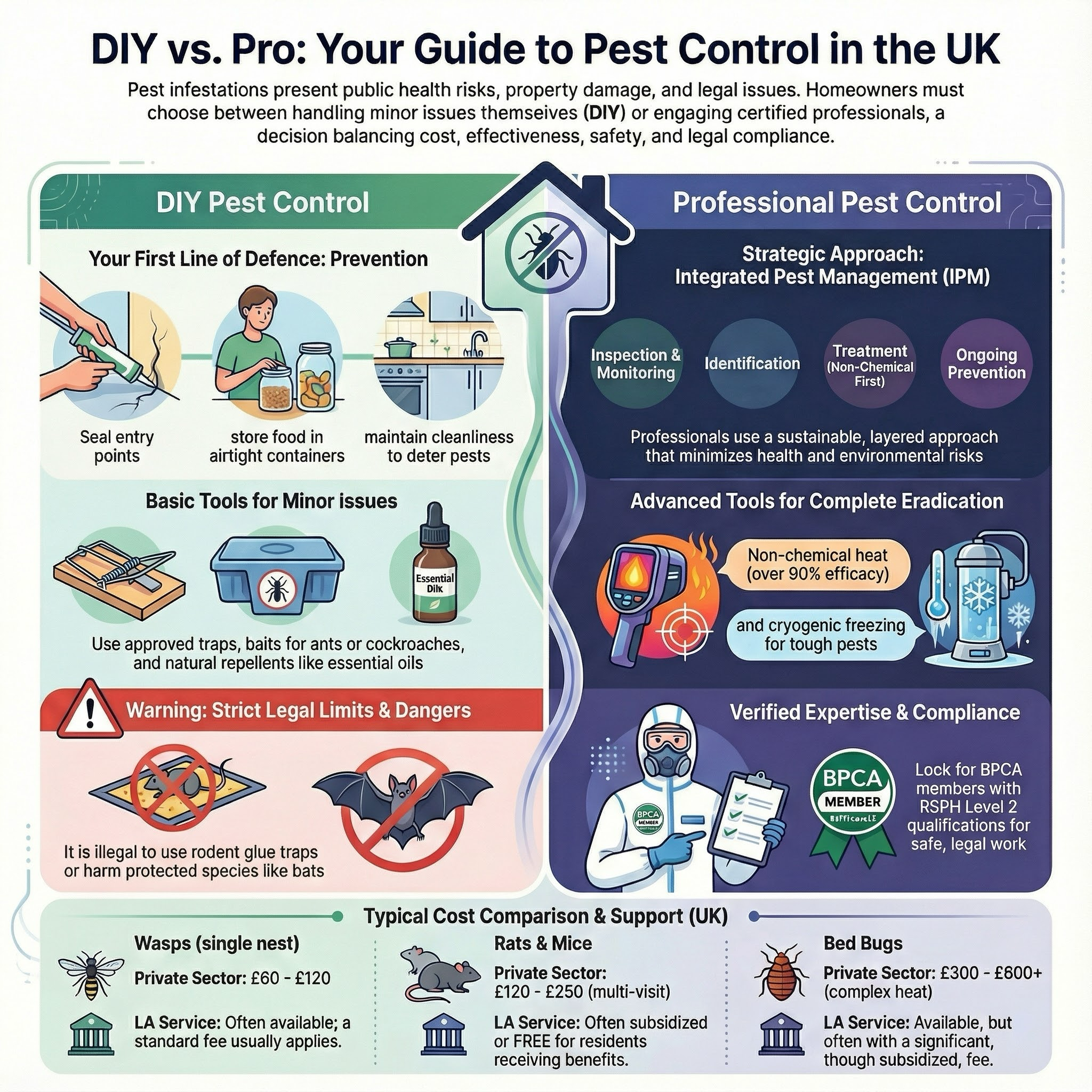
Pest Control explained
Professional mouse control focuses on three pillars: identification, eradication, and prevention. By hiring a qualified technician, you ensure that the root cause of the problem is addressed through professional-grade treatments and structural proofing that keeps your home secure for the long term.
| Item | Low £ | High £ | Notes |
|---|---|---|---|
| Initial Inspection & First Treatment | £90 | £150 | Includes survey and setup of traps/bait. |
| Follow-up Visits (per visit) | £60 | £95 | Usually 1-2 visits required after initial setup. |
| Basic Proofing (Minor gaps) | £40 | £120 | Sealing air bricks and pipe entries. |
| Full Residential Package | £180 | £450 | Typical cost for a 3-visit treatment plan inc. VAT. |
| Emergency Call-out | £120 | £200 | Same-day or out-of-hours attendance. |
Pricing is primarily influenced by the scale of the infestation and the size of the property. A single room treatment is significantly cheaper than a large period home with multiple floor voids and complex loft spaces that require extensive proofing.
While DIY traps and baits are available at hardware stores, they are often insufficient for established infestations. Professional technicians have access to restricted-use rodenticides that are more effective and are trained to spot entry points that homeowners often miss.
In the UK, the use of rodenticides is strictly governed. Professionals must follow the CRRU (Campaign for Responsible Rodenticide Use) code of practice to protect non-target wildlife like owls and pet cats.
There is no scientific evidence that peppermint oil or ultrasonic devices provide long-term control. While they may temporarily startle mice, the rodents quickly habituate to the smell or sound, especially if there is a food source nearby.
No. Modern professional treatments involve secure bait stations and targeted gels that do not require you to vacate the property. Your technician will advise if any specific precautions are needed for very young children or crawling babies.
Mouse droppings are small (the size of a grain of rice) and pointed at the ends, whereas rat droppings are much larger and blunt. Mice also tend to nibble food in many different places, while rats are more likely to eat from a single source.
This is a common concern. Most modern rodenticides cause the mouse to feel unwell and seek moisture or their nest, which is often outside or in a ventilated cavity. While a small odour is possible, it usually dissipates quickly due to the small body mass of a mouse.
Yes, live-capture traps can be used, but you must check them every few hours to prevent the animal from suffering. Legally, if you catch a house mouse, you must release it far enough away that it cannot return, but be aware that many relocated mice do not survive in the wild.
Mice don't only seek out dirty homes; they seek warmth and shelter. Even the cleanest home can have an infestation if there are structural gaps or if a neighbour has an issue that is overflowing into your property.
This guide was written with AI assistance and is intended for general information only. Prices are estimates based on UK averages and may vary by region. Always get at least three quotes and consult a qualified professional before starting any work.
Ask follow-ups in plain English. The AI explains options, sequencing and what to ask the pest control — so you walk in informed.
Discovering a rat problem in your UK home is more than just an unpleasant surprise; it is a genuine risk to your property’s integrity and your family’s health. ...
READ GUIDE →GuideA fly infestation in a UK home is more than just a seasonal nuisance; it is a significant hygiene risk. Flies are known carriers of bacteria such as Salmonella ...
READ GUIDE →GuideDiscovering signs of rats in your home is more than just a nuisance; it is a significant health and safety risk. Rats can gnaw through electrical cables, damage...
READ GUIDE →GuideGrey squirrels are more than just a garden nuisance; they are a significant threat to the structural integrity and safety of UK homes. Once they gain access to ...
READ GUIDE →GuideDomestic Pest and Vermin Control Guide Scope of Works Inspect lofts, sub‑floors, kitchens and exterior for signs, entry points and species identification . Prod...
READ GUIDE →GuideFinding maggots in your home is a distressing experience for any UK homeowner. These larvae, typically from houseflies or blowflies, are not just unsightly; the...
READ GUIDE →