Instant
01 · Ask
Ask the AI a follow-up
Got more questions about mouse infestation control? Describe the bit you're unsure about — the AI explains options, sequencing and what to ask the pest control.

Full mouse infestation treatment — bait stations, multiple traps, entry-point sealing and 2-3 follow-up visits.
You've read the brief on mouse infestation control. Now lean on us to find the right pest control — and stay in control of the job.
Got more questions about mouse infestation control? Describe the bit you're unsure about — the AI explains options, sequencing and what to ask the pest control.
Costs, timelines, pitfalls and the right questions to ask before any pest control starts on mouse infestation control.
Itemised quotes from up to 3 local pest controls on mouse infestation control — so you can compare like-for-like, not lump sums.
Ready when you are
Enter your postcode and get free quotes from local pros.
Four moves that separate a smooth job from a nightmare.
If you block entry points before the mice inside are dealt with, they may die in your walls, causing a severe smell and fly infestation.
Failing to address overflowing bird feeders or compost heaps in the garden often leads to immediate re-infestation.
Using expanding foam is a common mistake; mice can chew through it in seconds. Professional steel wool or mesh is required.
Stopping the treatment as soon as the noise stops. There are often "satellite" nests that need to be addressed to prevent a comeback.
Indicative UK ranges and what affects price.
By job type
Quote spread is typically ± 18% — always get 3 quotes.
Pest Control quick-view
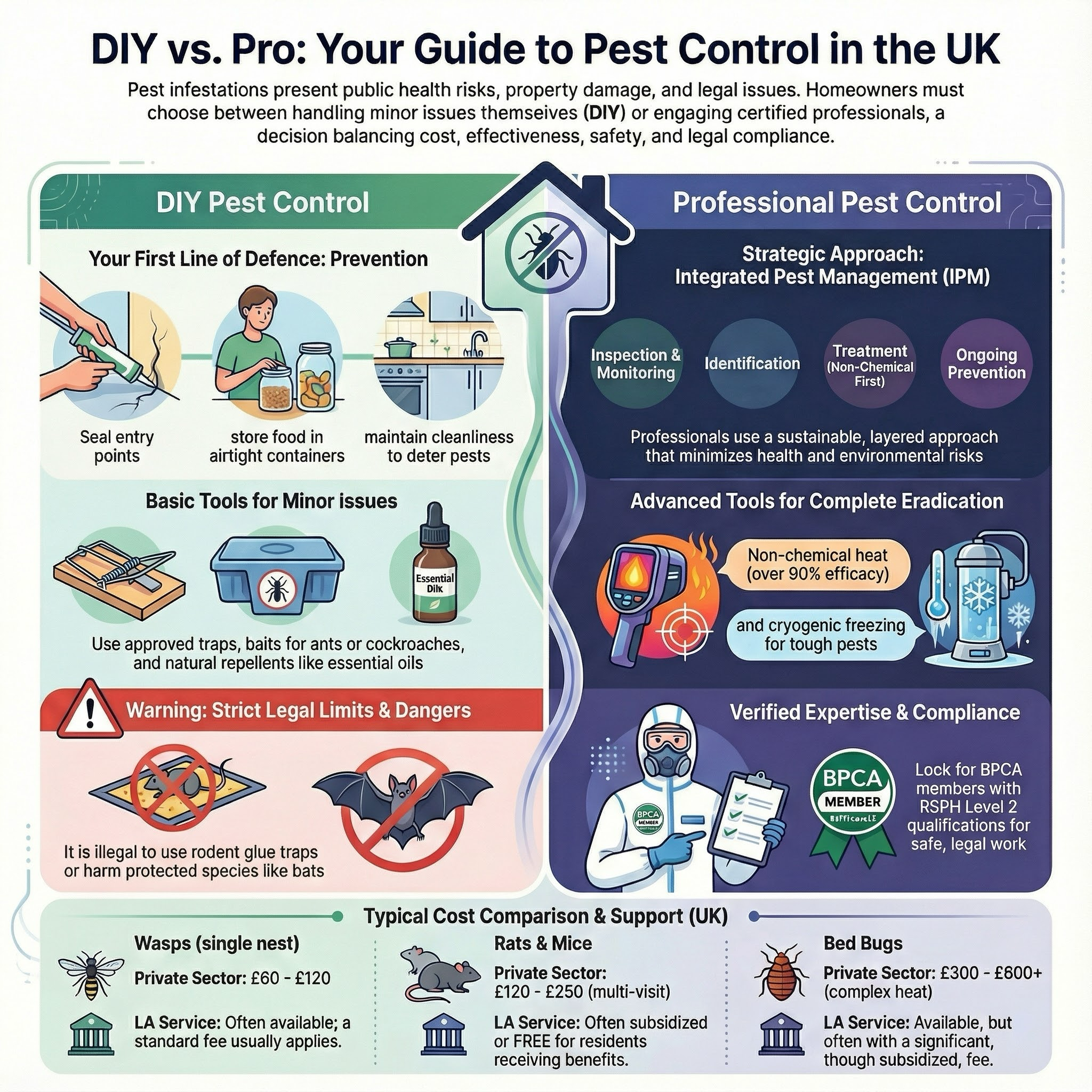
Pest Control explained
Mice are prolific breeders and can quickly overwhelm a household if not managed professionally. They carry diseases such as Salmonella and Listeria, and their constant need to gnaw can lead to damaged woodwork, ruined insulation, and even house fires caused by chewed electrical cables. Taking swift, professional action is essential to protecting your family and your investment.
The cost of mouse control in the UK varies based on the severity of the infestation and the size of your property. Most professional firms offer "treatment packs" which include the initial survey and two follow-up visits.
| Item | Low £ | High £ | Notes |
|---|---|---|---|
| Standard 3-Visit Treatment | £180 | £350 | Includes survey, baiting/trapping, and 2 follow-ups. |
| Emergency Call-Out | £90 | £160 | Same-day service or out-of-hours attendance. |
| Basic Proofing Works | £60 | £250 | Sealing small gaps and airbricks with mesh. |
| Carcass Removal & Decontamination | £50 | £120 | Per visit for cleaning and odour neutralisation. |
| Large Property/Commercial | £450 | £800+ | Multiple baiting points across large acreage or outbuildings. |
Prices are influenced by your location (London and the SE are typically 20% higher), the accessibility of your loft or cellar, and whether structural repairs are needed to block entry points. Always check if VAT is included in the initial quote.
While DIY traps and baits are available in hardware stores, they are often less effective than professional-grade products. Amateur baiting frequently leads to "bait shyness" or, worse, the secondary poisoning of local wildlife and pets if not handled correctly. UK law regarding rodenticide use (CRRU guidelines) is strict; professionals are trained to use these chemicals safely and legally. If you have more than one or two sightings, or if you hear noises in the walls, a professional is required to find the root cause and ensure the mice don't simply return a month later.
Pest control is governed by several pieces of legislation to ensure safety and environmental protection. Your tradesperson must comply with the Control of Pesticides Regulations 1986 and the Wildlife and Countryside Act 1981. You should expect a "Treatment Report" after each visit, detailing the chemicals used, their locations, and any safety precautions you need to take. If the work involves significant waste removal, they should have a Waste Carrier's Licence from the Environment Agency.
Professionals use tamper-resistant bait stations that are locked and secured, preventing pets from reaching the poison. However, you should always discuss the location of these stations with your technician, especially if you have "chewer" breeds or curious puppies.
While modern rodenticides are designed to dehydrate the mouse (which can reduce odour), there is always a small risk of a smell if a mouse dies in an inaccessible area. Professionals try to mitigate this by using traps in sensitive areas where carcasses can be easily removed.
There is little scientific evidence that ultrasonic devices provide long-term control. Mice are highly adaptable and usually become accustomed to the sound within a few days, or simply move to a different part of the house where the sound doesn't reach.
Common entry points include gaps around waste pipes, broken airbricks, under-door gaps, and even climbing up ivy or rough brickwork to enter via the roofline. They only need a gap the size of a ballpoint pen to squeeze through.
It is best to wait until the technician has performed their initial survey, as the location and freshness of droppings provide vital clues about their nesting habits. When you do clean, always wear a mask and gloves, and use a disinfectant rather than a vacuum, which can kick up dust and pathogens.
This guide was written with AI assistance and is intended for general information only. Prices are estimates based on UK averages and may vary by region. Always get at least three quotes and consult a qualified professional before starting any work.
Ask follow-ups in plain English. The AI explains options, sequencing and what to ask the pest control — so you walk in informed.
Discovering a rat problem in your UK home is more than just an unpleasant surprise; it is a genuine risk to your property’s integrity and your family’s health. ...
READ GUIDE →GuideA fly infestation in a UK home is more than just a seasonal nuisance; it is a significant hygiene risk. Flies are known carriers of bacteria such as Salmonella ...
READ GUIDE →GuideDiscovering signs of rats in your home is more than just a nuisance; it is a significant health and safety risk. Rats can gnaw through electrical cables, damage...
READ GUIDE →GuideGrey squirrels are more than just a garden nuisance; they are a significant threat to the structural integrity and safety of UK homes. Once they gain access to ...
READ GUIDE →GuideDomestic Pest and Vermin Control Guide Scope of Works Inspect lofts, sub‑floors, kitchens and exterior for signs, entry points and species identification . Prod...
READ GUIDE →GuideFinding maggots in your home is a distressing experience for any UK homeowner. These larvae, typically from houseflies or blowflies, are not just unsightly; the...
READ GUIDE →