Instant
01 · Ask
Ask the AI a follow-up
Got more questions about mouse inspection? Describe the bit you're unsure about — the AI explains options, sequencing and what to ask the pest control.

Pre-purchase or active-infestation mouse inspection — written report identifies activity, entry points and treatment plan.
You've read the brief on mouse inspection. Now lean on us to find the right pest control — and stay in control of the job.
Got more questions about mouse inspection? Describe the bit you're unsure about — the AI explains options, sequencing and what to ask the pest control.
Costs, timelines, pitfalls and the right questions to ask before any pest control starts on mouse inspection.
Itemised quotes from up to 3 local pest controls on mouse inspection — so you can compare like-for-like, not lump sums.
Ready when you are
Enter your postcode and get free quotes from local pros.
Four moves that separate a smooth job from a nightmare.
If the loft hatch is blocked or floorboards can't be lifted, the inspection is incomplete. Clear these areas before the tradie arrives.
Putting down traps without sealing entry points (proofing) results in a "revolving door" infestation.
Mice often chew through plastic plumbing pipes (Speedfit); an inspection should check for signs of slow leaks caused by gnawing.
In UK terraces, mice often travel through the "party wall" or shared roof voids, meaning your house may be clean but still vulnerable.
Indicative UK ranges and what affects price.
By job type
Quote spread is typically ± 18% — always get 3 quotes.
Pest Control quick-view
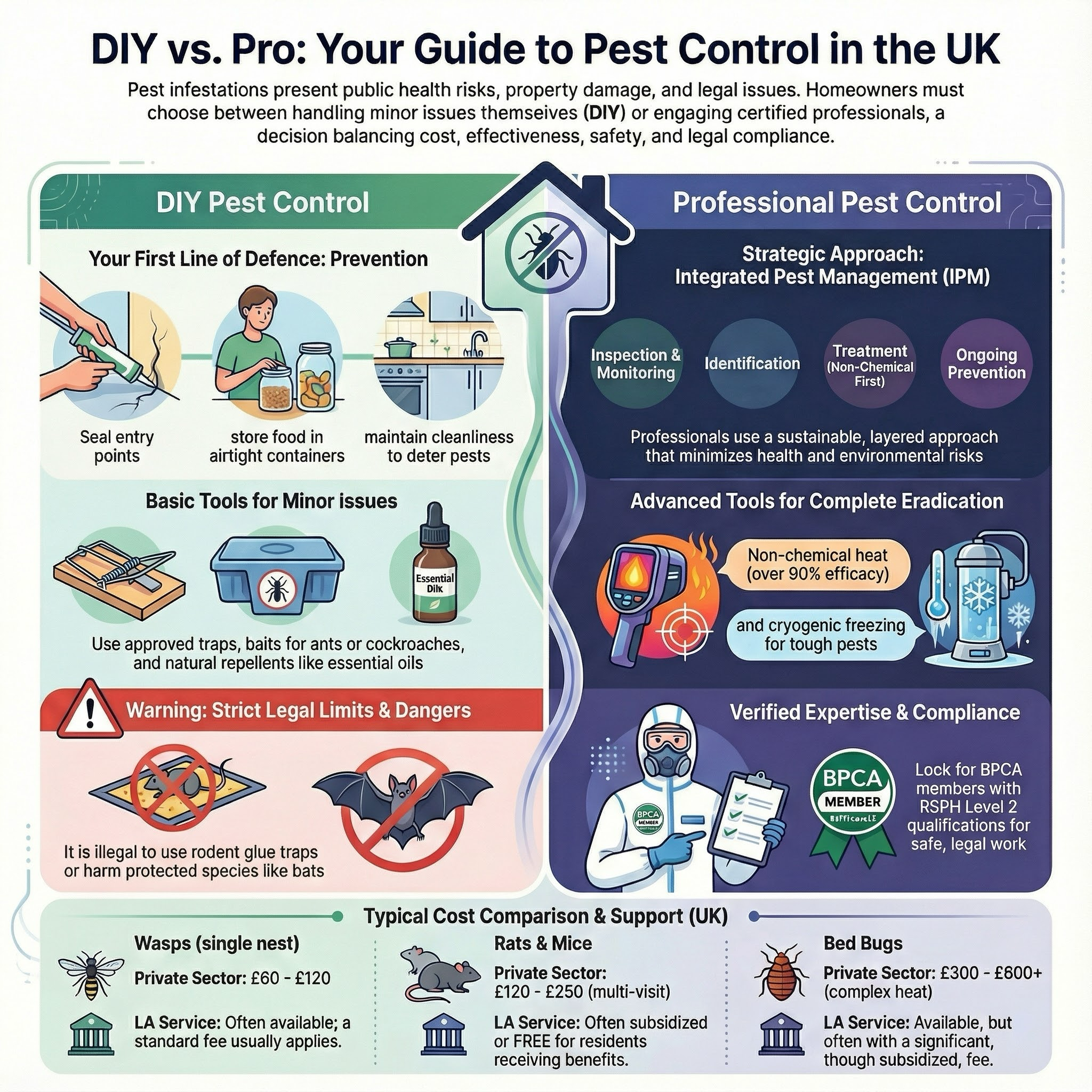
Pest Control explained
Whether you have heard scratching in the loft or found droppings in the kitchen, a formal inspection provides a clear roadmap for eradication and long-term proofing. In the UK’s terraced and semi-detached housing stock, mice often move between properties, making a professional assessment vital to stop the cycle.
Prices for a mouse inspection vary based on your location in the UK and the size of the property. Most pest control companies charge a fixed fee for the initial survey, which may be deducted from the total cost if you proceed with a full treatment plan.
| Item | Low £ | High £ | Notes |
|---|---|---|---|
| Standard Inspection Visit | £80 | £150 | Includes 1 hour on-site and full report. |
| Emergency/Out-of-Hours | £120 | £220 | Evening or weekend call-outs. |
| Monitoring Materials | £15 | £50 | Non-toxic indicators and bait stations. |
| Minor Proofing (while on site) | £40 | £100 | Sealing 1-2 small gaps with wire wool/mesh. |
| Total Average Project | £120 | £260 | Typical cost for inspection + basic monitoring. |
Costs are generally higher in London and the South East. If the inspection reveals a heavy infestation requiring specialist "deep cleaning" or loft insulation removal due to contamination, these services are quoted separately.
While you can buy traps at a hardware store, DIY efforts often fail because they treat the symptom rather than the cause. Mice can squeeze through gaps as small as 6mm (the width of a pencil); a professional has the training to spot these obscured entry points that homeowners often miss.
Professional pest controllers have access to higher-grade monitoring equipment and legal rodenticides not available to the general public.
If you live in a flat or a terraced house, a professional is essential to determine if the mice are coming from a neighbouring property, which may require a coordinated approach or landlord intervention.
No. A standard inspection is non-invasive and does not involve the "fogging" or spraying of heavy chemicals. You can stay in the property while the technician works.
Yes. Mice are nocturnal and secretive; seeing one during the day often suggests a larger population is already established nearby. Early detection is much cheaper than a full-scale removal.
Professional technicians use tamper-resistant bait stations that are designed to keep pets and children out. Always disclose the presence of pets before the inspection begins.
The primary goal of an inspection is assessment. While they may set traps or bait during the visit, "killing" the mice is part of the subsequent treatment phase, not the initial survey.
Proofing is the physical blocking of entry points. Most inspectors provide a quote for this after the survey, though minor gaps might be filled for a small extra charge during the visit.
This guide was written with AI assistance and is intended for general information only. Prices are estimates based on UK averages and may vary by region. Always get at least three quotes and consult a qualified professional before starting any work.
Ask follow-ups in plain English. The AI explains options, sequencing and what to ask the pest control — so you walk in informed.
Discovering a rat problem in your UK home is more than just an unpleasant surprise; it is a genuine risk to your property’s integrity and your family’s health. ...
READ GUIDE →GuideA fly infestation in a UK home is more than just a seasonal nuisance; it is a significant hygiene risk. Flies are known carriers of bacteria such as Salmonella ...
READ GUIDE →GuideDiscovering signs of rats in your home is more than just a nuisance; it is a significant health and safety risk. Rats can gnaw through electrical cables, damage...
READ GUIDE →GuideGrey squirrels are more than just a garden nuisance; they are a significant threat to the structural integrity and safety of UK homes. Once they gain access to ...
READ GUIDE →GuideDomestic Pest and Vermin Control Guide Scope of Works Inspect lofts, sub‑floors, kitchens and exterior for signs, entry points and species identification . Prod...
READ GUIDE →GuideFinding maggots in your home is a distressing experience for any UK homeowner. These larvae, typically from houseflies or blowflies, are not just unsightly; the...
READ GUIDE →