Instant
01 · Ask
Ask the AI a follow-up
Got more questions about rat control in garden? Describe the bit you're unsure about — the AI explains options, sequencing and what to ask the pest control.

Outdoor rat infestation in garden, shed or compost — bait stations and trap deployment.
You've read the brief on rat control in garden. Now lean on us to find the right pest control — and stay in control of the job.
Got more questions about rat control in garden? Describe the bit you're unsure about — the AI explains options, sequencing and what to ask the pest control.
Costs, timelines, pitfalls and the right questions to ask before any pest control starts on rat control in garden.
Itemised quotes from up to 3 local pest controls on rat control in garden — so you can compare like-for-like, not lump sums.
Ready when you are
Enter your postcode and get free quotes from local pros.
Four moves that separate a smooth job from a nightmare.
This occurs when a pet or bird of prey eats a rat that has consumed poison. Professionals mitigate this by using specific baiting patterns and frequent carcass collection.
The most common reason garden treatments fail. Rats are often more attracted to high-calorie bird seed than the bait in a trap.
Rats don't respect boundary fences. If a neighbour has a compost heap or chickens, you may need a coordinated approach to stop re-infestation.
Simply killing the current rats without sealing the holes under your shed or decking is a temporary fix; new rats will move into the "vacant" territory within weeks.
Indicative UK ranges and what affects price.
By job type
Quote spread is typically ± 18% — always get 3 quotes.
Pest Control quick-view
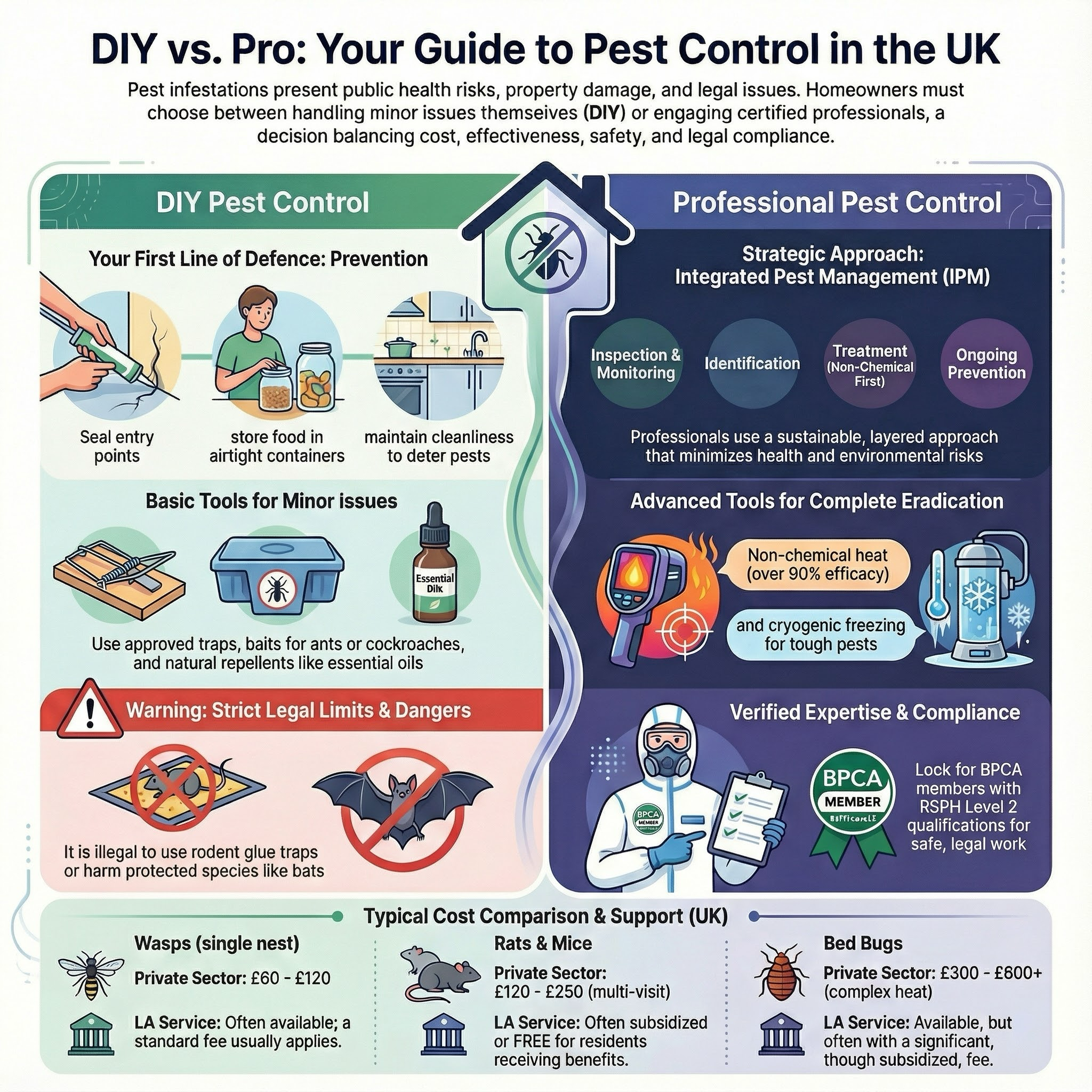
Pest Control explained
Professional rat control ensures that infestations are dealt with humanely, legally, and safely. Acting quickly is essential, as a small family of rats can balloon into a major infestation within weeks, potentially leading to rats entering your home through drainage pipes or wall cavities.
| Item | Low £ | High £ | Notes |
|---|---|---|---|
| Initial Survey & Call-out | £80 | £130 | Includes risk assessment and treatment plan. |
| Standard 3-Visit Treatment | £180 | £350 | Typical for a domestic garden infestation. |
| Emergency/Same-Day Call-out | £120 | £200 | Premium for rapid response. |
| Garden Proofing (Labour & Materials) | £100 | £500+ | Varies wildly based on shed size and fencing needs. |
| Drain Survey (CCTV) | £150 | £250 | Recommended if rats are suspected to be in the sewers. |
Prices are influenced by your location (London and the South East typically command higher rates) and the severity of the infestation. Most professional pest controllers charge for a "course of treatment" rather than a single visit, as one-off visits rarely solve a rat problem permanently.
While DIY bait and traps are available at garden centres, they are often less potent than professional-grade products. Improper use of rodenticides by homeowners can lead to "bait shyness" or, more seriously, the accidental poisoning of pets and local wildlife.
Professional pest controllers have access to restricted rodenticides and the expertise to place them where they are most effective and least dangerous.
In the UK, the use of rodenticides is strictly governed. Professionals must follow the CRRU (Campaign for Responsible Rodenticide Use) code of best practice to protect the environment. If you have a significant infestation or rats are nearing the house, professional intervention is the safest and most cost-effective route.
Questions to ask:
Professional bait stations are locked and weighted to prevent pets from accessing the rodenticide. Technicians also use "bitterants" in the bait to discourage ingestion by non-rodents, though you should always monitor pets in the garden during treatment.
There is very little scientific evidence that ultrasonic devices provide a long-term solution. Rats are highly adaptable and quickly become accustomed to the noise, especially if there is a reliable food source nearby.
While not legally required, it is highly recommended. Rats often travel across several gardens; if the source of the problem is next door, your own treatment will be much less effective without their cooperation.
Most UK councils have moved away from free pest control services. While some offer subsidised rates for residents on certain benefits, most now charge market rates or refer you to private contractors.
A professional will look for "clear takes" (where bait is no longer being eaten), a lack of fresh droppings, and the absence of new "smudge marks" or grease trails along walls and fences.
This guide was written with AI assistance and is intended for general information only. Prices are estimates based on UK averages and may vary by region. Always get at least three quotes and consult a qualified professional before starting any work.
Ask follow-ups in plain English. The AI explains options, sequencing and what to ask the pest control — so you walk in informed.
Discovering a rat problem in your UK home is more than just an unpleasant surprise; it is a genuine risk to your property’s integrity and your family’s health. ...
READ GUIDE →GuideA fly infestation in a UK home is more than just a seasonal nuisance; it is a significant hygiene risk. Flies are known carriers of bacteria such as Salmonella ...
READ GUIDE →GuideDiscovering signs of rats in your home is more than just a nuisance; it is a significant health and safety risk. Rats can gnaw through electrical cables, damage...
READ GUIDE →GuideGrey squirrels are more than just a garden nuisance; they are a significant threat to the structural integrity and safety of UK homes. Once they gain access to ...
READ GUIDE →GuideDomestic Pest and Vermin Control Guide Scope of Works Inspect lofts, sub‑floors, kitchens and exterior for signs, entry points and species identification . Prod...
READ GUIDE →GuideFinding maggots in your home is a distressing experience for any UK homeowner. These larvae, typically from houseflies or blowflies, are not just unsightly; the...
READ GUIDE →