Instant
01 · Ask
Ask the AI a follow-up
Got more questions about bag and box removal? Describe the bit you're unsure about — the AI explains options, sequencing and what to ask the rubbish clearance.

Post-move cardboard, packing waste and rubbish bags — removed off-site with waste-transfer note.
You've read the brief on bag and box removal. Now lean on us to find the right rubbish clearance — and stay in control of the job.
Got more questions about bag and box removal? Describe the bit you're unsure about — the AI explains options, sequencing and what to ask the rubbish clearance.
Costs, timelines, pitfalls and the right questions to ask before any rubbish clearance starts on bag and box removal.
Itemised quotes from up to 3 local rubbish clearances on bag and box removal — so you can compare like-for-like, not lump sums.
Ready when you are
Enter your postcode and get free quotes from local pros.
Four moves that separate a smooth job from a nightmare.
Finding tins of old paint or car batteries at the bottom of boxes. These require separate, more expensive disposal routes and can lead to mid-job price increases.
Bags that are too heavy to lift safely. Use smaller bags for heavy items like books or tiles to avoid "split bag" accidents.
If the van cannot park within 15 metres of the property, many companies will apply a "long carry" surcharge.
Mixing food waste with dry recyclables. This can lead to the entire load being rejected by the recycling centre and charged at the higher landfill rate.
Indicative UK ranges and what affects price.
By job type
Quote spread is typically ± 18% — always get 3 quotes.
Rubbish Clearance quick-view
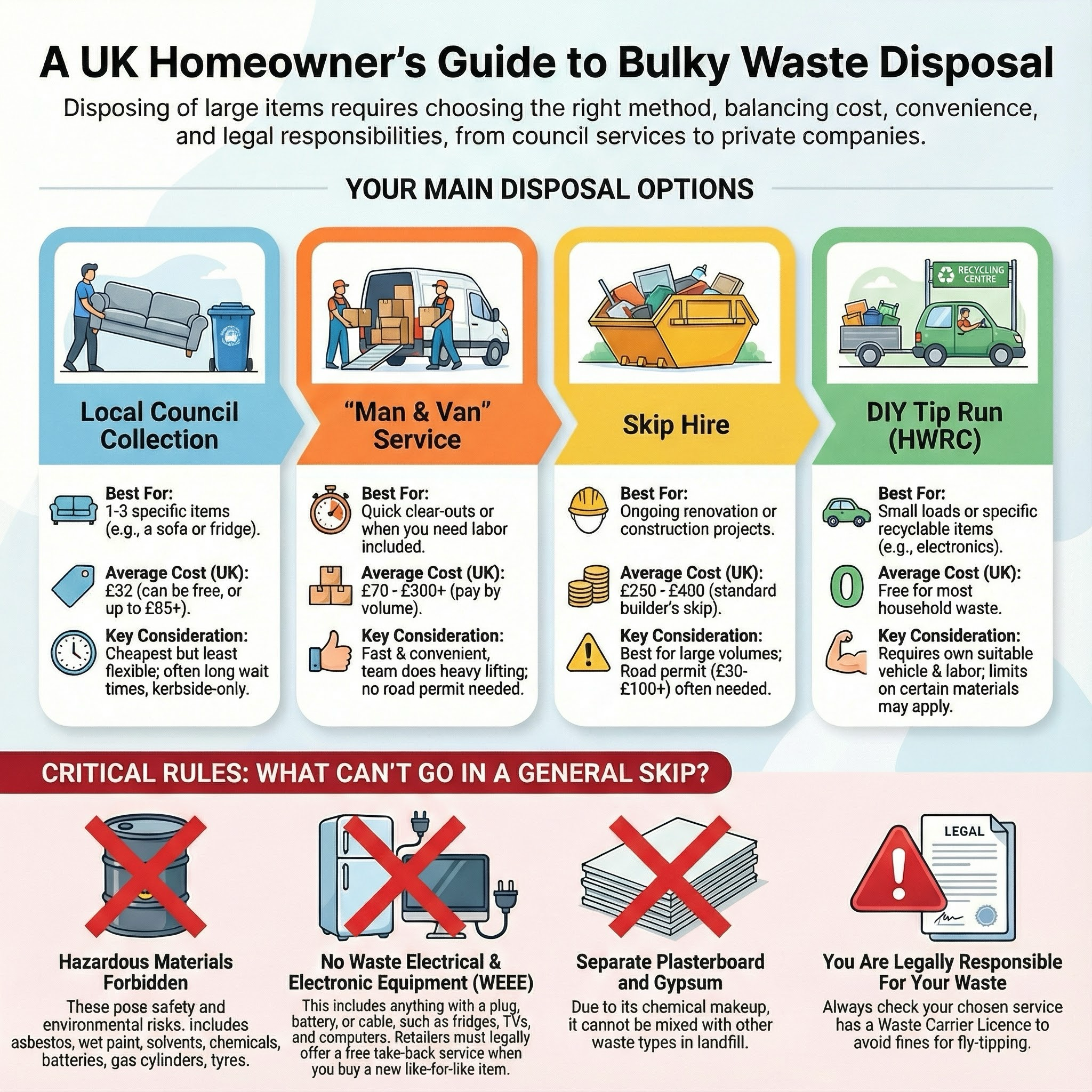
Rubbish Clearance explained
Unlike skip hire, this service includes the heavy lifting, sorting, and transport, making it a "labour-included" solution. Professional clearance teams ensure your waste is handled legally, diverted from landfill where possible, and disposed of at licensed facilities.
| Item | Low £ | High £ | Notes |
|---|---|---|---|
| Minimum Call-out Charge | £70 | £130 | Covers first 30-60 mins and small volumes. |
| Labour (per operative/hour) | £40 | £70 | Two-person teams are standard for safety. |
| Disposal Fees (per 100kg) | £25 | £55 | Based on weight and type of waste. |
| Packing Materials | £0 | £50 | If the trader provides heavy-duty bags/boxes. |
| Surcharges (Stairs/Parking) | £20 | £90 | Applicable for flats without lifts or CPZ zones. |
| Average Total Job | £150 | £450 | Most 1/4 to 1/2 van load clearances. |
Several factors influence the final quote, most notably the volume and weight of the items. "Heavy" waste, such as bags of soil or rubble, costs significantly more to dispose of than "light" waste like cardboard boxes of old clothes. Access issues, such as a lack of parking or multiple flights of stairs, will also increase the labour component of the bill.
For a few bags of general waste, a trip to the local Household Waste Recycling Centre (HWRC) is the most cost-effective route. However, many UK councils now require bookings and have strict limits on "DIY waste" or the use of vans/trailers at local tips.
Legal Warning: If you hire an unlicensed "man with a van" and they fly-tip your waste, you are legally responsible and can face unlimited fines or prosecution under the Environmental Protection Act 1990.
Hiring a professional is recommended for large volumes, heavy items, or when you require a documented audit trail for insurance or tenancy agreements. Professionals hold the necessary Waste Carrier Licence and have the insurance to cover damage to your property during the move.
The waste industry is heavily regulated in the UK to prevent fly-tipping and environmental damage. You should expect the following paperwork and standards:
As long as the waste is accessible (e.g., on a driveway or in a porch) and payment has been arranged, you don't need to be present. However, for internal removals from lofts or rooms, an adult must be on-site to provide access.
Most standard bag and box removal services exclude liquids and hazardous chemicals. These require specialist handling. Always declare these items upfront, as some traders have the specific permits required to take them for an extra fee.
A Waste Transfer Note is a legal receipt that proves you handed your waste to a licensed carrier. If your waste is later found fly-tipped, this document is your legal defence against prosecution.
For health and safety reasons, most operatives will not lift individual items over 20-25kg alone. If you have very heavy boxes, inform the trader so they can send a two-person team or specialized lifting equipment.
Many clearance companies offer a "reuse" service where they drop off quality items at local charities. Note that they may still charge for the labour and transport time, even if they don't pay disposal fees on those specific items.
This guide was written with AI assistance and is intended for general information only. Prices are estimates based on UK averages and may vary by region. Always get at least three quotes and consult a qualified professional before starting any work.
Ask follow-ups in plain English. The AI explains options, sequencing and what to ask the rubbish clearance — so you walk in informed.
Disposing of an old mattress or a bulky bed frame is one of the more challenging tasks for UK homeowners. Beyond the physical strain of navigating heavy, awkwar...
READ GUIDE →GuideManaging commercial waste is a significantly different beast compared to standard residential rubbish. Whether you are a landlord clearing a shop unit, a home-b...
READ GUIDE →GuideDisposing of an old sofa or armchair in the UK has become more complex due to recent environmental legislation. Bulky furniture is difficult to move, and many i...
READ GUIDE →GuideScrapping a car in the UK is a straightforward process, but it is governed by strict environmental and legal regulations. Whether your vehicle is a non-runner, ...
READ GUIDE →GuideAccumulating black bin bags is a common headache for UK homeowners, whether it’s due to a missed council collection, a deep spring clean, or the aftermath of a ...
READ GUIDE →GuideWhether you are decommissioning a commercial suite or simply reclaiming a spare bedroom from years of "home office" clutter, a professional office clean-out is ...
READ GUIDE →