Instant
01 · Ask
Ask the AI a follow-up
Got more questions about bulky Waste Disposal? Describe the bit you're unsure about — the AI explains options, sequencing and what to ask the rubbish clearance.

Sofa, fridge, wardrobe — single bulky-item disposal by a licensed waste carrier.
You've read the brief on bulky Waste Disposal. Now lean on us to find the right rubbish clearance — and stay in control of the job.
Got more questions about bulky Waste Disposal? Describe the bit you're unsure about — the AI explains options, sequencing and what to ask the rubbish clearance.
Costs, timelines, pitfalls and the right questions to ask before any rubbish clearance starts on bulky Waste Disposal.
Itemised quotes from up to 3 local rubbish clearances on bulky Waste Disposal — so you can compare like-for-like, not lump sums.
Ready when you are
Enter your postcode and get free quotes from local pros.
Four moves that separate a smooth job from a nightmare.
Homeowners often underestimate how much space their items will take in a van. Send photos to the contractor to get a firm quote.
Narrow hallways or lack of parking can lead to surcharges. Always warn the team if they need to carry items down multiple flights of stairs.
Some firms quote a low "base price" but add significant fees for mattresses, fridges, or TVs on arrival.
Rogue traders may offer very low prices but dump the waste illegally. If the price seems too good to be true, it likely is.
Indicative UK ranges and what affects price.
By job type
Quote spread is typically ± 18% — always get 3 quotes.
Rubbish Clearance quick-view
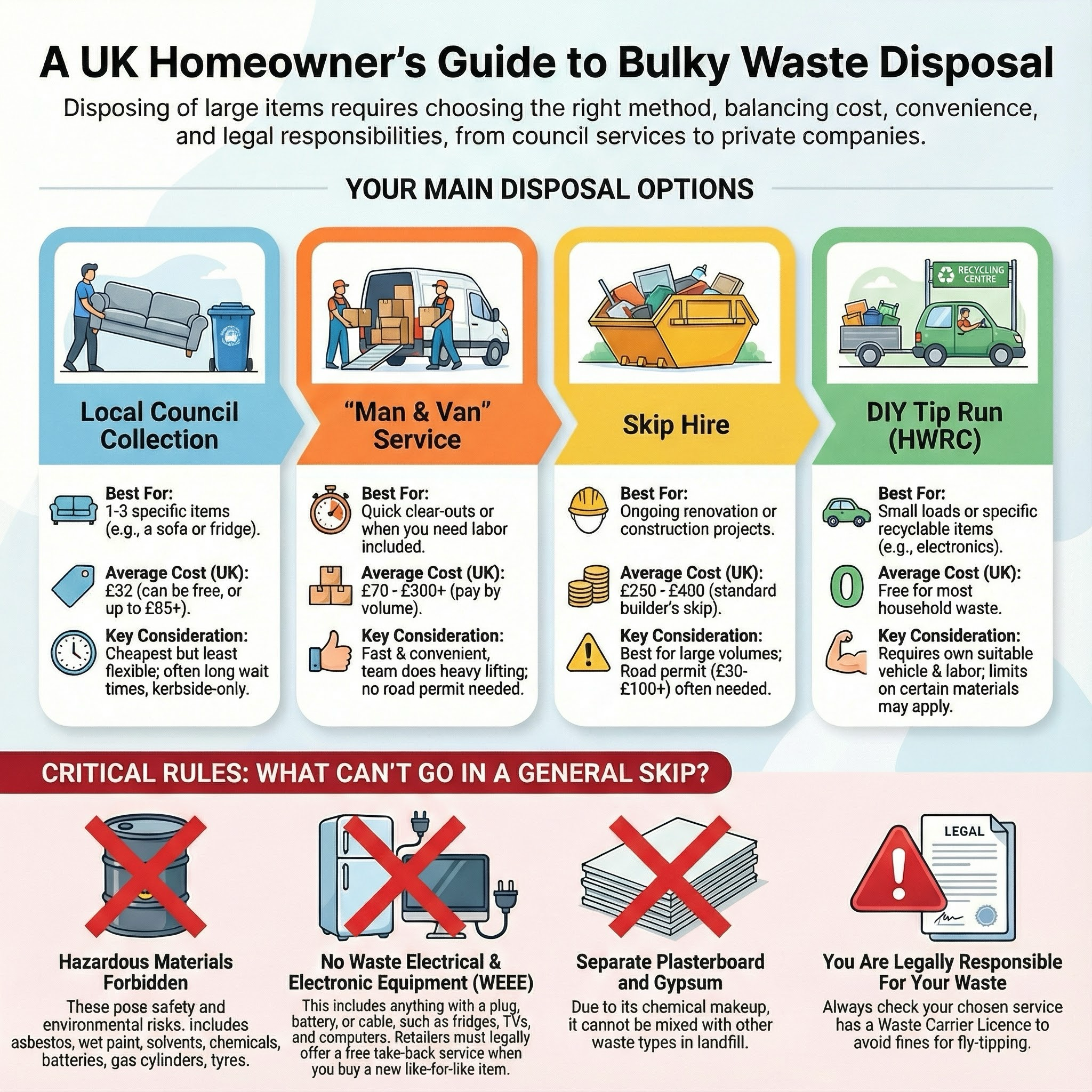
Rubbish Clearance explained
Beyond convenience, hiring a professional service protects you from the legal risks associated with fly-tipping. In the UK, the "Duty of Care" legislation means you are responsible for your waste until it reaches a licensed facility, making it vital to choose a reputable contractor.
Pricing for bulky waste disposal is usually based on the volume of the vehicle filled (measured in cubic yards) or the weight of the load. Specific items, such as mattresses or fridges, often carry flat-rate surcharges due to the high cost of recycling them.
| Item / Service | Low £ | High £ | Notes |
|---|---|---|---|
| Single Item Uplift | £50 | £95 | e.g., a single armchair or washing machine. |
| Small Load (1/4 Van) | £90 | £140 | Approx. 2-3 cubic yards; ideal for a small clear-out. |
| Medium Load (1/2 Van) | £180 | £260 | Approx. 6-7 cubic yards; standard for room clearances. |
| Full Van Load | £350 | £600 | 12-14 cubic yards; up to 1 tonne in weight. |
| Mattress Surcharge | £25 | £45 | Required due to complex recycling processes. |
| Fridge/Freezer Surcharge | £35 | £70 | Covers degassing and hazardous component removal. |
| Labour (per hour) | £30 | £50 | Usually applied if loading takes over 1 hour. |
Total costs are influenced by your location (London and the South East attract higher rates), the ease of access to the property, and whether the waste contains "POPs" (Persistent Organic Pollutants) found in most upholstered seating.
Homeowners can take bulky waste to a local Household Waste Recycling Centre (HWRC) for free or a small fee, but this requires a suitable vehicle and the physical ability to lift heavy items. Most councils also offer a "Bulky Waste Collection" service, which is cheaper than private firms but often involves long waiting lists and requires you to leave items outside on the pavement.
Professional services are preferable if you need items removed from inside the property, have a large volume of waste, or require a specific collection time. Professionals also handle the dismantling of furniture and the legal paperwork required for "Duty of Care" compliance.
Warning: If you hire an unlicensed "man with a van" and your waste is found fly-tipped, you can be fined thousands of pounds or face prosecution. Always verify a carrier's license.
POPs (Persistent Organic Pollutants) are chemicals found in the foam and fabric of many upholstered items manufactured before 2019. UK law now requires these items to be incinerated rather than buried, which has increased disposal costs for waste companies.
Yes. Most general waste carriers cannot take "hazardous" waste such as asbestos, raw meat, medical waste, or large quantities of chemicals/paint unless they have a specific hazardous waste license.
If the items are outside (e.g., on a driveway), you usually don't need to be present as long as payment has been arranged. If the items are inside, an adult must be present to grant access and sign the Waste Transfer Note.
A skip is often better for heavy "inert" waste like soil or rubble. For bulky items like furniture, a collection service is usually cheaper as you only pay for the volume used and don't need to pay for a skip permit from the council.
You can check the name or registration number on the Environment Agency’s "Public Register" website. A legitimate business will be happy to provide their number (usually starting with CBDU or CBWE).
This guide was written with AI assistance and is intended for general information only. Prices are estimates based on UK averages and may vary by region. Always get at least three quotes and consult a qualified professional before starting any work.
Ask follow-ups in plain English. The AI explains options, sequencing and what to ask the rubbish clearance — so you walk in informed.
Disposing of an old mattress or a bulky bed frame is one of the more challenging tasks for UK homeowners. Beyond the physical strain of navigating heavy, awkwar...
READ GUIDE →GuideManaging commercial waste is a significantly different beast compared to standard residential rubbish. Whether you are a landlord clearing a shop unit, a home-b...
READ GUIDE →GuideDisposing of an old sofa or armchair in the UK has become more complex due to recent environmental legislation. Bulky furniture is difficult to move, and many i...
READ GUIDE →GuideScrapping a car in the UK is a straightforward process, but it is governed by strict environmental and legal regulations. Whether your vehicle is a non-runner, ...
READ GUIDE →GuideAccumulating black bin bags is a common headache for UK homeowners, whether it’s due to a missed council collection, a deep spring clean, or the aftermath of a ...
READ GUIDE →GuideWhether you are decommissioning a commercial suite or simply reclaiming a spare bedroom from years of "home office" clutter, a professional office clean-out is ...
READ GUIDE →