Instant
01 · Ask
Ask the AI a follow-up
Got more questions about fridge Disposal? Describe the bit you're unsure about — the AI explains options, sequencing and what to ask the rubbish clearance.

Old fridge or freezer removed — degassed and recycled at a licensed WEEE facility.
You've read the brief on fridge Disposal. Now lean on us to find the right rubbish clearance — and stay in control of the job.
Got more questions about fridge Disposal? Describe the bit you're unsure about — the AI explains options, sequencing and what to ask the rubbish clearance.
Costs, timelines, pitfalls and the right questions to ask before any rubbish clearance starts on fridge Disposal.
Itemised quotes from up to 3 local rubbish clearances on fridge Disposal — so you can compare like-for-like, not lump sums.
Ready when you are
Enter your postcode and get free quotes from local pros.
Four moves that separate a smooth job from a nightmare.
If a fridge isn't defrosted 24 hours in advance, it will leak smelly, stagnant water across your carpets during removal.
Many homeowners forget that American-style fridges are wider than standard UK doorways; always measure before the team arrives.
Cheap "man and van" services found on social media often dump fridges in country lanes. If the waste is traced back to you via a serial number or address, you are legally liable for the fine.
Fridges are heavy and have sharp metal feet. Without proper floor protection, they can easily gouge vinyl or wood flooring.
Indicative UK ranges and what affects price.
By job type
Quote spread is typically ± 18% — always get 3 quotes.
Rubbish Clearance quick-view
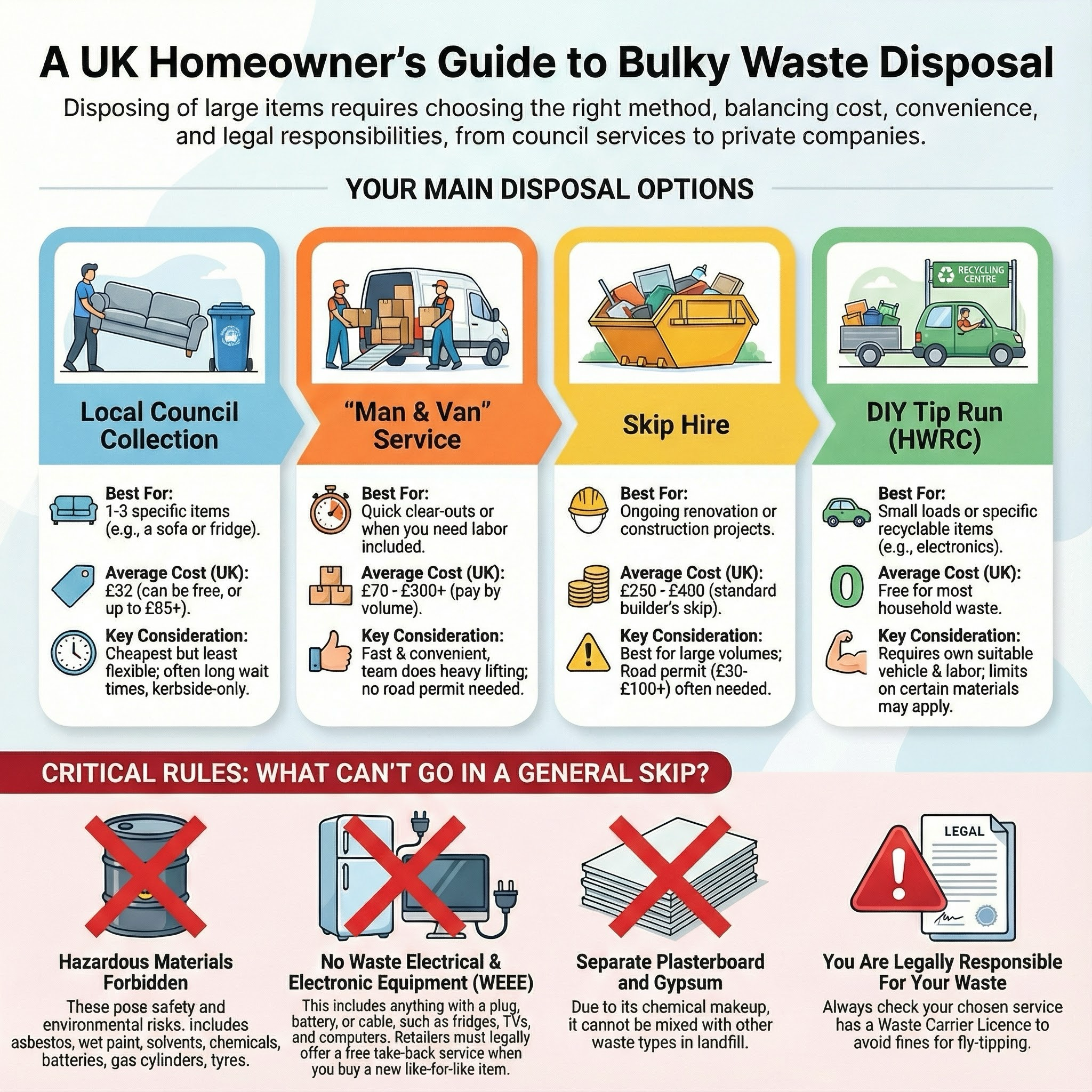
Rubbish Clearance explained
Whether you are upgrading to a modern American-style unit or clearing out a broken integrated model, hiring a professional ensures the appliance is degassed and recycled according to WEEE (Waste Electrical and Electronic Equipment) regulations. This guide outlines the costs, legal requirements, and practical steps for a hassle-free removal.
Prices for fridge disposal vary based on the size of the appliance and the ease of access. American-style fridge-freezers are significantly more expensive to remove due to their weight and the requirement for two or more operatives.
| Item | Low £ | High £ | Notes |
|---|---|---|---|
| Under-counter Fridge | £45 | £75 | Standard collection, ground floor. |
| Standard Tall Fridge/Freezer | £65 | £110 | Freestanding unit, single operative. |
| American-style (Side-by-Side) | £110 | £190 | Requires 2-person team and heavy lifting gear. |
| Commercial Fridge/Chiller | £150 | £350+ | Based on volume and refrigerant type. |
| Stair Carry Surcharge | £20 | £50 | Per flight of stairs if no lift is available. |
Factors that increase the price include "long carries" (where the vehicle cannot park near the door), the need to remove doors to fit the unit through frames, and urgent same-day call-out fees.
While you can physically move a fridge yourself, you cannot simply leave it on the pavement or put it in a standard skip. Fly-tipping hazardous waste carries unlimited fines and potential criminal prosecution in the UK.
If you choose the DIY route, you must transport the unit to a local Household Waste Recycling Centre (HWRC) that accepts WEEE items. However, most domestic cars are too small to transport a fridge upright, and laying a fridge on its side can cause oil to move into the cooling pipes, making it a fire hazard if ever reused.
Note: Most UK councils offer a bulky waste collection service for a lower fee (£20–£50), but they typically require you to leave the fridge outside your property, which may not be possible for elderly or disabled residents.
To protect yourself from "cowboy" collectors who might fly-tip your appliance, always verify the following before booking:
Fridge disposal is strictly governed by several pieces of legislation to protect the ozone layer and prevent soil contamination.
Yes. You should empty and defrost the unit at least 24 hours before the scheduled collection. This prevents water from leaking into the collection vehicle and ensures the unit is light enough to move safely.
Generally, no. Most skip hire companies in the UK prohibit fridges and freezers because they are classified as hazardous waste. If you put one in a skip without prior arrangement, the driver will likely refuse to take the skip or charge you a significant penalty fee.
Most council bulky waste services only offer "kerbside" collection. This means you must be able to move the fridge to the edge of your property yourself. If you need the item moved from a kitchen or an upstairs flat, you will usually need to hire a private clearance specialist.
It is a legal document that records the transfer of waste from one person to another. It includes details of what is being taken, who is taking it, and where it is going. You should keep this for at least two years to prove you disposed of the appliance legally.
If the fridge is in perfect working order, some charities like the British Heart Foundation may collect it for free to resell. However, if it is broken or very old, you will almost certainly have to pay for professional disposal due to the high costs of degassing.
This guide was written with AI assistance and is intended for general information only. Prices are estimates based on UK averages and may vary by region. Always get at least three quotes and consult a qualified professional before starting any work.
Ask follow-ups in plain English. The AI explains options, sequencing and what to ask the rubbish clearance — so you walk in informed.
Disposing of an old mattress or a bulky bed frame is one of the more challenging tasks for UK homeowners. Beyond the physical strain of navigating heavy, awkwar...
READ GUIDE →GuideManaging commercial waste is a significantly different beast compared to standard residential rubbish. Whether you are a landlord clearing a shop unit, a home-b...
READ GUIDE →GuideDisposing of an old sofa or armchair in the UK has become more complex due to recent environmental legislation. Bulky furniture is difficult to move, and many i...
READ GUIDE →GuideScrapping a car in the UK is a straightforward process, but it is governed by strict environmental and legal regulations. Whether your vehicle is a non-runner, ...
READ GUIDE →GuideAccumulating black bin bags is a common headache for UK homeowners, whether it’s due to a missed council collection, a deep spring clean, or the aftermath of a ...
READ GUIDE →GuideWhether you are decommissioning a commercial suite or simply reclaiming a spare bedroom from years of "home office" clutter, a professional office clean-out is ...
READ GUIDE →