Instant
01 · Ask
Ask the AI a follow-up
Got more questions about garden Gate Installation? Describe the bit you're unsure about — the AI explains options, sequencing and what to ask the rubbish clearance.

Timber, metal or composite garden gate — supplied, hung and hardware fitted.
You've read the brief on garden Gate Installation. Now lean on us to find the right rubbish clearance — and stay in control of the job.
Got more questions about garden Gate Installation? Describe the bit you're unsure about — the AI explains options, sequencing and what to ask the rubbish clearance.
Costs, timelines, pitfalls and the right questions to ask before any rubbish clearance starts on garden Gate Installation.
Itemised quotes from up to 3 local rubbish clearances on garden Gate Installation — so you can compare like-for-like, not lump sums.
Ready when you are
Enter your postcode and get free quotes from local pros.
Four moves that separate a smooth job from a nightmare.
Usually caused by using hinges that are too light for the weight of the timber. Always use "hook and band" hinges for heavy gates.
Occurs when posts are "encased" in concrete without drainage. A professional will ensure the concrete creates a shed-slope away from the timber.
Timber expands in the damp UK winter. If fitted too tightly in summer, the gate will bind and refuse to close by November.
As the ground settles or the wood moves, latches can drift. Using adjustable hinges allows for easy recalibration.
Indicative UK ranges and what affects price.
By job type
Quote spread is typically ± 18% — always get 3 quotes.
Rubbish Clearance quick-view
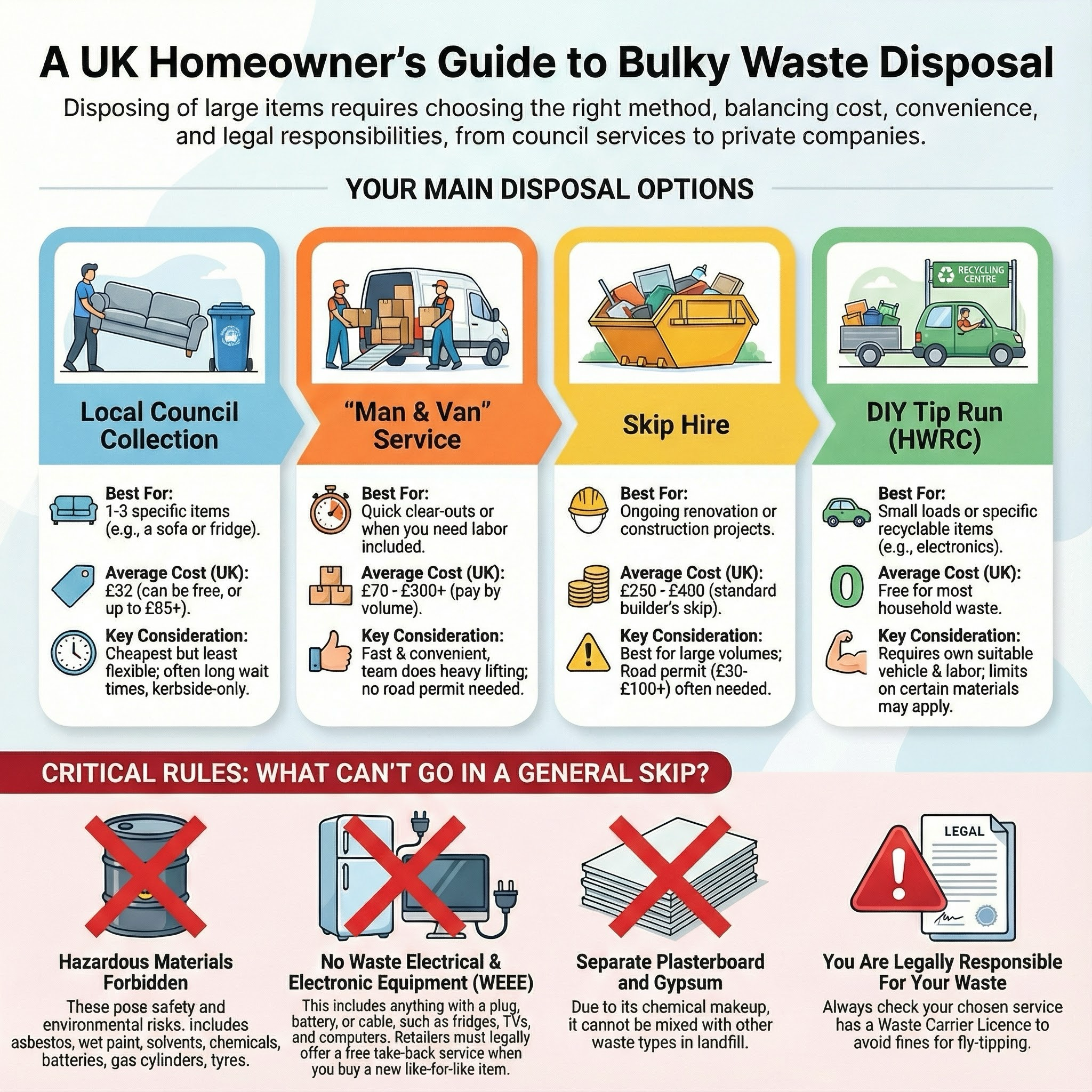
Rubbish Clearance explained
Whether you are replacing a rotten side gate or installing a grand entrance to your driveway, professional installation ensures the posts remain plumb and the latch aligns perfectly year-round. This guide covers everything from material choices to the latest UK pricing for 2025/26.
The cost of garden gate installation varies significantly based on the material chosen and whether new posts are required. Standard softwood gates are the most budget-friendly, while bespoke hardwood or metal options sit at the higher end of the scale.
| Item | Low £ | High £ | Notes |
|---|---|---|---|
| Standard Softwood Gate | £70 | £160 | Pressure-treated, standard sizes. |
| Hardwood Gate (Oak/Iroko) | £300 | £950 | Bespoke sizes, premium durability. |
| Installation Labour | £160 | £350 | Per gate, depending on ground conditions. |
| Post & Materials | £60 | £140 | Inc. Postcrete, timber posts, and fixings. |
| Premium Ironmongery | £40 | £120 | Heavy-duty galvanised or black powder-coated. |
| Waste Disposal Fee | £30 | £70 | Removal of old gate and concrete spoil. |
Prices generally include VAT. Factors such as working on a steep slope, drilling into reinforced concrete, or requiring bespoke joinery will push costs toward the higher end of these estimates.
A simple "off-the-shelf" gate swap is a manageable DIY task for those with basic carpentry tools. However, installing new posts is physically demanding and requires precision; if the posts are even slightly out of alignment, the gate will never close properly.
Professional installers have the heavy-duty SDS drills and augers required to bypass stones or old foundations that often thwart DIY attempts.
For automated gates or those involving integrated intercoms, you must hire a professional. Any electrical work must comply with Part P of the Building Regulations and be signed off by a competent person.
Questions to ask:
If you have a pressure-treated (tanalised) softwood gate, it is protected against rot but will benefit from a UV-resistant oil or stain every 2 years to prevent splitting. Hardwood gates like Oak require annual oiling to maintain their colour.
For longevity, Iroko or Western Red Cedar are excellent as they contain natural oils that resist decay. For a budget-friendly option, pressure-treated Redwood is far superior to cheap white wood or deal.
Only if the posts are rock-solid. If you can move the post by hand, or if there is visible rot at the ground line, the weight of a new gate will cause it to fail quickly. It is usually best to replace the posts at the same time.
A minimum of 50mm (2 inches) is standard to allow for airflow and to prevent the gate from catching on stones or debris. On sloping ground, this may need to be significantly larger.
Adjustable hinges allow you to move the gate left, right, in, or out using a spanner. They are highly recommended for the UK climate, as they allow you to fix a "dropping" gate in minutes without rehanging it.
This guide was written with AI assistance and is intended for general information only. Prices are estimates based on UK averages and may vary by region. Always get at least three quotes and consult a qualified professional before starting any work.
Ask follow-ups in plain English. The AI explains options, sequencing and what to ask the rubbish clearance — so you walk in informed.
Disposing of an old mattress or a bulky bed frame is one of the more challenging tasks for UK homeowners. Beyond the physical strain of navigating heavy, awkwar...
READ GUIDE →GuideManaging commercial waste is a significantly different beast compared to standard residential rubbish. Whether you are a landlord clearing a shop unit, a home-b...
READ GUIDE →GuideDisposing of an old sofa or armchair in the UK has become more complex due to recent environmental legislation. Bulky furniture is difficult to move, and many i...
READ GUIDE →GuideScrapping a car in the UK is a straightforward process, but it is governed by strict environmental and legal regulations. Whether your vehicle is a non-runner, ...
READ GUIDE →GuideAccumulating black bin bags is a common headache for UK homeowners, whether it’s due to a missed council collection, a deep spring clean, or the aftermath of a ...
READ GUIDE →GuideWhether you are decommissioning a commercial suite or simply reclaiming a spare bedroom from years of "home office" clutter, a professional office clean-out is ...
READ GUIDE →