Instant
01 · Ask
Ask the AI a follow-up
Got more questions about industrial Scrap Metal Collection? Describe the bit you're unsure about — the AI explains options, sequencing and what to ask the rubbish clearance.

Scrap metal collected from commercial or industrial sites — weighed, paid by weight, licensed dealer.
You've read the brief on industrial Scrap Metal Collection. Now lean on us to find the right rubbish clearance — and stay in control of the job.
Got more questions about industrial Scrap Metal Collection? Describe the bit you're unsure about — the AI explains options, sequencing and what to ask the rubbish clearance.
Costs, timelines, pitfalls and the right questions to ask before any rubbish clearance starts on industrial Scrap Metal Collection.
Itemised quotes from up to 3 local rubbish clearances on industrial Scrap Metal Collection — so you can compare like-for-like, not lump sums.
Ready when you are
Enter your postcode and get free quotes from local pros.
Four moves that separate a smooth job from a nightmare.
Old industrial tanks may contain residues or gases that are flammable; never attempt to cut these yourself.
Large lorries require significant turning circles and solid ground; "soft" driveways can be crushed by the weight of a loaded scrap truck.
Market prices for metal fluctuate daily; ensure your quote clarifies if the price is fixed or based on the day's weighbridge rate.
Some "cherry-pickers" will take high-value copper but leave behind heavy, low-value iron; ensure your contract covers total removal.
Indicative UK ranges and what affects price.
By job type
Quote spread is typically ± 18% — always get 3 quotes.
Rubbish Clearance quick-view
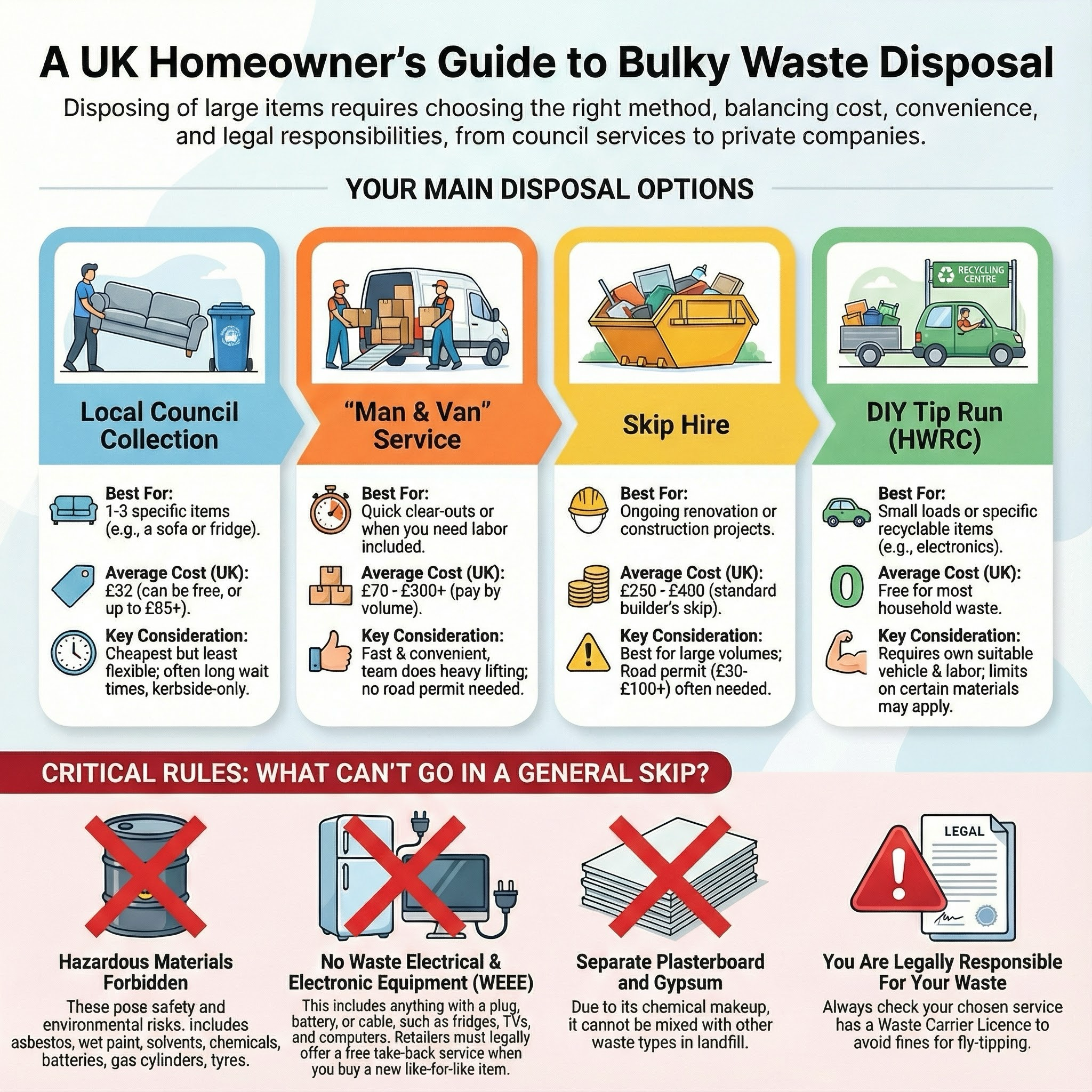
Rubbish Clearance explained
Managing industrial-grade scrap requires more than just a standard van; it involves heavy lifting equipment, specialized cutting tools, and a strict adherence to UK environmental laws. Professional collectors ensure that metals are diverted from landfills and processed through the correct recycling streams, often providing a cost-effective alternative to standard skip hire.
Pricing for industrial scrap collection is unique because the value of the metal can sometimes offset the cost of the labour and transport. However, for smaller "industrial" residential jobs, you should expect the following baseline fees for 2025/26.
| Item | Low £ | High £ | Notes |
|---|---|---|---|
| Minimum Call-out / Assessment | £120 | £250 | Covers transport and initial site safety check. |
| Labour (per hour, per person) | £65 | £110 | Includes dismantling and heavy lifting. | Specialist Cutting/Dismantling | £250 | £600 | Daily or half-day rate for oxy-fuel cutting. |
| Hiab / Grab Lorry Hire | £300 | £550 | Per visit for very heavy or awkward items. |
| Hazardous Material Surcharge | £80 | £200 | For items containing oils, coolants, or capacitors. |
Factors affecting the final price include the current global market value of the metal, the ease of access for large vehicles, and whether the metal requires significant "cleaning" (removing non-metal attachments).
Note: Under the Scrap Metal Dealers Act 2013, it is illegal for any collector to pay you in cash. All payments must be made via electronic transfer or cheque.
While you can take small amounts of scrap to a local household waste recycling centre (HWRC) yourself, industrial scrap is strictly a professional job. The sheer weight of industrial components poses a significant risk of injury or damage to your property if handled without proper lifting gear.
Furthermore, transporting commercial-grade waste requires a Waste Carrier Licence. If you hire an unlicensed "man with a van" and your scrap is fly-tipped, you remain legally liable for the fines. Professionals also have the equipment to handle hazardous residues often found in industrial scrap, such as hydraulic fluids or heavy grease.
Potentially. If the value of the metal (like copper or brass) exceeds the cost of labour and transport, the dealer will pay you via bank transfer. However, for heavy iron or mixed loads, the service cost often cancels out the metal value.
It isn't required, but "clean" metal (free of plastic, wood, or rubber) fetches a much higher price. If the collector has to spend hours stripping insulation or removing attachments, they will charge for the labour.
Yes, but these require specific safety protocols. Tanks must be certified "gas-free" or professionally drained before they can be cut and loaded as scrap metal.
By law, you must provide a valid photocard driving licence OR a passport supported by a utility bill or bank statement dated within the last three months.
Ferrous metals contain iron and are magnetic (like steel); they are generally lower in value. Non-ferrous metals (like copper, aluminium, and lead) are not magnetic and are worth significantly more per tonne.
This guide was written with AI assistance and is intended for general information only. Prices are estimates based on UK averages and may vary by region. Always get at least three quotes and consult a qualified professional before starting any work.
Ask follow-ups in plain English. The AI explains options, sequencing and what to ask the rubbish clearance — so you walk in informed.
Disposing of an old mattress or a bulky bed frame is one of the more challenging tasks for UK homeowners. Beyond the physical strain of navigating heavy, awkwar...
READ GUIDE →GuideManaging commercial waste is a significantly different beast compared to standard residential rubbish. Whether you are a landlord clearing a shop unit, a home-b...
READ GUIDE →GuideDisposing of an old sofa or armchair in the UK has become more complex due to recent environmental legislation. Bulky furniture is difficult to move, and many i...
READ GUIDE →GuideScrapping a car in the UK is a straightforward process, but it is governed by strict environmental and legal regulations. Whether your vehicle is a non-runner, ...
READ GUIDE →GuideAccumulating black bin bags is a common headache for UK homeowners, whether it’s due to a missed council collection, a deep spring clean, or the aftermath of a ...
READ GUIDE →GuideWhether you are decommissioning a commercial suite or simply reclaiming a spare bedroom from years of "home office" clutter, a professional office clean-out is ...
READ GUIDE →