Instant
01 · Ask
Ask the AI a follow-up
Got more questions about tile Repair Cost & Work? Describe the bit you're unsure about — the AI explains options, sequencing and what to ask the tiler.

What tile repairs cost in 2026 — by damage, tile type and whether the matching tile is still available.
You've read the brief on tile Repair Cost & Work. Now lean on us to find the right tiler — and stay in control of the job.
Got more questions about tile Repair Cost & Work? Describe the bit you're unsure about — the AI explains options, sequencing and what to ask the tiler.
Costs, timelines, pitfalls and the right questions to ask before any tiler starts on tile Repair Cost & Work.
Itemised quotes from up to 3 local tilers on tile Repair Cost & Work — so you can compare like-for-like, not lump sums.
Ready when you are
Enter your postcode and get free quotes from local pros.
Four moves that separate a smooth job from a nightmare.
When the replacement tile sits higher or lower than the originals, creating a trip hazard and a poor finish.
New grout often looks brighter than old, weathered grout. A pro may suggest cleaning the entire area to achieve a uniform look.
If multiple tiles sound "hollow" when tapped, the adhesive has failed. Replacing just one tile is a temporary fix; the whole area may eventually need lifting.
If tiles crack in a straight line across a floor, it usually indicates a crack in the concrete screed below which requires a "displacement membrane."
Indicative UK ranges and what affects price.
By job type
Quote spread is typically ± 18% — always get 3 quotes.
Tiler quick-view
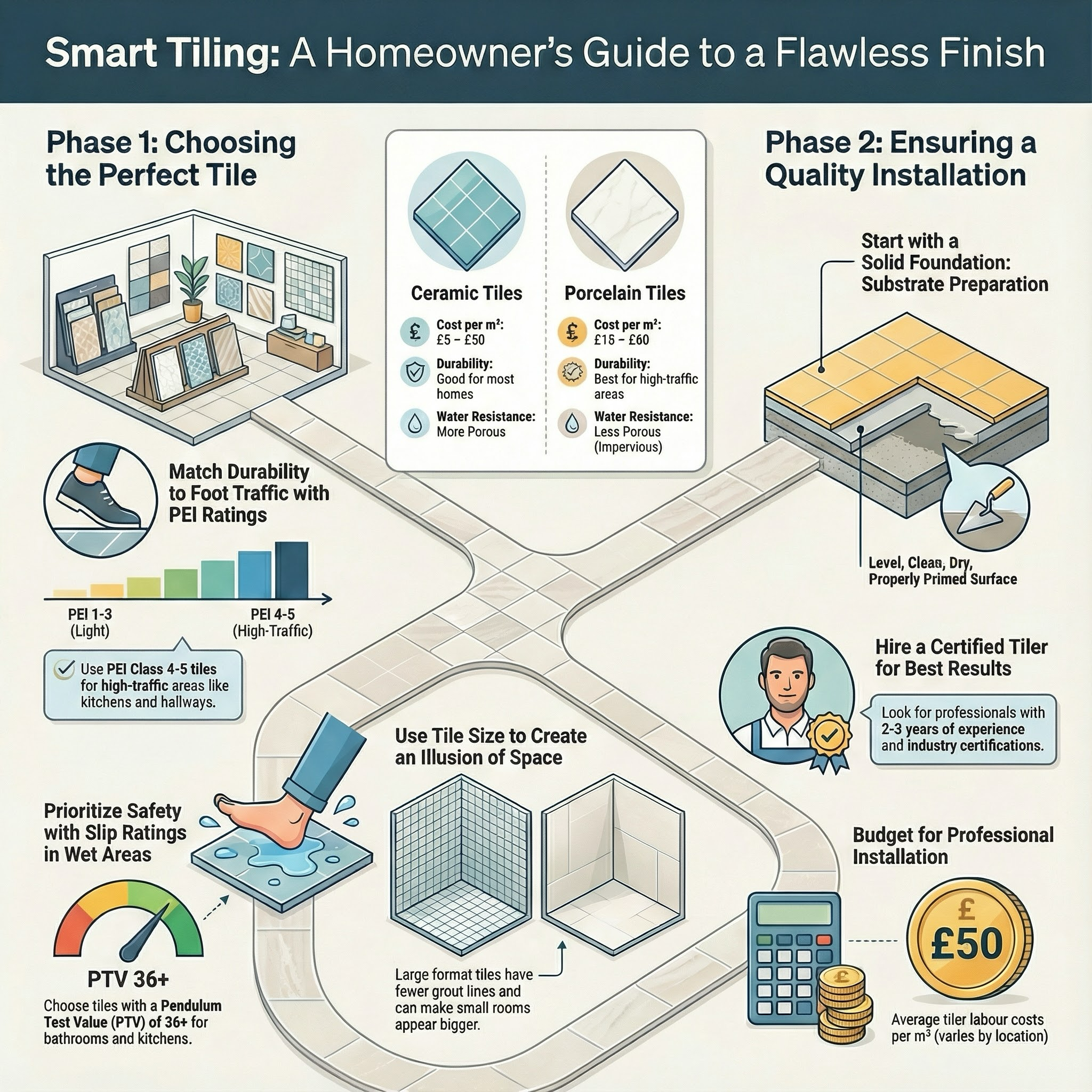
Tiler explained
A professional tile repair restores the watertight seal of your walls or floors while ensuring a seamless visual finish. This guide covers everything from current UK labour rates to the technical standards you should expect from a qualified tiler.
Most tilers charge a minimum call-out fee to cover travel and setup, as small repairs often take less than half a day but require a full kit of tools.
| Item | Low £ | High £ | Notes |
|---|---|---|---|
| Minimum Call-out Fee | £90 | £160 | Covers the first 1-2 hours of work. |
| Hourly Labour Rate | £45 | £75 | Higher rates typically apply in London and the SE. |
| Single Tile Replacement | £120 | £220 | Includes materials (excluding the tile itself). |
| Patch Repair (1m²) | £250 | £450 | Includes substrate prep and grouting. |
| Materials (Adhesive/Grout) | £30 | £70 | Specialist epoxy grouts cost more. |
Prices are influenced by the tile material; natural stone like marble or slate requires specialist diamond-tipped tools and sealing treatments, which will increase the labour cost compared to standard ceramic or porcelain.
While replacing a single kitchen splashback tile is a manageable DIY task, floor repairs and wet room fixes usually require a professional. If you have underfloor heating, a DIYer risks piercing the heating cables or pipes during tile removal.
In bathrooms, the "tanking" (waterproofing) layer behind the tiles is critical. A professional tiler knows how to repair a tile without compromising this membrane, preventing leaks into the room below.
Expert Tip: Always keep a "spare box" of tiles from your original installation. Matching batch numbers years later is nearly impossible, as kiln temperatures and dye lots change with every production run.
Small chips can sometimes be repaired using a colour-matched ceramic repair kit or epoxy resin. However, a hairline crack usually indicates movement, and the only permanent solution is replacement.
Common causes include "dot and dab" fixing (leaving voids behind the tile), tiling over green (unseasoned) timber, or a lack of expansion joints in large floor areas.
Check the back of a broken piece for a manufacturer's name or code. If the tile is discontinued, specialist "tile matching" services in the UK can often source reclaimed stock.
You should generally wait 24 hours before walking on floor tiles or using a shower to allow the adhesive and grout to fully cure and become waterproof.
Grout darkens with age and dirt. A professional will try to match the current shade, but a slight difference is common. Using a "grout pen" or "grout reviver" on the rest of the room can help blend the repair.
This guide was written with AI assistance and is intended for general information only. Prices are estimates based on UK averages and may vary by region. Always get at least three quotes and consult a qualified professional before starting any work.
Ask follow-ups in plain English. The AI explains options, sequencing and what to ask the tiler — so you walk in informed.
Updating wall tiles is one of the most effective ways to modernise a UK kitchen or bathroom without a full renovation. Beyond the aesthetic lift, professional t...
READ GUIDE →GuideMosaic tiling is the ultimate way to add texture, colour, and a bespoke feel to your UK home. Whether it’s a kitchen splashback, a wet room floor, or a decorati...
READ GUIDE →GuideVictorian geometric and encaustic tiles are a quintessential feature of British period properties, from London townhouses to seaside villas. These intricate pat...
READ GUIDE →GuideOrdering tiles is more than just picking a pattern you like. For UK homeowners, it involves calculating precise quantities, accounting for wastage, and ensuring...
READ GUIDE →GuideTiling a bathroom wall while incorporating an access hatch is a practical necessity for many UK homes. It allows for seamless aesthetics while providing vital a...
READ GUIDE →GuideBrick tiling, often referred to as "brick slips," has become a staple of UK interior design. Whether you are looking to create an industrial-style feature wall ...
READ GUIDE →