Instant
01 · Ask
Ask the AI a follow-up
Got more questions about electric Range Cooker Repair? Describe the bit you're unsure about — the AI explains options, sequencing and what to ask the appliance repair.

Rangemaster, Stoves, Aga Masterchef — element, fan, ignition or PCB fixed on-site.
You've read the brief on electric Range Cooker Repair. Now lean on us to find the right appliance repair — and stay in control of the job.
Got more questions about electric Range Cooker Repair? Describe the bit you're unsure about — the AI explains options, sequencing and what to ask the appliance repair.
Costs, timelines, pitfalls and the right questions to ask before any appliance repair starts on electric Range Cooker Repair.
Itemised quotes from up to 3 local appliance repairs on electric Range Cooker Repair — so you can compare like-for-like, not lump sums.
Ready when you are
Enter your postcode and get free quotes from local pros.
Four moves that separate a smooth job from a nightmare.
This is usually caused by a "blown" element where the internal filament has touched the outer casing, creating an earth fault.
Often indicates a failing fan motor or a faulty thermostat that is no longer regulating the temperature accurately.
Many range cookers will not operate if the digital clock is not set or if the unit is in "Auto" mode. Check this before calling an engineer.
A grinding or humming sound usually points to a dry or worn bearing in the cooling fan or the convection fan.
Indicative UK ranges and what affects price.
By job type
Quote spread is typically ± 18% — always get 3 quotes.
Appliance Repair quick-view
Appliance Repair explained
Repairing an electric range is usually more cost-effective than replacing the entire unit, especially for premium brands like Rangemaster, Falcon, or Stoves. This guide covers the essential costs, timelines, and safety considerations for getting your cooker back to peak performance.
Repair costs vary significantly based on the brand of your range and the specific part that has failed. Premium brands often have higher part costs but are generally more "serviceable" than budget models.
| Repair Item | Low £ | High £ | Notes |
|---|---|---|---|
| Call-out & Diagnosis | £70 | £110 | Often deducted from the final repair bill. |
| Oven Element Replacement | £95 | £160 | Includes part and labour; fan elements are common. |
| Fan Motor Replacement | £120 | £210 | Essential for even heat distribution. |
| Thermostat Replacement | £100 | £180 | Fixes issues with overheating or undercooking. |
| Main Control Board/PCB | £250 | £550 | The "brain" of the cooker; most expensive part. |
| Door Seal Replacement | £60 | £110 | Simple fix to improve energy efficiency. |
Note: Prices include VAT and are based on standard UK rates for 2025/26. Expect to pay a 20-30% premium in London and the South East. Factors affecting the price include the age of the appliance and whether parts are still in active production.
While replacing a door seal or a lightbulb is a straightforward DIY task, most electric range repairs should be left to a professional. These appliances operate on high-voltage circuits (usually 32A or higher) and involve complex internal wiring.
Warning: Attempting to repair internal electrical components without proper training can void your home insurance and poses a significant risk of electric shock or fire.
A professional engineer has the correct testing equipment (like a multimeter and insulation resistance tester) to ensure the appliance isn't just "working," but is actually safe for continued use.
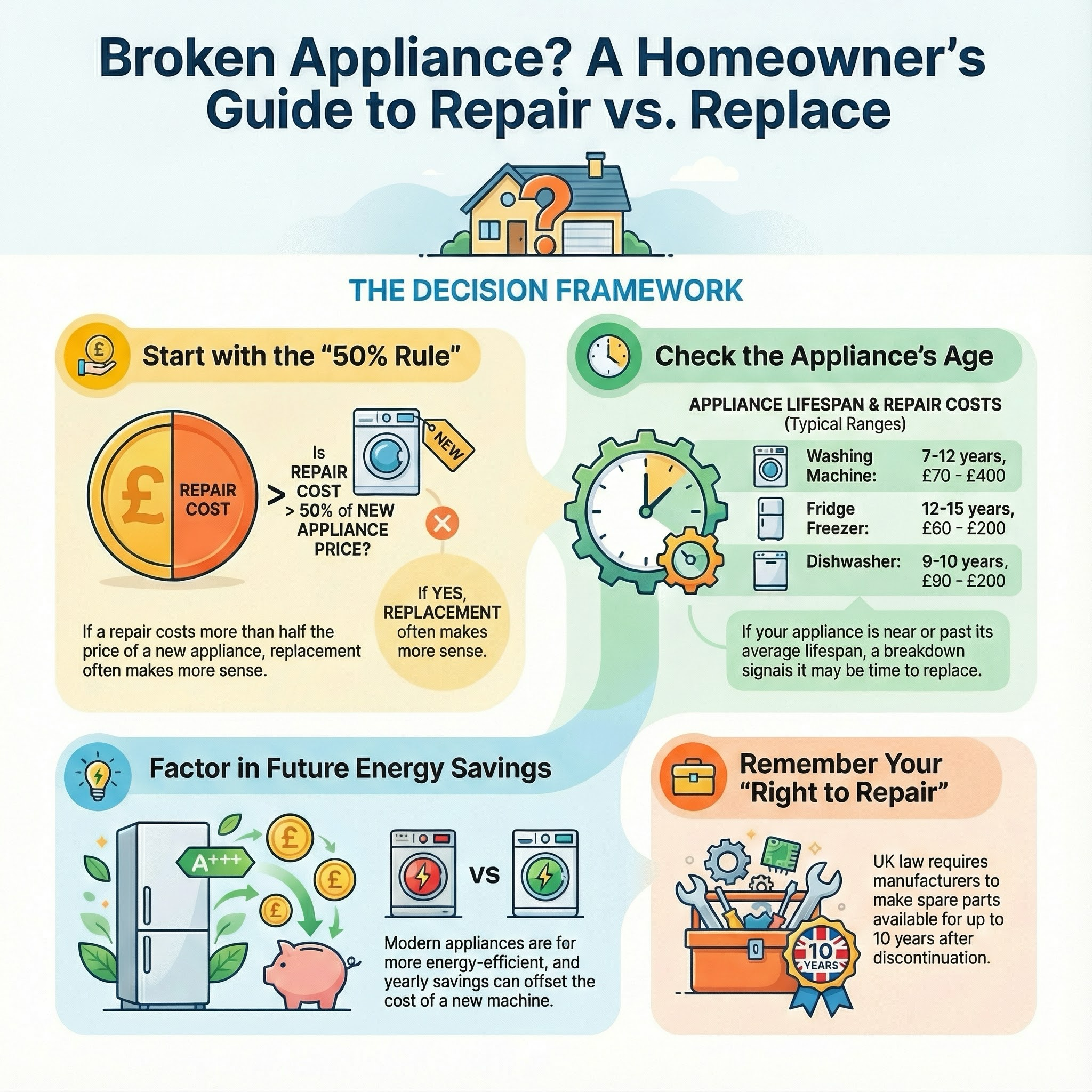
Generally, yes. High-end range cookers are built to last 15-20 years. If the repair cost is less than 50% of the price of a new equivalent model, a repair is usually the smarter financial choice.
In most cases, yes, as the hob and ovens run on separate internal circuits. However, if the fault is causing your RCD to trip, you will likely lose power to the entire appliance until it is repaired.
If the fan is spinning but the air is cold, the circular heating element surrounding the fan has likely failed. This is one of the most common and affordable repairs for electric ranges.
Most engineers prefer to move the appliance themselves using specialized air-mats or glides to avoid scratching your kitchen floor. However, ensure the area around the cooker is clear of clutter.
Model numbers are usually found on a small silver sticker located inside the door frame of the main oven, or occasionally behind the storage drawer at the bottom of the unit.
Many large national firms offer fixed-price labour, but local independent tradespeople usually charge a call-out fee plus parts. Always clarify which pricing structure is being used before booking.
This guide was written with AI assistance and is intended for general information only. Prices are estimates based on UK averages and may vary by region. Always get at least three quotes and consult a qualified professional before starting any work.
Ask follow-ups in plain English. The AI explains options, sequencing and what to ask the appliance repair — so you walk in informed.
Microwaves are a staple of the modern UK kitchen, offering convenience for everything from defrosting to full meal preparation. While basic freestanding models ...
READ GUIDE →GuideA faulty fridge or freezer is one of the most urgent domestic repairs, with food safety and waste being the primary concerns. For many UK homeowners, a professi...
READ GUIDE →GuideA cold oven is a major disruption to any UK household, but a failed heating element is one of the most common and cost-effective repairs you can undertake. Inst...
READ GUIDE →GuideScope of Works • inspect appliance and perform diagnostic checks (power, suction, switches, wiring) • clean and test filters, dust bin or bag and airway for blo...
READ GUIDE →GuideA faulty microwave display is a common frustration for UK homeowners. Whether the screen has gone completely dark, is flickering, or showing unintelligible "gho...
READ GUIDE →GuideA faulty oven can bring a UK household to a standstill, turning meal times into a logistical challenge. Whether it is a failed heating element, a noisy fan, or ...
READ GUIDE →