Instant
01 · Ask
Ask the AI a follow-up
Got more questions about grill and airdryer repair? Describe the bit you're unsure about — the AI explains options, sequencing and what to ask the appliance repair.

Element, fan or controller — bench-fixed and tested before being put back in service.
You've read the brief on grill and airdryer repair. Now lean on us to find the right appliance repair — and stay in control of the job.
Got more questions about grill and airdryer repair? Describe the bit you're unsure about — the AI explains options, sequencing and what to ask the appliance repair.
Costs, timelines, pitfalls and the right questions to ask before any appliance repair starts on grill and airdryer repair.
Itemised quotes from up to 3 local appliance repairs on grill and airdryer repair — so you can compare like-for-like, not lump sums.
Ready when you are
Enter your postcode and get free quotes from local pros.
Four moves that separate a smooth job from a nightmare.
The leading cause of dryer fires in the UK. Even if the dryer "works," a blocked internal duct forces the motor to overheat.
Often overlooked, a broken latch or sensor will prevent the appliance from starting as a safety precaution.
In grills, grease dripping onto the element causes "hot spots" that eventually lead to the coil snapping or shorting out.
Usually caused by poor ventilation. If the dryer is pushed too close to the wall, it can't breathe, tripping the one-time-use fuse.
Indicative UK ranges and what affects price.
By job type
Quote spread is typically ± 18% — always get 3 quotes.
Appliance Repair quick-view
Appliance Repair explained
Professional appliance repair ensures your machines operate efficiently, reducing energy bills and extending the lifespan of expensive white goods. This guide covers everything from diagnostic procedures to 2025 pricing for repairing grills and drying appliances.
Repair costs vary based on your location in the UK and the brand of the appliance. Premium brands like Miele or Bosch often incur higher parts costs compared to budget-friendly manufacturers.
| Item | Low £ | High £ | Notes |
|---|---|---|---|
| Call-out / Diagnostics | £80 | £120 | Often covers the first 30-60 minutes. |
| Labour (per hour) | £60 | £100 | Varies by region (London/SE is higher). |
| Heating Element | £25 | £90 | Part only; varies by model. |
| Thermostats/Sensors | £15 | £55 | Critical safety components. |
| Drive Belts/Motors | £20 | £160 | Drum belts are cheap; motors are expensive. |
| Total Typical Repair | £145 | £350 | Includes call-out, 1 hour labour, and parts. |
The total price is heavily influenced by "accessibility." Built-in or integrated appliances take longer to extract and reinstall, which can add £40–£80 to the final labour bill.
While cleaning a lint filter is a DIY task, internal repairs should be left to professionals. Grills and dryers are high-wattage appliances that draw significant current; a loose connection or incorrect part can lead to a house fire or fatal electric shock.
Warning: If your grill is part of a gas oven, it is illegal for anyone other than a Gas Safe registered engineer to break the gas seal or perform repairs on the gas components.
For electric units, UK Building Regulations (Part P) suggest that while minor repairs aren't "notifiable," they must still be performed to a safe standard. A professional will provide a guarantee and carry out essential PAT (Portable Appliance Testing) style checks after the repair.
3 Questions to Ask:
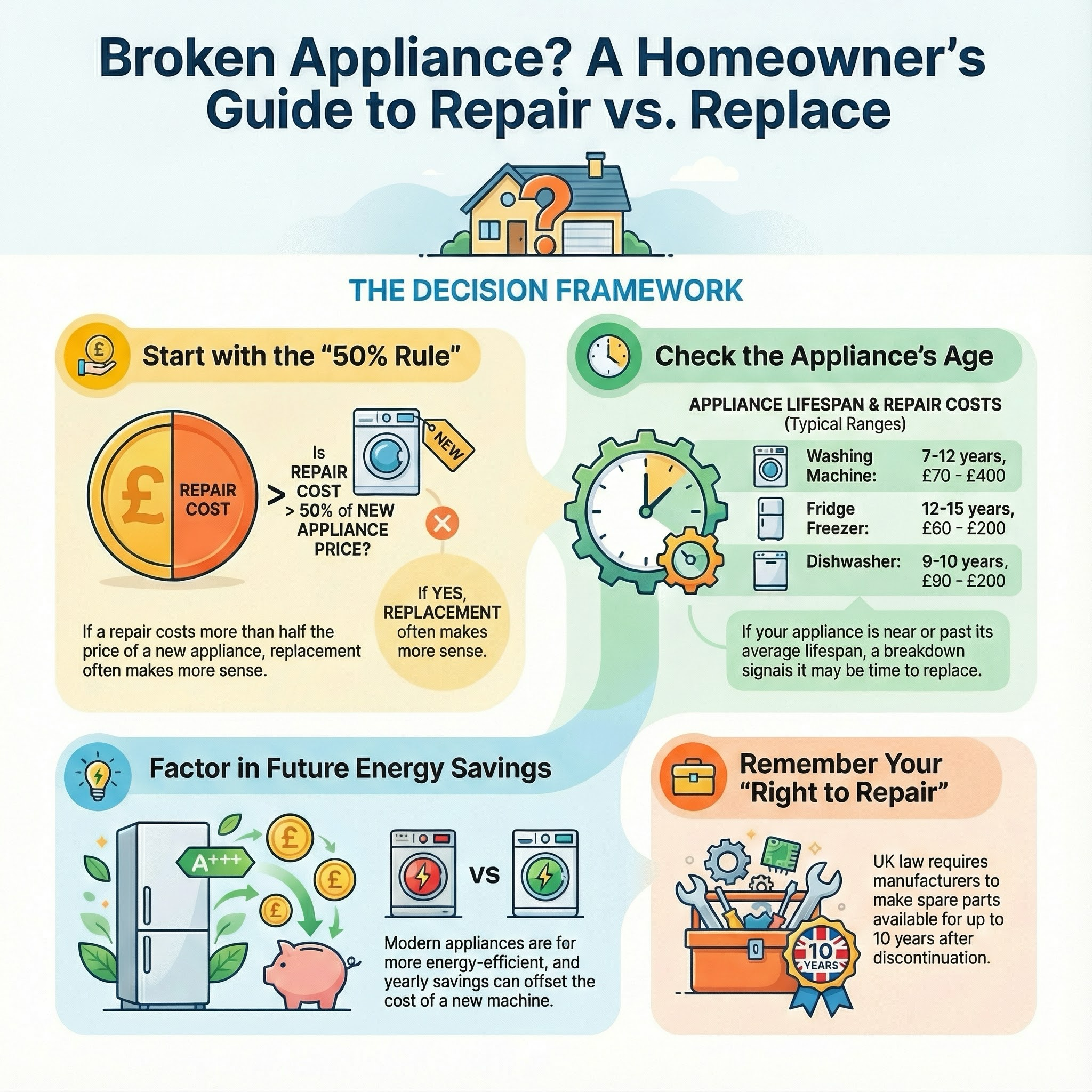
Generally, if the repair cost is more than 50% of the price of a new, energy-efficient model, replacement is better. Older appliances are significantly less efficient than modern A+++ rated units.
This usually indicates a melting wiring loom or a failing terminal block where the power enters the appliance. Turn it off at the wall immediately and call an engineer.
If the dryer is making a grinding noise or smells of smoke, do not use it. This indicates a bearing or motor failure which can quickly escalate into a fire risk.
It is helpful, but not always necessary. If it is a heavy built-in unit, let the engineer know in advance so they can bring the appropriate sliders or lifting equipment.
This is usually a sign of a partial element failure, a blocked condenser unit (in condenser dryers), or a faulty NTC sensor (thermostat) that isn't reading the temperature correctly.
This guide was written with AI assistance and is intended for general information only. Prices are estimates based on UK averages and may vary by region. Always get at least three quotes and consult a qualified professional before starting any work.
Ask follow-ups in plain English. The AI explains options, sequencing and what to ask the appliance repair — so you walk in informed.
Microwaves are a staple of the modern UK kitchen, offering convenience for everything from defrosting to full meal preparation. While basic freestanding models ...
READ GUIDE →GuideA faulty fridge or freezer is one of the most urgent domestic repairs, with food safety and waste being the primary concerns. For many UK homeowners, a professi...
READ GUIDE →GuideA cold oven is a major disruption to any UK household, but a failed heating element is one of the most common and cost-effective repairs you can undertake. Inst...
READ GUIDE →GuideScope of Works • inspect appliance and perform diagnostic checks (power, suction, switches, wiring) • clean and test filters, dust bin or bag and airway for blo...
READ GUIDE →GuideA faulty microwave display is a common frustration for UK homeowners. Whether the screen has gone completely dark, is flickering, or showing unintelligible "gho...
READ GUIDE →GuideA faulty oven can bring a UK household to a standstill, turning meal times into a logistical challenge. Whether it is a failed heating element, a noisy fan, or ...
READ GUIDE →