Instant
01 · Ask
Ask the AI a follow-up
Got more questions about tumble Dryer Repair Cost? Describe the bit you're unsure about — the AI explains options, sequencing and what to ask the appliance repair.

What a call-out costs, what the common parts cost, and when a new dryer is the better buy.
You've read the brief on tumble Dryer Repair Cost. Now lean on us to find the right appliance repair — and stay in control of the job.
Got more questions about tumble Dryer Repair Cost? Describe the bit you're unsure about — the AI explains options, sequencing and what to ask the appliance repair.
Costs, timelines, pitfalls and the right questions to ask before any appliance repair starts on tumble Dryer Repair Cost.
Itemised quotes from up to 3 local appliance repairs on tumble Dryer Repair Cost — so you can compare like-for-like, not lump sums.
Ready when you are
Enter your postcode and get free quotes from local pros.
Four moves that separate a smooth job from a nightmare.
Often a tripped thermal fuse or a burnt-out element caused by restricted airflow.
Usually a snapped drive belt or a failed capacitor; you might hear the motor humming but see no movement.
Typically indicates worn drum bearings, a faulty jockey pulley, or something caught in the fan.
Frequently caused by faulty moisture sensors or a blocked pump in condenser models.
Indicative UK ranges and what affects price.
By job type
Quote spread is typically ± 18% — always get 3 quotes.
Appliance Repair quick-view
Appliance Repair explained
Modern tumble dryers, particularly heat pump and condenser models, are complex machines. Prompt repairs not only restore convenience but also ensure the appliance remains energy-efficient and, most importantly, fire-safe for your home.
| Item | Low £ | High £ | Notes |
|---|---|---|---|
| Standard Call-out Fee | £60 | £110 | Usually covers the first 30-60 minutes of labour. |
| Drive Belt Replacement | £75 | £140 | Includes the belt and labour; price varies by brand. |
| Heating Element | £110 | £220 | Elements for heat pump dryers are significantly dearer. |
| Control Board (PCB) | £160 | £350 | The most expensive component; often requires manufacturer parts. |
| Drum Bearings | £90 | £190 | Labour-intensive repair requiring a full teardown. |
| Door Seal or Catch | £65 | £115 | Simple fix often completed within the call-out fee. |
Prices vary based on your location (London and the South East typically command higher rates) and the brand of your appliance. Premium German brands like Miele or Bosch often have higher part costs compared to budget-friendly brands like Beko or Indesit.
Pro Tip: Many engineers will waive or discount the call-out fee if you agree to proceed with the repair after the diagnosis.
While clearing a lint filter or emptying a water tank is standard maintenance, internal repairs should be left to professionals. Tumble dryers are one of the most common causes of domestic fires in the UK; incorrect wiring or failing to properly clear internal lint can have catastrophic consequences.
Furthermore, many modern dryers contain complex electronics and sensors that require specific diagnostic tools. Attempting a DIY repair on a machine under warranty will also void your cover instantly.
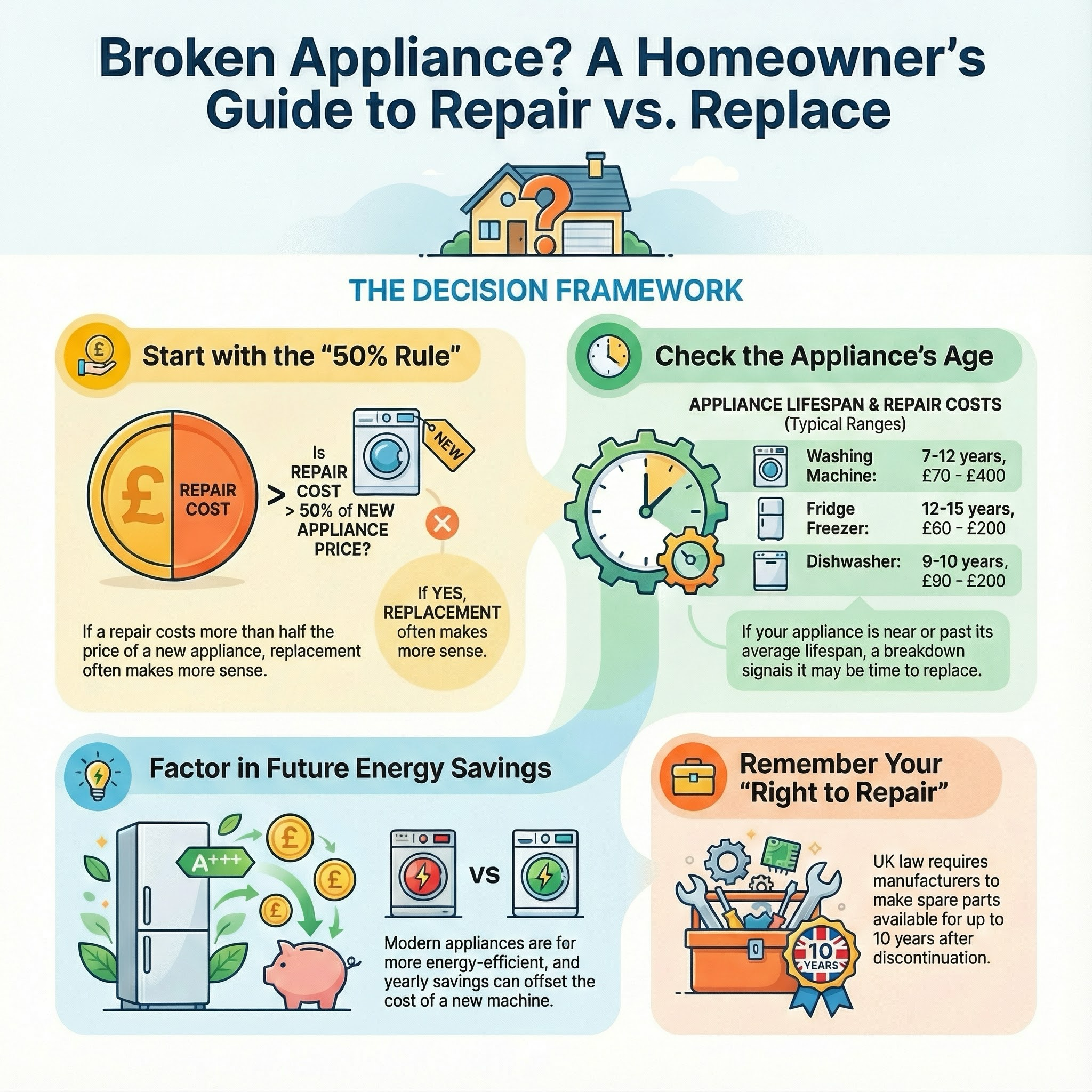
If the repair costs more than 50% of a new equivalent model, replacement is usually better. However, for premium brands, a 7-year-old machine may still have several years of life left if the repair is minor.
This is a serious warning sign. It is usually caused by a build-up of lint touching the heating element. Switch the machine off at the wall immediately and do not use it until it has been professionally inspected.
Heat pump dryers are more complex and use a refrigerant system similar to a fridge. Repairs are generally more expensive and take longer because the components are more difficult to access and replace.
Ideally, yes. Clear any items off the top and ensure there is enough space for the engineer to pull the machine out. If your dryer is stacked on top of a washing machine, let the engineer know in advance as they may need a second person to help.
Clean the lint filter after every single load, vacuum the condenser unit monthly, and never overload the drum. Overloading puts excessive strain on the belt, motor, and bearings.
This guide was written with AI assistance and is intended for general information only. Prices are estimates based on UK averages and may vary by region. Always get at least three quotes and consult a qualified professional before starting any work.
Ask follow-ups in plain English. The AI explains options, sequencing and what to ask the appliance repair — so you walk in informed.
Microwaves are a staple of the modern UK kitchen, offering convenience for everything from defrosting to full meal preparation. While basic freestanding models ...
READ GUIDE →GuideA faulty fridge or freezer is one of the most urgent domestic repairs, with food safety and waste being the primary concerns. For many UK homeowners, a professi...
READ GUIDE →GuideA cold oven is a major disruption to any UK household, but a failed heating element is one of the most common and cost-effective repairs you can undertake. Inst...
READ GUIDE →GuideScope of Works • inspect appliance and perform diagnostic checks (power, suction, switches, wiring) • clean and test filters, dust bin or bag and airway for blo...
READ GUIDE →GuideA faulty microwave display is a common frustration for UK homeowners. Whether the screen has gone completely dark, is flickering, or showing unintelligible "gho...
READ GUIDE →GuideA faulty oven can bring a UK household to a standstill, turning meal times into a logistical challenge. Whether it is a failed heating element, a noisy fan, or ...
READ GUIDE →