Instant
01 · Ask
Ask the AI a follow-up
Got more questions about vacuum Cleaner Motor Replacement? Describe the bit you're unsure about — the AI explains options, sequencing and what to ask the appliance repair.

Motor burnt out or smelling hot — replaced on-bench with a brand-matched unit, fully tested.
You've read the brief on vacuum Cleaner Motor Replacement. Now lean on us to find the right appliance repair — and stay in control of the job.
Got more questions about vacuum Cleaner Motor Replacement? Describe the bit you're unsure about — the AI explains options, sequencing and what to ask the appliance repair.
Costs, timelines, pitfalls and the right questions to ask before any appliance repair starts on vacuum Cleaner Motor Replacement.
Itemised quotes from up to 3 local appliance repairs on vacuum Cleaner Motor Replacement — so you can compare like-for-like, not lump sums.
Ready when you are
Enter your postcode and get free quotes from local pros.
Four moves that separate a smooth job from a nightmare.
Homeowners often assume the motor is dead when the issue is actually a thermal cut-out triggered by a blockage or a faulty power cord.
Using "pattern" motors can sometimes lead to higher noise levels or a shorter lifespan compared to genuine manufacturer parts.
If the internal filters aren't cleaned or replaced alongside the motor, the "burnt" smell of the old motor may persist.
Forcing open plastic casings without the correct tools can snap internal tabs, leading to air leaks and reduced suction after reassembly.
Indicative UK ranges and what affects price.
By job type
Quote spread is typically ± 18% — always get 3 quotes.
Appliance Repair quick-view
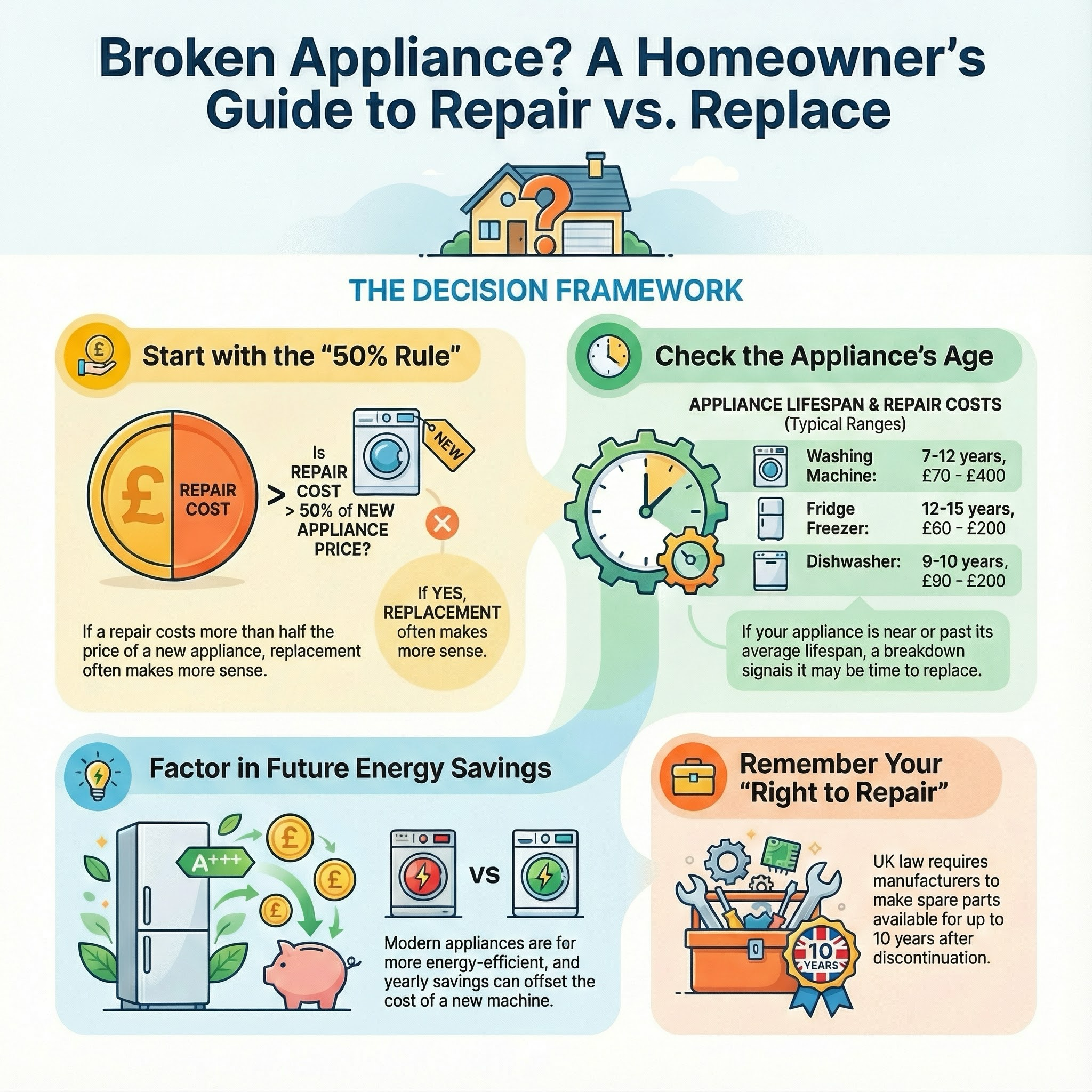
Appliance Repair explained
While some modern machines are designed to be "disposable," high-quality vacuum cleaners are built to be serviced. Enlisting a professional ensures the electrical integrity of the unit remains intact and that the correct thermal safety components are properly configured during the swap.
| Item | Low £ | High £ | Notes |
|---|---|---|---|
| Call-out / Diagnostic Fee | £45 | £75 | Often deducted from the final repair bill. |
| Labour (Standard Repair) | £50 | £90 | Fixed fee is common for appliance repairs. |
| Budget/Generic Motor | £30 | £60 | Suitable for older or "workhorse" models. |
| OEM/Premium Motor | £70 | £160 | Genuine parts for Dyson, Miele, or Sebo. |
| Total Project Cost | £125 | £325 | Inclusive of VAT and parts. |
Prices vary significantly based on the brand and model. Premium cordless vacuum motors (digital motors) are generally more expensive than traditional brushed motors found in corded uprights. Availability of parts also dictates the price; common models like the Henry (Numatic) have very affordable spares compared to imported high-end brands.
While many UK homeowners are comfortable with basic DIY, vacuum motor replacement involves mains electricity and high-speed rotating parts. Modern vacuums, particularly Dyson and Shark, use complex "clamshell" designs that are notoriously easy to crack if you don't know the hidden clip locations.
A professional repairer provides a warranty on both the part and the labour. Crucially, they will perform a PAT test after reassembly. If you DIY and a wiring fault causes a fire, your home insurance may be invalidated if the appliance wasn't repaired by a competent person to UK safety standards.
If the machine cost more than £250 new (like a Miele or Sebo), a repair is usually worth it. If it was a budget supermarket model, the repair cost might exceed the value of the machine.
The most common cause is restricted airflow. If filters aren't cleaned or bags aren't changed, the motor has to work harder and loses its primary cooling source, leading to overheating.
On some older corded models, yes. If the motor is sparking or cutting out, it might just need new brushes (costing £10-£20). However, most modern "digital" motors are sealed units that require full replacement.
A new motor will restore the machine to its original factory performance. However, if your suction is poor, it is often due to blocked filters or hoses rather than the motor itself.
A sharp, metallic, or ozone-like smell usually indicates the motor windings are burning or the carbon brushes have worn down to the springs. You should stop using the machine immediately to avoid a fire risk.
This guide was written with AI assistance and is intended for general information only. Prices are estimates based on UK averages and may vary by region. Always get at least three quotes and consult a qualified professional before starting any work.
Ask follow-ups in plain English. The AI explains options, sequencing and what to ask the appliance repair — so you walk in informed.
Microwaves are a staple of the modern UK kitchen, offering convenience for everything from defrosting to full meal preparation. While basic freestanding models ...
READ GUIDE →GuideA faulty fridge or freezer is one of the most urgent domestic repairs, with food safety and waste being the primary concerns. For many UK homeowners, a professi...
READ GUIDE →GuideA cold oven is a major disruption to any UK household, but a failed heating element is one of the most common and cost-effective repairs you can undertake. Inst...
READ GUIDE →GuideScope of Works • inspect appliance and perform diagnostic checks (power, suction, switches, wiring) • clean and test filters, dust bin or bag and airway for blo...
READ GUIDE →GuideA faulty microwave display is a common frustration for UK homeowners. Whether the screen has gone completely dark, is flickering, or showing unintelligible "gho...
READ GUIDE →GuideA faulty oven can bring a UK household to a standstill, turning meal times into a logistical challenge. Whether it is a failed heating element, a noisy fan, or ...
READ GUIDE →