Instant
01 · Ask
Ask the AI a follow-up
Got more questions about washer dryer repair? Describe the bit you're unsure about — the AI explains options, sequencing and what to ask the appliance repair.

Wash or dry cycle failing, leaking or noisy — fixed on-site by a local appliance engineer.
You've read the brief on washer dryer repair. Now lean on us to find the right appliance repair — and stay in control of the job.
Got more questions about washer dryer repair? Describe the bit you're unsure about — the AI explains options, sequencing and what to ask the appliance repair.
Costs, timelines, pitfalls and the right questions to ask before any appliance repair starts on washer dryer repair.
Itemised quotes from up to 3 local appliance repairs on washer dryer repair — so you can compare like-for-like, not lump sums.
Ready when you are
Enter your postcode and get free quotes from local pros.
Four moves that separate a smooth job from a nightmare.
Usually caused by a failed heating element, a blown thermal fuse, or a condenser duct completely choked with lint.
Often indicates failing drum bearings or a foreign object (like a coin or bra wire) trapped in the outer tub.
Typically a blocked filter or a failed drain pump; this often prevents the dryer cycle from starting for safety reasons.
Modern machines use codes (e.g., F05, E18) to signal specific faults; always have these ready when calling an engineer.
Indicative UK ranges and what affects price.
By job type
Quote spread is typically ± 18% — always get 3 quotes.
Appliance Repair quick-view
Appliance Repair explained
Repairing a washer dryer requires a specialist touch to navigate the combined mechanical and electrical components. Investing in a professional repair not only restores your daily routine but also extends the lifespan of an expensive appliance, preventing unnecessary landfill waste and the high cost of a replacement unit.
The cost of a washer dryer repair in the UK is influenced by the brand (premium brands like Miele or Bosch often have higher part costs) and whether the unit is freestanding or integrated. Integrated machines usually incur higher labour charges as they must be carefully extracted from cabinetry.
| Item | Low £ | High £ | Notes |
|---|---|---|---|
| Call-out / Diagnostic Fee | £80 | £130 | Often deducted from the final bill if you proceed. |
| Labour (per hour) | £60 | £100 | Charged after the first hour or diagnostic period. |
| Minor Parts (Seals, Belts) | £20 | £60 | Common wear-and-tear items often kept on vans. |
| Major Parts (Motor, PCB) | £120 | £300 | Control boards and motors for high-end brands. |
| Integrated Removal Fee | £30 | £60 | Additional labour for built-in kitchen units. |
| Total Typical Repair | £140 | £450 | Most domestic repairs fall within this range. |
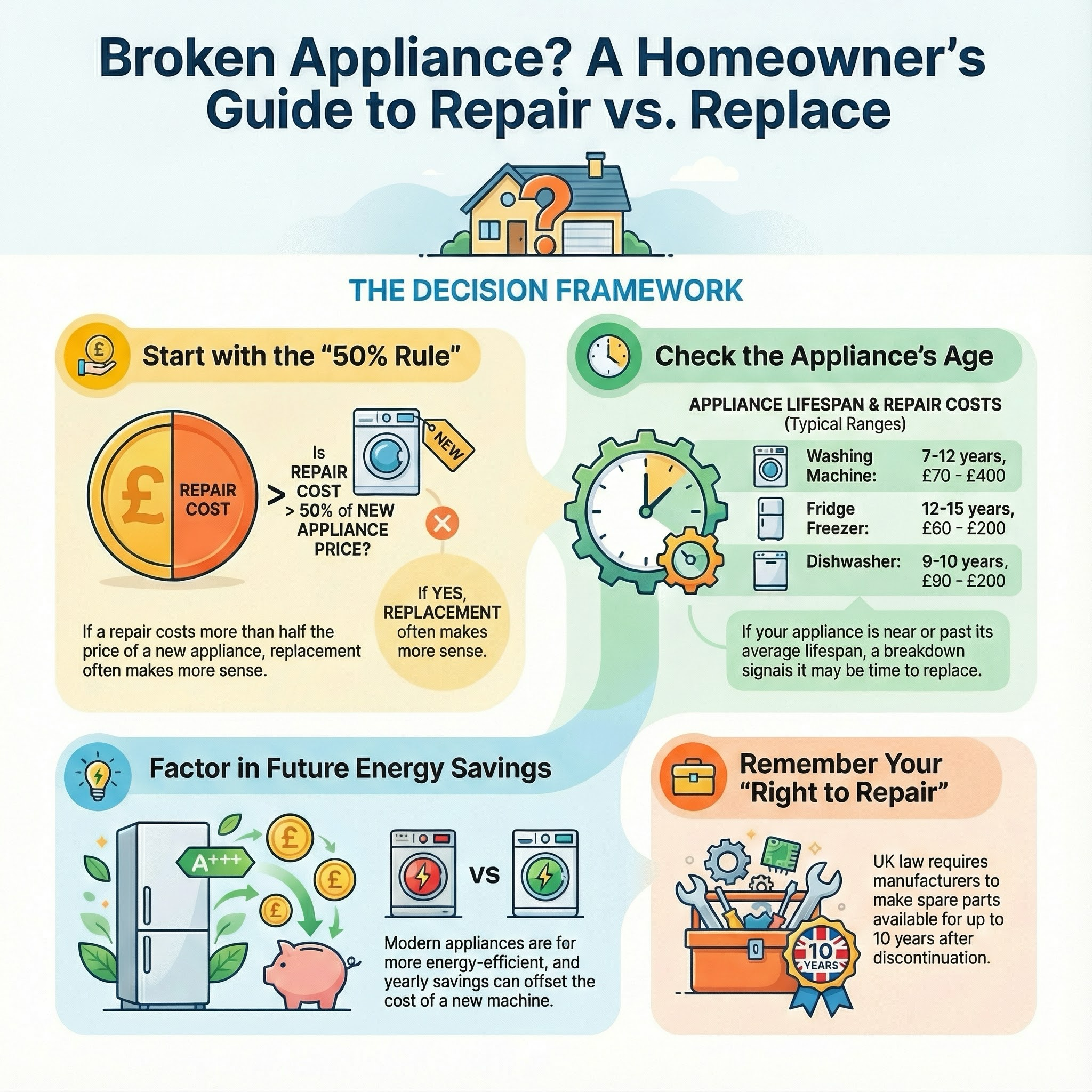
Note: If your repair quote exceeds 50% of the cost of a new machine, your engineer may recommend replacement, especially if the unit is over 7 years old.
While clearing a blocked pump filter is a straightforward DIY task, most washer dryer repairs should be left to a professional. These machines combine water and high-voltage electricity, posing a significant risk of electric shock or flood damage if handled incorrectly.
Furthermore, many modern appliances require specific diagnostic software to reset error codes or calibrate new control boards. Attempting a DIY repair can also void any remaining manufacturer warranty or your home insurance coverage in the event of a subsequent fire or leak.
Generally, yes. Most high-quality washer dryers are designed to last 8-12 years. If the repair cost is under £200, it is usually more cost-effective than buying a new mid-range unit.
This is often caused by a build-up of lint hitting the heating element or a slipping drive belt. Switch the appliance off at the wall immediately and call an engineer, as this is a fire risk.
No, the engineer will need the machine connected to power and water to run diagnostics. However, you should ensure the drum is empty and the area around the machine is clear.
Many common faults like pump blockages or belt replacements are fixed on the first visit. If a specific PCB or heating element is required, a second visit is usually necessary.
This is frequently due to a blocked condenser or a faulty moisture sensor. If the machine cannot "breathe" or sense the humidity correctly, the cycle will continue indefinitely or fail to heat.
This guide was written with AI assistance and is intended for general information only. Prices are estimates based on UK averages and may vary by region. Always get at least three quotes and consult a qualified professional before starting any work.
Ask follow-ups in plain English. The AI explains options, sequencing and what to ask the appliance repair — so you walk in informed.
Microwaves are a staple of the modern UK kitchen, offering convenience for everything from defrosting to full meal preparation. While basic freestanding models ...
READ GUIDE →GuideA faulty fridge or freezer is one of the most urgent domestic repairs, with food safety and waste being the primary concerns. For many UK homeowners, a professi...
READ GUIDE →GuideA cold oven is a major disruption to any UK household, but a failed heating element is one of the most common and cost-effective repairs you can undertake. Inst...
READ GUIDE →GuideScope of Works • inspect appliance and perform diagnostic checks (power, suction, switches, wiring) • clean and test filters, dust bin or bag and airway for blo...
READ GUIDE →GuideA faulty microwave display is a common frustration for UK homeowners. Whether the screen has gone completely dark, is flickering, or showing unintelligible "gho...
READ GUIDE →GuideA faulty oven can bring a UK household to a standstill, turning meal times into a logistical challenge. Whether it is a failed heating element, a noisy fan, or ...
READ GUIDE →