Instant
01 · Ask
Ask the AI a follow-up
Got more questions about air Bricks Installation — Damp Control UK? Describe the bit you're unsure about — the AI explains options, sequencing and what to ask the bricklayer.

Underfloor ventilation for suspended timber floors — stops damp, rot and musty smells.
You've read the brief on air Bricks Installation — Damp Control UK. Now lean on us to find the right bricklayer — and stay in control of the job.
Got more questions about air Bricks Installation — Damp Control UK? Describe the bit you're unsure about — the AI explains options, sequencing and what to ask the bricklayer.
Costs, timelines, pitfalls and the right questions to ask before any bricklayer starts on air Bricks Installation — Damp Control UK.
Itemised quotes from up to 3 local bricklayers on air Bricks Installation — Damp Control UK — so you can compare like-for-like, not lump sums.
Ready when you are
Enter your postcode and get free quotes from local pros.
Four moves that separate a smooth job from a nightmare.
— leaves, soil, render. Annual clear-out.
— common in older houses. Add more.
— usually inadequate ventilation.
— water bridges into wall.
Indicative UK ranges and what affects price.
By job type
Quote spread is typically ± 18% — always get 3 quotes.
Bricklayer quick-view
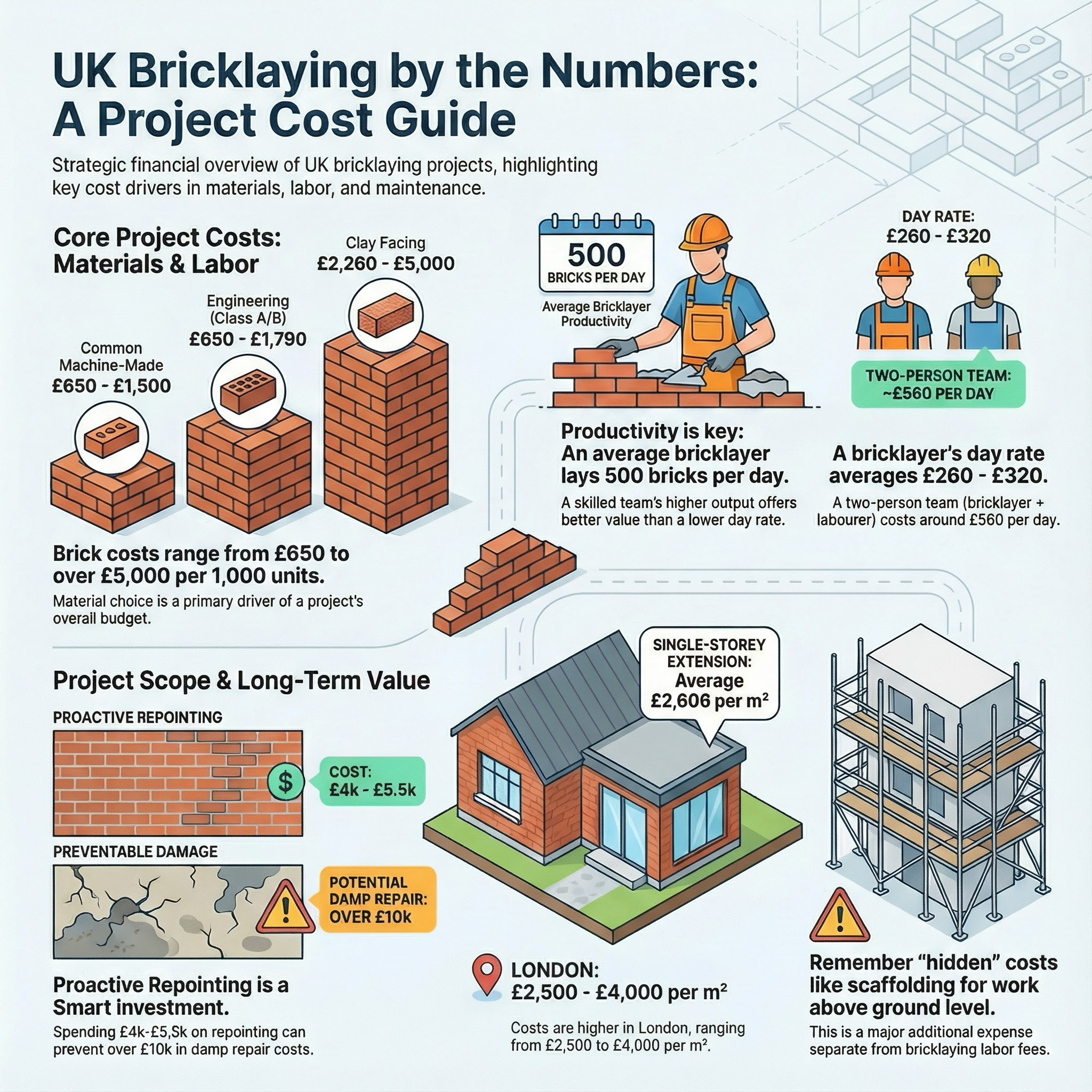
Air bricks are perforated bricks installed in external walls below floor level — providing ventilation to the void under suspended timber floors. Adequate ventilation prevents damp and rot. Insufficient air bricks (or blocked ones) are a common cause of UK damp problems. This guide covers what air brick installation costs in 2026, how many you need, and where they go.
Most pre-1960 UK houses with suspended timber floors need air bricks. Modern solid floors don't.
| Item | Low £ | High £ | Notes |
|---|---|---|---|
| Single air brick install | 50 | 140 | Cut and fit |
| Air brick + cavity sleeve | 80 | 200 | For cavity walls |
| Premium ventilator grille | 30 | 120 | Decorative finish |
| Multiple air bricks (4–8 brick install) | 400 | 1,200 | Bulk pricing |
| Surveying/diagnosis | 100 | 400 | If damp suspected |
Cutting through external walls is achievable for capable DIYers. For cavity walls, cavity sleeves matter — easier to hire.
Damp in floor void, musty smell from underfloor area, rot in timbers. Survey confirms.
Slightly — floor void is colder than outside. Insulate the floor itself rather than block air bricks.
No — damp damage costs more than the heat loss.
Yes for solid walls — cutting and fitting is straightforward. Cavity walls need sleeve detail.
50–100 years. Plastic ones may shorter due to UV; clay almost permanent.
Modern solid floor construction doesn't need air bricks. Older suspended-floor properties do.
This guide was written with AI assistance and is intended for general information only. Prices are estimates based on UK averages and may vary by region. Always get at least three quotes and consult a qualified professional before starting any work.
Ask follow-ups in plain English. The AI explains options, sequencing and what to ask the bricklayer — so you walk in informed.
Brickwork is the backbone of most UK homes, providing structural integrity and protection against our unpredictable weather. Over time, exposure to rain, frost,...
READ GUIDE →GuideYour front steps are more than just a functional entrance; they are a vital part of your home’s kerb appeal and structural safety. For UK homeowners, replacing ...
READ GUIDE →GuideRepointing is the process of renewing the external part of mortar joints between bricks. Over time, the UK’s harsh weather causes mortar to crumble, crack, and ...
READ GUIDE →GuideCracks in brickwork are a common sight for UK homeowners, often triggered by seasonal temperature changes, heavy clay soils, or historical settlement. While man...
READ GUIDE →GuideGarden walls are more than just boundaries; they provide security, privacy, and kerb appeal to UK homes. However, constant exposure to the British weather—parti...
READ GUIDE →GuideHistoric dry stone walls are a defining feature of the British countryside and many period properties. Unlike modern masonry, these structures rely on gravity a...
READ GUIDE →