Instant
01 · Ask
Repair, match or build new?
Spalling brick, dropped wall, want a new extension? Describe what you've got — the AI tells you whether it's a repointing job, a rebuild or a structural call.

English Bond for strength, Garden Wall Bond for economy — pattern, cost and where each suits.
Read the brief on bond, mortar and DPC — then let Three local bricklayers quote on the right spec.
Spalling brick, dropped wall, want a new extension? Describe what you've got — the AI tells you whether it's a repointing job, a rebuild or a structural call.
Stretcher vs Flemish bond, NHL lime, cavity ties, weep holes, DPC heights. Know what good looks like before the first course is laid.
Three local bricklayers quote on the same spec — bricks, mortar, scaffold, finishing — so you can pick the right hand for the job.
Ready when you are
Enter your postcode and get free quotes from local pros.
Four moves that separate a smooth job from a nightmare.
On extensions and repairs, sourcing the right brick is harder than laying it. Insist on a sample wall — three courses, on-site, in your light — before they buy the pallet.
Lime mortar, cement mortar, NHL grade — the wrong mix on the wrong brick spalls in five winters. Ask which mix and why.
Stretcher, Flemish, English — the bond should match the existing wall, especially on period properties. Catch it at first course, not after pointing.
Any external wall needs a DPC at the right height — 150mm above finished ground level. A missing or wrong DPC creates damp problems you'll be fixing for years.
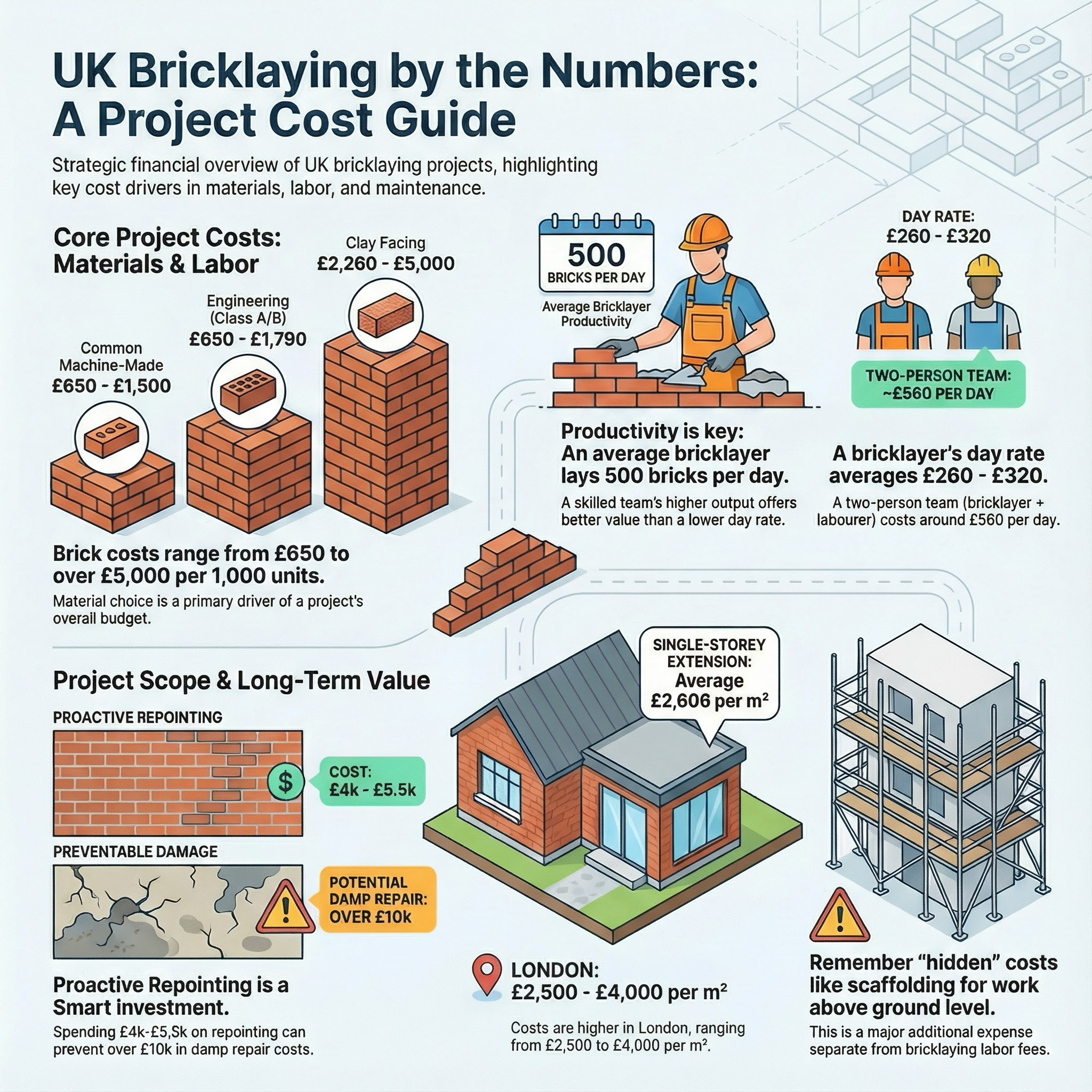
Indicative UK ranges and what affects price.
By job type
Quote spread is typically ± 18% — always get 3 quotes.
Bricklayer quick-view
If you're laying a heritage brick wall, you'll likely be choosing between English bond and garden wall bond — two patterns alternating stretcher and header courses in different ratios. They look different, cost different, and suit different purposes. This guide covers the differences and where each works.
Both are stronger than stretcher bond. English bond is the gold standard for strength; garden wall bond is a cheaper compromise.
| Bond | Labour cost | Wall thickness |
|---|---|---|
| Stretcher bond (modern) | Baseline | 215mm |
| Garden wall bond | +10–20% | 327mm typically |
| Flemish bond | +15–25% | 327mm |
| English bond | +20–35% | 327mm |
English bond is older — used since at least Tudor times. Garden wall bond emerged later for cheaper garden walls.
English bond reads as more historic and formal. Garden wall bond is heritage but subtler.
Less strong than English — fewer headers tying the wall together. Adequate for garden walls; not for retaining walls.
English bond is typically 10–15% more expensive in labour than garden wall bond.
Rare and usually a mistake. Pick one bond pattern per wall for visual coherence.
Modern bricklayers often default to stretcher unless you ask. For heritage work, specify the bond in the brief.
This guide was written with AI assistance and is intended for general information only. Prices are estimates based on UK averages and may vary by region. Always get at least three quotes and consult a qualified professional before starting any work.
Ask follow-ups in plain English. The AI explains options, sequencing and what to ask the bricklayer — so you walk in informed.
Brickwork is the backbone of most UK homes, providing structural integrity and protection against our unpredictable weather. Over time, exposure to rain, frost,...
READ GUIDE →GuideYour front steps are more than just a functional entrance; they are a vital part of your home’s kerb appeal and structural safety. For UK homeowners, replacing ...
READ GUIDE →GuideRepointing is the process of renewing the external part of mortar joints between bricks. Over time, the UK’s harsh weather causes mortar to crumble, crack, and ...
READ GUIDE →GuideCracks in brickwork are a common sight for UK homeowners, often triggered by seasonal temperature changes, heavy clay soils, or historical settlement. While man...
READ GUIDE →GuideGarden walls are more than just boundaries; they provide security, privacy, and kerb appeal to UK homes. However, constant exposure to the British weather—parti...
READ GUIDE →GuideHistoric dry stone walls are a defining feature of the British countryside and many period properties. Unlike modern masonry, these structures rely on gravity a...
READ GUIDE →