Instant
01 · Ask
Ask the AI a follow-up
Got more questions about cupboard door installation? Describe the bit you're unsure about — the AI explains options, sequencing and what to ask the carpenter.

Replace tired kitchen or wardrobe doors — measured, ordered, hung and adjusted to a clean reveal.
You've read the brief on cupboard door installation. Now lean on us to find the right carpenter — and stay in control of the job.
Got more questions about cupboard door installation? Describe the bit you're unsure about — the AI explains options, sequencing and what to ask the carpenter.
Costs, timelines, pitfalls and the right questions to ask before any carpenter starts on cupboard door installation.
Itemised quotes from up to 3 local carpenters on cupboard door installation — so you can compare like-for-like, not lump sums.
Ready when you are
Enter your postcode and get free quotes from local pros.
Four moves that separate a smooth job from a nightmare.
Doors that swing open on their own usually mean the carcass is not level. A carpenter can often compensate for this via the hinges.
Using the wrong screw length or over-tightening into chipboard carcasses can strip the thread, requiring a "hinge repair plate."
Different brands use different offsets for hinge holes; never assume a new door will fit old plates without checking measurements first.
Even a 2mm difference in handle height is visible to the naked eye. Always use a template or jig for drilling.
Indicative UK ranges and what affects price.
By job type
Quote spread is typically ± 18% — always get 3 quotes.
Carpenter quick-view
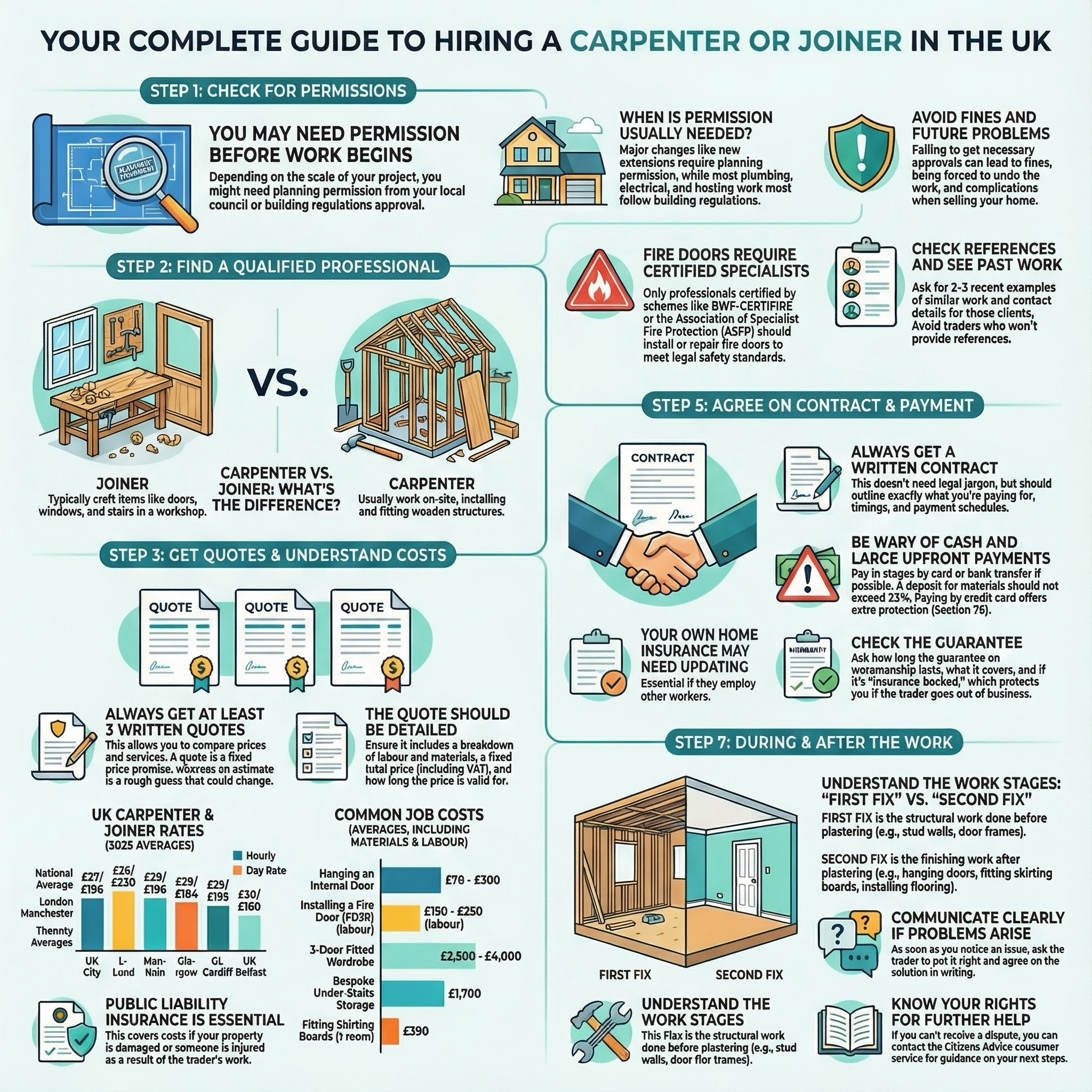
Carpenter explained
A professional carpenter ensures that every door sits perfectly flush, with consistent "reveals" (the gaps between doors) and smooth operation. This guide covers everything from labour rates to the technical pitfalls of DIY installation.
Prices vary significantly based on whether you are buying "off-the-shelf" standard sizes (like those from IKEA or Howdens) or commissioning bespoke joinery. All prices below include VAT and reflect current 2025/26 UK market averages.
| Item | Low £ | High £ | Notes |
|---|---|---|---|
| Labour (Daily Rate) | £250 | £450 | Higher in London and the SE. |
| Standard MDF Door (Unit) | £25 | £85 | Pre-finished foil or laminate. |
| Solid Oak/Bespoke Door (Unit) | £120 | £350+ | Includes priming or lacquering. |
| High-Quality Hinge (Pair) | £8 | £25 | Soft-close, 110-degree opening. |
| Waste Disposal | £30 | £80 | Removal of old doors and packaging. |
Factors affecting the final bill include the number of "integrated" appliances (which require more complex door-on-door fitting) and whether the existing carcasses need reinforcing or levelling before the new doors can be hung.
If you are simply swapping "like-for-like" doors from the same manufacturer, DIY is achievable with a basic screwdriver. However, if you are changing hinge positions or working with expensive solid wood, a professional carpenter is a wise investment. Warning: Drilling hinge holes incorrectly can ruin a door instantly, and achieving perfectly straight lines across a long run of units is notoriously difficult for amateurs.
Note: If your cupboard installation involves moving electrical sockets or integrated gas hobs, you must hire a Part P certified electrician or a Gas Safe engineer to handle those specific elements.
Yes, but the success depends on the substrate. Solid wood or MDF can be sanded and painted, but "wrapped" vinyl doors often peel if painted. Replacement is usually more durable for high-traffic areas like kitchens.
Most UK kitchen units follow 300mm, 400mm, 500mm, and 600mm widths. However, heights vary between brands (e.g., 715mm vs 720mm), so always measure the door, not the carcass.
Yes. Access to the inside of the carcass is required to screw in hinge plates and handles. Emptying them also prevents dust from settling on your belongings.
It is a hydraulic mechanism built into the hinge or clipped onto it that prevents the door from slamming. Most modern hinges have this integrated as standard.
As long as the chipboard isn't "blown" (swollen from water damage) or crumbling, they can usually be reused. If the screw holes are loose, a carpenter can use "G-plugs" or repair plates to provide a secure fixing.
This guide was written with AI assistance and is intended for general information only. Prices are estimates based on UK averages and may vary by region. Always get at least three quotes and consult a qualified professional before starting any work.
Ask follow-ups in plain English. The AI explains options, sequencing and what to ask the carpenter — so you walk in informed.
Joinery and Metalwork Installation Guide Scope of Works Survey & design brief – site measure‑up, discuss timber/steel grade, produce sketches/CAD. Workshop ...
READ GUIDE →GuideAssembling a chest of drawers is one of the most common yet frustrating home improvement tasks. Whether you have purchased a flat-pack unit from a high-street r...
READ GUIDE →GuideCustom carpentry is the hallmark of a well-finished UK home. Unlike flat-pack furniture, bespoke joinery is designed to fit the unique, often irregular dimensio...
READ GUIDE →GuideLetterbox Repair Guide Scope of Works Initial inspection & measure‑up – check door thickness, sleeve length and draught issues. Remove interior trim & o...
READ GUIDE →GuideFrom squeaky floorboards and sticking doors to more serious issues like timber rot or structural joist damage, carpentry repairs are a staple of UK home mainten...
READ GUIDE →GuideA wobbly or broken dining chair leg doesn't mean your furniture set is destined for the skip. Professional repair restores the structural integrity and aestheti...
READ GUIDE →