Instant
01 · Ask
Ask the AI a follow-up
Got more questions about stair tread replacement and handrail installation? Describe the bit you're unsure about — the AI explains options, sequencing and what to ask the carpenter.

Worn treads swapped, handrail repaired or replaced — done without ripping out the whole staircase.
You've read the brief on stair tread replacement and handrail installation. Now lean on us to find the right carpenter — and stay in control of the job.
Got more questions about stair tread replacement and handrail installation? Describe the bit you're unsure about — the AI explains options, sequencing and what to ask the carpenter.
Costs, timelines, pitfalls and the right questions to ask before any carpenter starts on stair tread replacement and handrail installation.
Itemised quotes from up to 3 local carpenters on stair tread replacement and handrail installation — so you can compare like-for-like, not lump sums.
Ready when you are
Enter your postcode and get free quotes from local pros.
Four moves that separate a smooth job from a nightmare.
Often caused by the tread rubbing against the riser or stringer. This is avoided by using high-quality wood glue and mechanical fixings during installation.
If the base post isn't securely bolted to the joists, the entire handrail will wobble.
Replacing only some treads can lead to uneven step heights, which is a major safety violation under UK law.
Using unseasoned wood can lead to gaps appearing after a few months of central heating use.
Indicative UK ranges and what affects price.
By job type
Quote spread is typically ± 18% — always get 3 quotes.
Carpenter quick-view
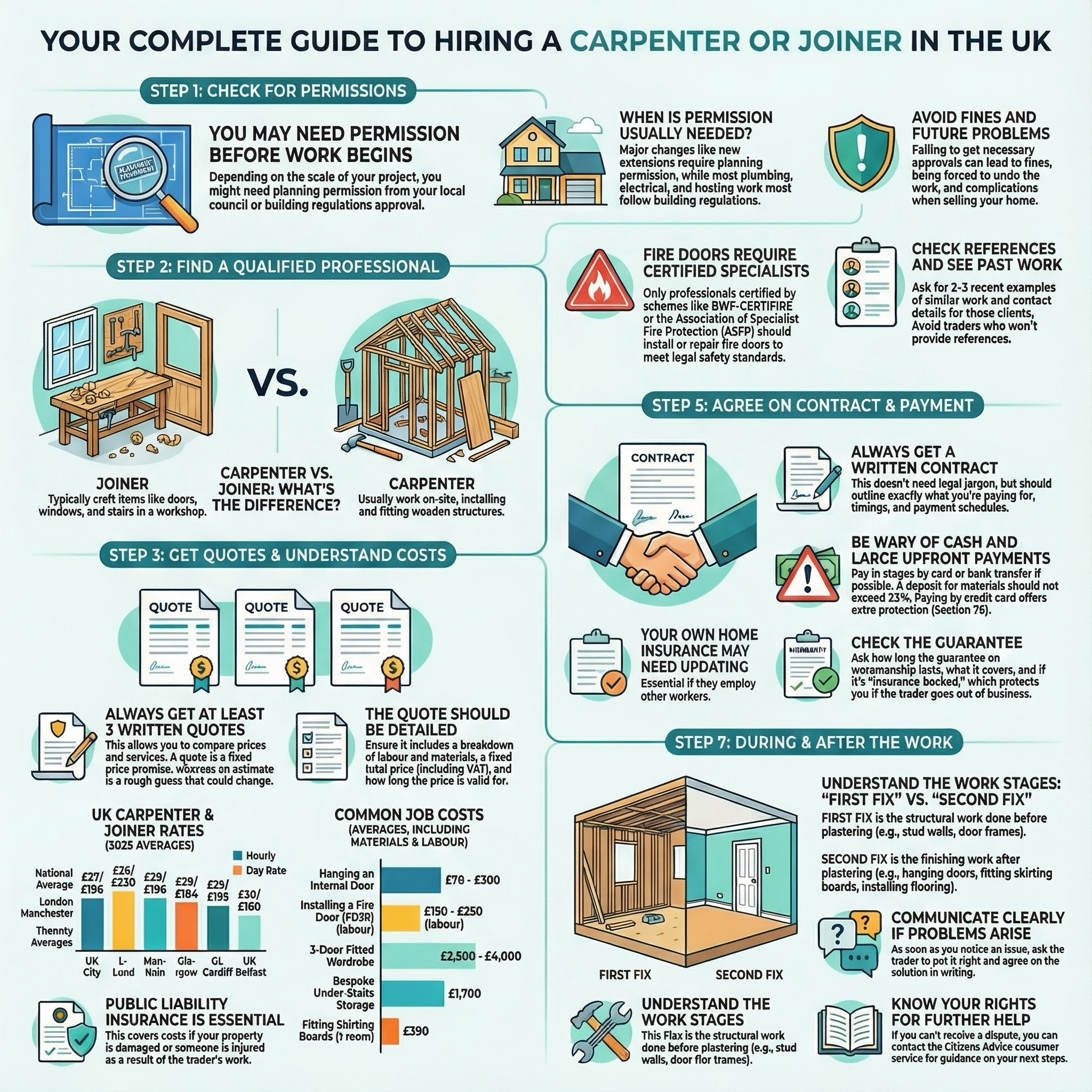
Carpenter explained
The staircase is often the first thing people see when entering a UK home. Beyond aesthetics, it is a critical structural element that must remain safe and compliant with building regulations. Replacing worn stair treads and installing a new handrail can transform a tired hallway while ensuring the safety of your family.
Whether you are dealing with creaky Victorian steps or looking to upgrade a 1970s semi with modern oak finishes, this guide covers the essential costs, timelines, and regulations involved in staircase refurbishment. Professional carpentry ensures that every riser is uniform and every handrail is secure enough to withstand years of heavy use.
| Item | Low £ | High £ | Notes |
|---|---|---|---|
| Standard Softwood/MDF Refurb | £600 | £1,200 | Straight flight, basic materials, intended for carpet. |
| Oak Treads & Glass Balustrade | £2,500 | £5,500+ | Premium materials and bespoke joinery. |
| Handrail & Spindles Only | £450 | £950 | Replacing the balustrade while keeping existing treads. |
| Labour (Daily Rate) | £250 | £450 | Varies by region (higher in London/SE). |
| Waste Disposal | £80 | £150 | Removal of old timber and debris. |
Prices in 2025/26 are heavily influenced by material choice. While MDF is cost-effective for stairs intended for carpeting, solid hardwoods like Oak or Walnut can triple the material costs but significantly increase property value. All prices include VAT where applicable.
While a skilled DIYer can replace a simple handrail, tread replacement is a structural task. If a tread is improperly fixed or the rise is inconsistent by even a few millimetres, it creates a significant trip hazard. Professionals are highly recommended for this work.
UK Building Regulations (Part K) are incredibly strict regarding the height of handrails and the "100mm sphere rule" for spindles. A professional carpenter ensures your staircase remains legal and safe for children and the elderly.
All staircase work in the UK must adhere to Building Regulations Part K. Failure to comply can cause issues when selling your home.
Yes, but access will be limited. Most carpenters work on one section at a time or provide temporary treads so you can reach the upper floors in the evening.
No. If the "stringers" (the side supports) are structurally sound, you can simply replace the treads and risers or use "stair cladding" kits to refresh the look.
Squeaks are caused by timber pieces rubbing together. A carpenter can fix this by adding glue blocks to the underside or screwing the treads more securely to the risers.
Oak is the UK favourite for its durability and grain. However, Ash is a great alternative for a lighter look, while Pine is the best choice if you intend to paint the balustrade.
Usually, no, provided you are replacing it like-for-like. However, if you are changing the pitch or the structural layout of the stairs, you may need to notify your local authority.
This guide was written with AI assistance and is intended for general information only. Prices are estimates based on UK averages and may vary by region. Always get at least three quotes and consult a qualified professional before starting any work.
Ask follow-ups in plain English. The AI explains options, sequencing and what to ask the carpenter — so you walk in informed.
Joinery and Metalwork Installation Guide Scope of Works Survey & design brief – site measure‑up, discuss timber/steel grade, produce sketches/CAD. Workshop ...
READ GUIDE →GuideAssembling a chest of drawers is one of the most common yet frustrating home improvement tasks. Whether you have purchased a flat-pack unit from a high-street r...
READ GUIDE →GuideCustom carpentry is the hallmark of a well-finished UK home. Unlike flat-pack furniture, bespoke joinery is designed to fit the unique, often irregular dimensio...
READ GUIDE →GuideLetterbox Repair Guide Scope of Works Initial inspection & measure‑up – check door thickness, sleeve length and draught issues. Remove interior trim & o...
READ GUIDE →GuideFrom squeaky floorboards and sticking doors to more serious issues like timber rot or structural joist damage, carpentry repairs are a staple of UK home mainten...
READ GUIDE →GuideA wobbly or broken dining chair leg doesn't mean your furniture set is destined for the skip. Professional repair restores the structural integrity and aestheti...
READ GUIDE →