Instant
01 · Ask
Ask the AI a follow-up
Got more questions about carpet Repair? Describe the bit you're unsure about — the AI explains options, sequencing and what to ask the carpets.

Burn, tear, snagging or lifting — patched, re-stretched and re-fitted without replacing the whole carpet.
You've read the brief on carpet Repair. Now lean on us to find the right carpets — and stay in control of the job.
Got more questions about carpet Repair? Describe the bit you're unsure about — the AI explains options, sequencing and what to ask the carpets.
Costs, timelines, pitfalls and the right questions to ask before any carpets starts on carpet Repair.
Itemised quotes from up to 3 local carpetss on carpet Repair — so you can compare like-for-like, not lump sums.
Ready when you are
Enter your postcode and get free quotes from local pros.
Four moves that separate a smooth job from a nightmare.
Even with the same carpet, the "donor" piece from a dark cupboard may look brighter than the faded carpet in the middle of a sunny room. A pro will "feather" or clean the area to help it blend.
This occurs when a join is forced together too tightly, creating a visible ridge. It is usually caused by poor tension during the repair.
If the underlay isn't also repaired or replaced beneath a patch, the new section may sit lower than the rest of the floor.
Using the wrong cutting tool can cause the carpet pile to unravel over time. Professional "row-finding" tools prevent this.
Indicative UK ranges and what affects price.
By job type
Quote spread is typically ± 18% — always get 3 quotes.
Carpets quick-view
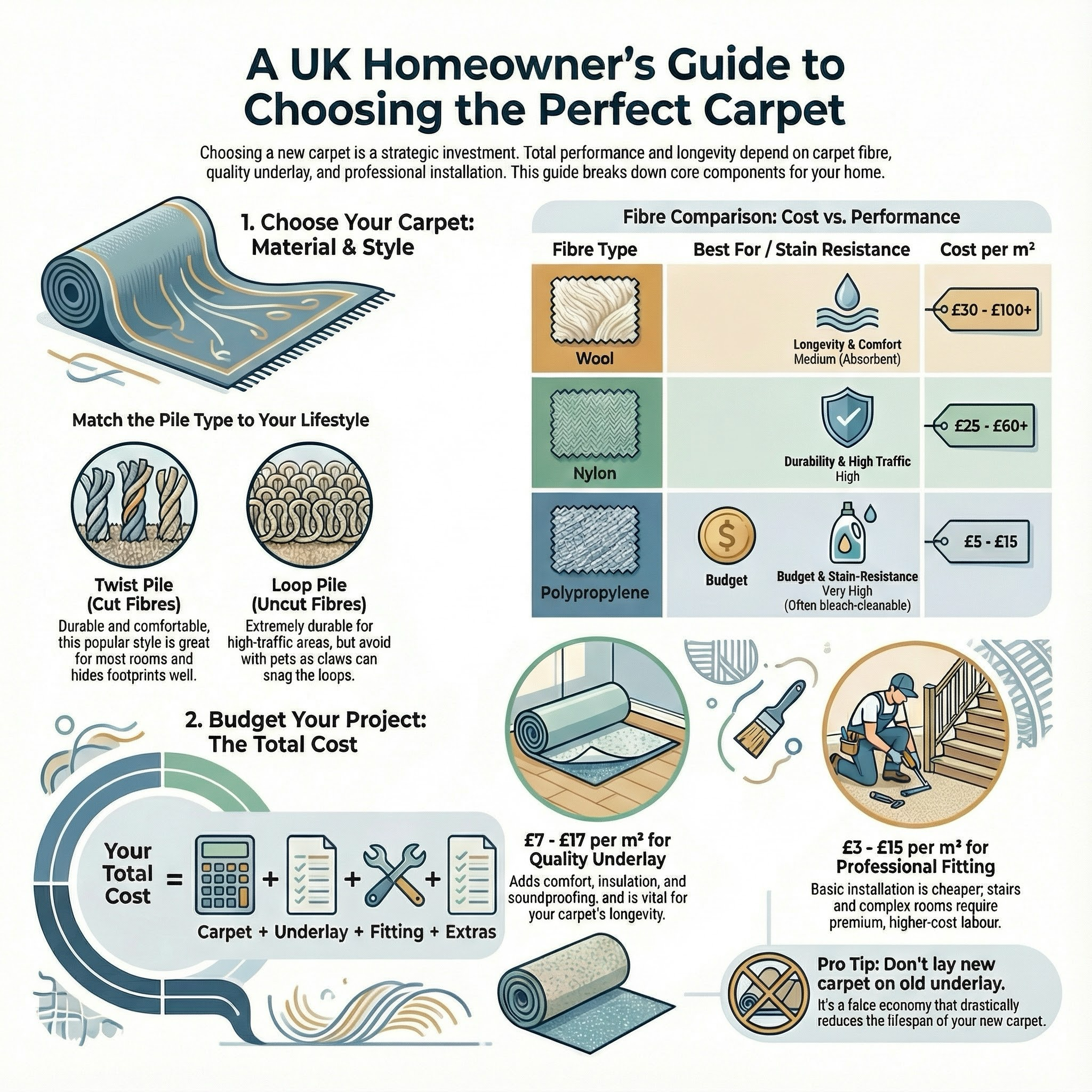
Carpets explained
Modern repair techniques can make even significant damage virtually invisible by utilising spare offcuts or "donor" pieces from hidden areas. Whether you are dealing with frayed seams or ripples that pose a trip hazard, a specialist carpet technician can usually restore the surface in a single visit.
Prices for carpet repairs in the UK vary based on the complexity of the weave and the extent of the damage. Most technicians charge a minimum call-out fee to cover travel and setup, which typically includes the first hour of labour.
| Item | Low £ | High £ | Notes |
|---|---|---|---|
| Call-out / Minimum Charge | £70 | £110 | Covers travel and initial assessment. |
| Small Patch Repair (e.g. Cigarette Burn) | £80 | £130 | Assumes homeowner has matching offcuts. |
| Room Re-stretching | £90 | £160 | To remove ripples and "waves". |
| Seam Repair (per linear metre) | £40 | £75 | Fixing split or frayed joins. |
| Full Room Cleaning (Post-Repair) | £40 | £70 | Often recommended to blend the repair. |
Note: Intricate patterns or high-end wool Axminster carpets may command a premium due to the precision required for pattern matching. Prices include VAT at the standard UK rate.
While DIY kits are available for small snags, they often result in "obvious" patches that can decrease the value of your home. Professional carpet fitters have the specialised heat-seaming irons and power stretchers required for a permanent, flush finish.
If your carpet is still under warranty, attempting a DIY repair will almost certainly void it. Always check your manufacturer's terms before proceeding.
Structural repairs, such as re-stretching or fixing stairs, should always be handled by a professional to ensure the carpet is safely secured to gripper rods, preventing slips and falls.
3 Questions to Ask:
While there are no mandatory "Part P" style building regs for carpet repair, work should be carried out in accordance with BS 5325 (Installation of textile floor coverings - Code of practice). This standard dictates how carpets should be stretched and secured to ensure longevity and safety.
A professional can usually "steal" a piece of carpet from a discreet location, such as the very back of an under-stairs cupboard or from underneath a fixed radiator. They will then replace that hidden area with a similar-coloured piece of new carpet.
Bleach permanently removes the pigment from the fibres. While some specialists offer "spot dyeing," the most reliable fix is usually a "cookie-cutter" patch repair where the bleached area is replaced with a fresh piece of matching carpet.
On deep-pile or tufted carpets, repairs are often 95-100% invisible. On very flat, short-pile carpets (like office-style loop piles), the seam may be slightly more visible, though still far less noticeable than the original damage.
Ripples usually occur due to poor initial installation, high humidity, or heavy furniture being dragged. A technician can "re-stretch" the carpet, trimming the excess at the walls to make it flat and tight again.
If the technician used a heat-bond iron, the adhesive sets as soon as it cools (usually 15-30 minutes). If they used liquid contact adhesives, you might need to avoid the area for 2-4 hours.
This guide was written with AI assistance and is intended for general information only. Prices are estimates based on UK averages and may vary by region. Always get at least three quotes and consult a qualified professional before starting any work.
Ask follow-ups in plain English. The AI explains options, sequencing and what to ask the carpets — so you walk in informed.
New flooring is one of the most impactful upgrades you can make to a UK home. Beyond the immediate aesthetic boost, high-quality flooring improves insulation, r...
READ GUIDE →GuideLaminate flooring remains one of the most popular choices for UK homeowners, offering the aesthetic of real hardwood with significantly higher durability and ea...
READ GUIDE →GuideInstalling new carpet is one of the most effective ways to instantly improve the comfort and insulation of your home. Whether you are opting for a durable wool-...
READ GUIDE →GuideFloor screeding is the process of applying a blended mixture of cement and graded sand (or a specialized liquid compound) to a structural concrete subfloor. For...
READ GUIDE →GuideModern vinyl flooring has evolved far beyond the basic "lino" of the past. Today, UK homeowners can choose from high-end sheet vinyl, Luxury Vinyl Tiles (LVT), ...
READ GUIDE →GuideRefinishing a wooden floor is one of the most effective ways to restore character and add significant value to a UK home. Whether you have discovered original V...
READ GUIDE →