Instant
01 · Ask
Ask the AI a follow-up
Got more questions about basement & Cellar Damp Proofing? Describe the bit you're unsure about — the AI explains options, sequencing and what to ask the damp proofer.

Cavity drain or cementitious tanking — for habitable cellars, with sump and pump as needed.
You've read the brief on basement & Cellar Damp Proofing. Now lean on us to find the right damp proofer — and stay in control of the job.
Got more questions about basement & Cellar Damp Proofing? Describe the bit you're unsure about — the AI explains options, sequencing and what to ask the damp proofer.
Costs, timelines, pitfalls and the right questions to ask before any damp proofer starts on basement & Cellar Damp Proofing.
Itemised quotes from up to 3 local damp proofers on basement & Cellar Damp Proofing — so you can compare like-for-like, not lump sums.
Ready when you are
Enter your postcode and get free quotes from local pros.
Four moves that separate a smooth job from a nightmare.
Type A tanking on active water ingress fails. Type C (drained cavity) is more reliable for water-prone basements.
Without battery backup, power cut causes flooding. Always specify dual-pump with battery.
Generic cement coating fails. Use Vandex, Sika, Permagard.
Some insurers exclude basement contents. Check policy.
Indicative UK ranges and what affects price.
By job type
Quote spread is typically ± 18% — always get 3 quotes.
Damp Proofer quick-view
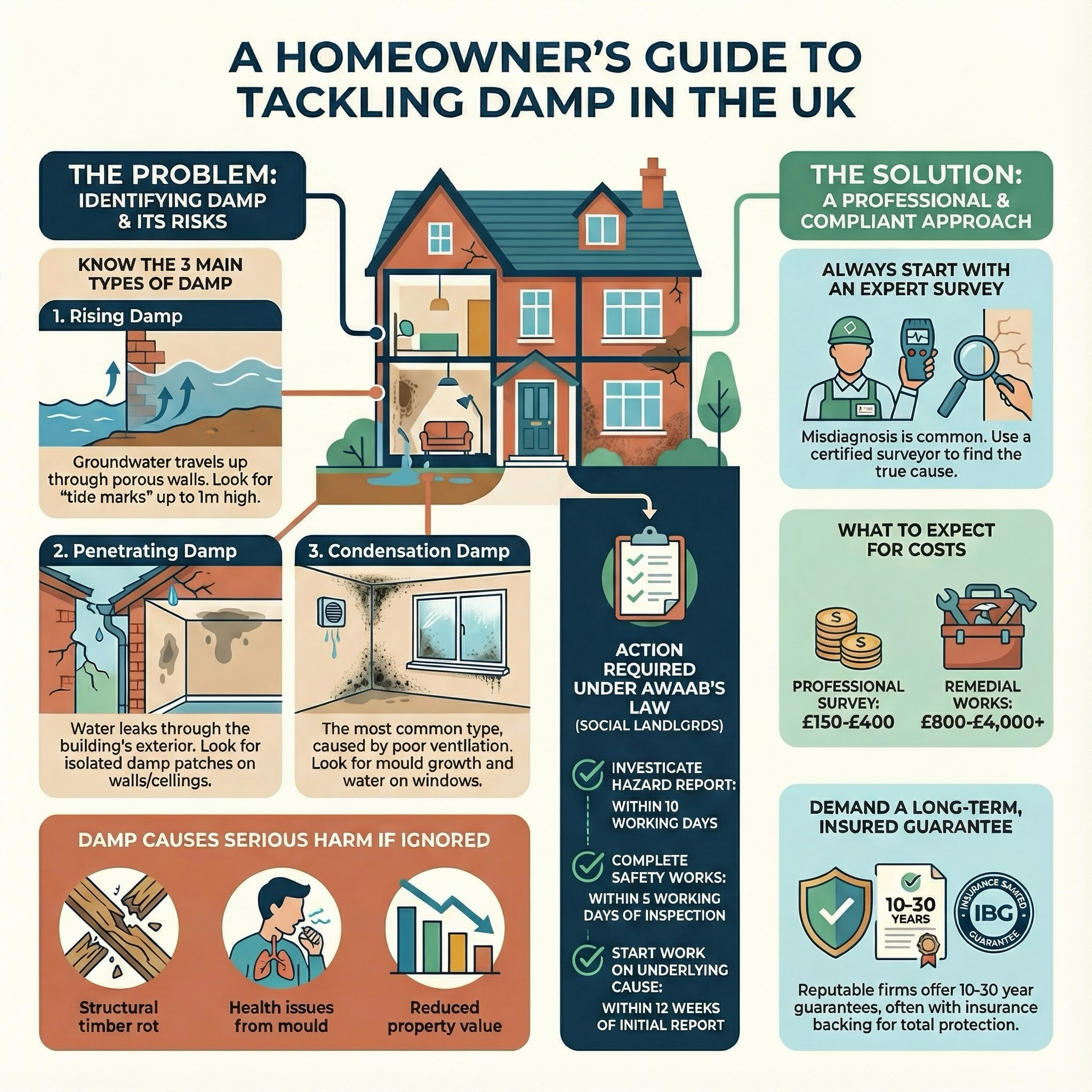
Damp Proofer explained
Basements and cellars need waterproofing because they're below the water table. Expect to pay £4,500–£18,000 for UK basement waterproofing depending on system, size, and existing condition.
Three approaches per BS 8102. Type A (barrier): cement-based slurry (Vandex, Sika) painted on walls and floor. Suitable for stable, dry-ish below-ground. Type B (integral): waterproof concrete structure itself. New build only. Type C (drained cavity): dimpled HDPE membrane (Newton, Delta, Permagard) on walls behind plasterboard, with floor drain to a sump pump. Most reliable for active water ingress.
| Item | Low (£) | High (£) | Notes |
|---|---|---|---|
| Type A tanking per m² | 40 | 100 | Cement-based slurry |
| Type C cavity drain per m² | 80 | 180 | Membrane + drainage |
| Sump pump installation | 800 | 2,500 | Including backup battery |
| Floor drainage channel | 40 | 100 | Per metre |
| Internal plasterboard finish | 40 | 80 | Per m² (over membrane) |
| Small cellar (15 m²) Type A | 3,500 | 7,500 | Walls and floor |
| Standard basement (30 m²) Type C | 9,000 | 18,000 | Premium system |
| Insurance-backed guarantee | 200 | 500 | 10–25 year cover |
Type A tanking: 1–2 weeks plus 2 weeks drying. Type C membrane: 2–4 weeks. Internal fit-out after: separate project.
Professional only. PCA waterproofing specialist or CSSW-qualified contractor. Risk of failure is high; consequences severe (flooding).
PCA member with basement waterproofing certificate. CSSW (Certificated Surveyor in Structural Waterproofing) qualification. Insurance-backed guarantee mandatory (£200–£500 extra but essential). 10–25 year warranty.
BS 8102:2022 code of practice for waterproofing below-ground structures. Building Regs Part C moisture control. Listed buildings need consent.
Type A (tanking) for occasional damp or stable conditions. Type C (cavity drain) for active water ingress. Quality surveyor specifies based on conditions.
Type A tanking: 25–35 years. Type C membrane: 50+ years (it's a permanent system). Sump pumps need replacement at 8–15 years.
For Type C systems: yes — the cavity drainage flows to a sump. For Type A: not usually. Always specify battery-backup pump for power cut protection.
Yes — basement conversions add 15–20% to property value. Requires Building Regs notification (insulation, ventilation, escape).
Inadequate ventilation. Combined with subtle moisture ingress. Specify proper extract and waterproofing as a single project.
Insurance-backed guarantee (IBG) protects against contractor disappearance. Costs £200–£500 extra but covers 10–25 years. Essential — basement leaks cost £000s to fix.
This guide was written with AI assistance and is intended for general information only. Prices are estimates based on UK averages and may vary by region. Always get at least three quotes and consult a qualified professional before starting any work.
Ask follow-ups in plain English. The AI explains options, sequencing and what to ask the damp proofer — so you walk in informed.
Dry rot ( Serpula lacrymans ) is one of the most serious threats to UK homes. Unlike wet rot, dry rot has the unique ability to spread through masonry and plast...
READ GUIDE →GuideEmergency damp proofing is a critical intervention for UK homeowners facing sudden moisture ingress or structural failure. Left unchecked, damp can lead to timb...
READ GUIDE →GuideStructural waterproofing is the specialised process of protecting a building's foundations and below-ground spaces from groundwater ingress. For UK homeowners, ...
READ GUIDE →GuidePenetrating damp is a common headache for UK homeowners, often caused by water "soaking" through external walls into the property. Unlike rising damp, which cli...
READ GUIDE →GuideDamp is one of the most common issues facing UK homeowners, particularly given our wet climate and ageing housing stock. Whether you are buying a new property o...
READ GUIDE →GuideDamp is more than just an unsightly patch on the wall; it is a warning sign of underlying structural issues that can impact your health and your home's value. A...
READ GUIDE →