Instant
01 · Ask
Ask the AI a follow-up
Got more questions about cellar Conversion Damp? Describe the bit you're unsure about — the AI explains options, sequencing and what to ask the damp proofer.

Make cellar habitable — full tanking, sump, drainage and ventilation to BS 8102 Grade 3.
You've read the brief on cellar Conversion Damp. Now lean on us to find the right damp proofer — and stay in control of the job.
Got more questions about cellar Conversion Damp? Describe the bit you're unsure about — the AI explains options, sequencing and what to ask the damp proofer.
Costs, timelines, pitfalls and the right questions to ask before any damp proofer starts on cellar Conversion Damp.
Itemised quotes from up to 3 local damp proofers on cellar Conversion Damp — so you can compare like-for-like, not lump sums.
Ready when you are
Enter your postcode and get free quotes from local pros.
Four moves that separate a smooth job from a nightmare.
Habitable rooms need 2.2m+ headroom (Part B). Cellars often 1.8–2.0m. Lowering floor is major work.
Cheap waterproofing fails after walls are sealed up. Insist on Type C cavity drain for habitable spaces.
Power cut floods finished basement. Always specify dual-pump with battery backup.
Habitable rooms need fire escape (window of minimum size). May require excavation for external door.
Indicative UK ranges and what affects price.
By job type
Quote spread is typically ± 18% — always get 3 quotes.
Damp Proofer quick-view
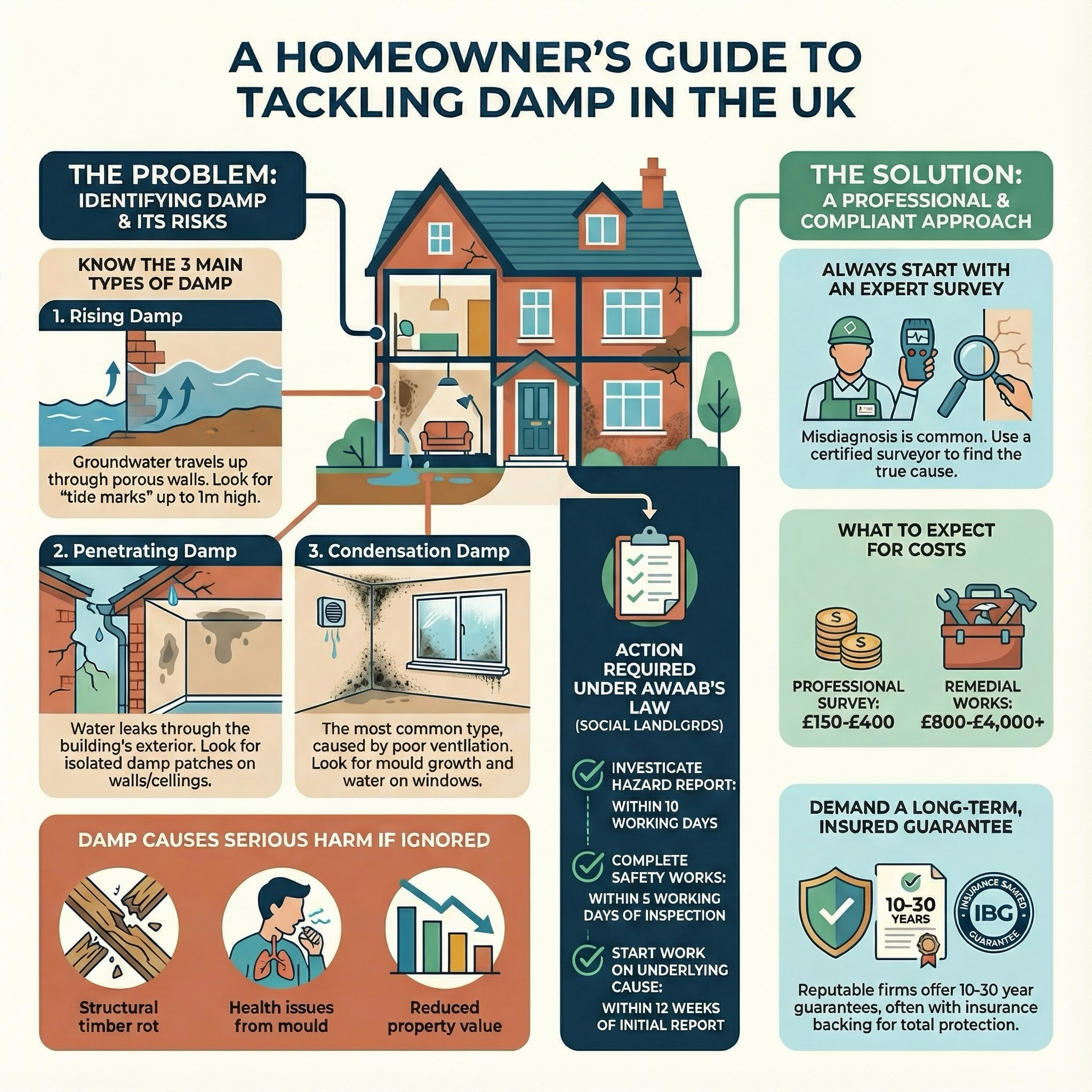
Damp Proofer explained
Converting a damp cellar to a habitable room adds 15–25% to property value. Expect to pay £15,000–£60,000 for UK cellar conversion depending on size, condition, and finish quality. Waterproofing is the foundation of any conversion.
Waterproofing first (Type A or Type C system per BS 8102). Floor level may be lowered (substantial work — Building Regs needed). Ceiling raised if low. New external door if no existing access. Insulation (walls, floor, ceiling). New electrical first fix (Part P certified). Plumbing if bathroom or kitchen included. Plasterboard finishes. Decoration. Heating extended from main house.
| Item | Low (£) | High (£) | Notes |
|---|---|---|---|
| Type C cavity drain waterproof system | 4,500 | 12,000 | For habitable use |
| Lowering floor (excavation + slab) | 3,500 | 15,000 | If headroom inadequate |
| Insulation throughout | 1,500 | 4,500 | Walls, floor, ceiling |
| Electrical first fix (Part P) | 1,500 | 4,000 | Including consumer unit |
| Bathroom installation | 3,500 | 10,000 | If included |
| Kitchenette | 3,000 | 10,000 | If included |
| Standard conversion total (study/playroom) | 15,000 | 35,000 | Small/medium |
| Premium conversion (gym/bathroom) | 35,000 | 80,000 | Full habitable suite |
Standard cellar conversion: 6–12 weeks. Premium with floor lowering and bathroom: 12–20 weeks.
Professional only. Waterproofing, structural work (if floor lowered), electrical (Part P), plumbing all regulated. Building Regs notification mandatory.
Specialist basement conversion company or experienced builder. PCA-qualified for waterproofing aspect. Get architect involved for design. Building inspector for compliance.
Building Regs full notification: Part B (escape), Part C (moisture), Part F (ventilation), Part L (thermal), Part P (electrical), Part E (acoustic in flats). Often planning permission for change of use to habitable. Listed buildings need consent.
Yes — with proper waterproofing, insulation, lighting, and ventilation. Best uses: home office, gym, playroom, cinema, wine cellar.
15–25% to property value typically. Quality bathroom conversion adds even more. Cost recovery 80–95% in good locations.
Change of use to habitable usually permitted development. Listed buildings: always. Conservation areas: often.
12–20 weeks typical for full conversion. Drying time between waterproofing and finishes adds weeks.
Type C cavity drain membrane (Newton, Delta) with sump pump and battery backup. Most reliable for habitable use.
Yes — building insurance covers all habitable space. Add to your contents insurance. Some insurers exclude basements due to flood risk — check.
This guide was written with AI assistance and is intended for general information only. Prices are estimates based on UK averages and may vary by region. Always get at least three quotes and consult a qualified professional before starting any work.
Ask follow-ups in plain English. The AI explains options, sequencing and what to ask the damp proofer — so you walk in informed.
Dry rot ( Serpula lacrymans ) is one of the most serious threats to UK homes. Unlike wet rot, dry rot has the unique ability to spread through masonry and plast...
READ GUIDE →GuideEmergency damp proofing is a critical intervention for UK homeowners facing sudden moisture ingress or structural failure. Left unchecked, damp can lead to timb...
READ GUIDE →GuideStructural waterproofing is the specialised process of protecting a building's foundations and below-ground spaces from groundwater ingress. For UK homeowners, ...
READ GUIDE →GuidePenetrating damp is a common headache for UK homeowners, often caused by water "soaking" through external walls into the property. Unlike rising damp, which cli...
READ GUIDE →GuideDamp is one of the most common issues facing UK homeowners, particularly given our wet climate and ageing housing stock. Whether you are buying a new property o...
READ GUIDE →GuideDamp is more than just an unsightly patch on the wall; it is a warning sign of underlying structural issues that can impact your health and your home's value. A...
READ GUIDE →