Instant
01 · Ask
Ask the AI a follow-up
Got more questions about damp Above DPC? Describe the bit you're unsure about — the AI explains options, sequencing and what to ask the damp proofer.

Penetrating, condensation or hidden plumbing leak — sorted by cause, with a written report.
You've read the brief on damp Above DPC. Now lean on us to find the right damp proofer — and stay in control of the job.
Got more questions about damp Above DPC? Describe the bit you're unsure about — the AI explains options, sequencing and what to ask the damp proofer.
Costs, timelines, pitfalls and the right questions to ask before any damp proofer starts on damp Above DPC.
Itemised quotes from up to 3 local damp proofers on damp Above DPC — so you can compare like-for-like, not lump sums.
Ready when you are
Enter your postcode and get free quotes from local pros.
Four moves that separate a smooth job from a nightmare.
Damp at 800mm or 1.5m height is NOT rising damp — rising damp shows below 1m only. Don't accept rising damp diagnosis above this level.
Water enters at one point and tracks across rafters or down walls. Find the entry point, not just visible internal damp.
Burst pipes in cavity hard to find. Inspector should use moisture mapping or thermal imaging.
Old wooden windows or perished uPVC seals let water track in. Often confused with rising damp because it appears at window-sill level.
Indicative UK ranges and what affects price.
By job type
Quote spread is typically ± 18% — always get 3 quotes.
Damp Proofer quick-view
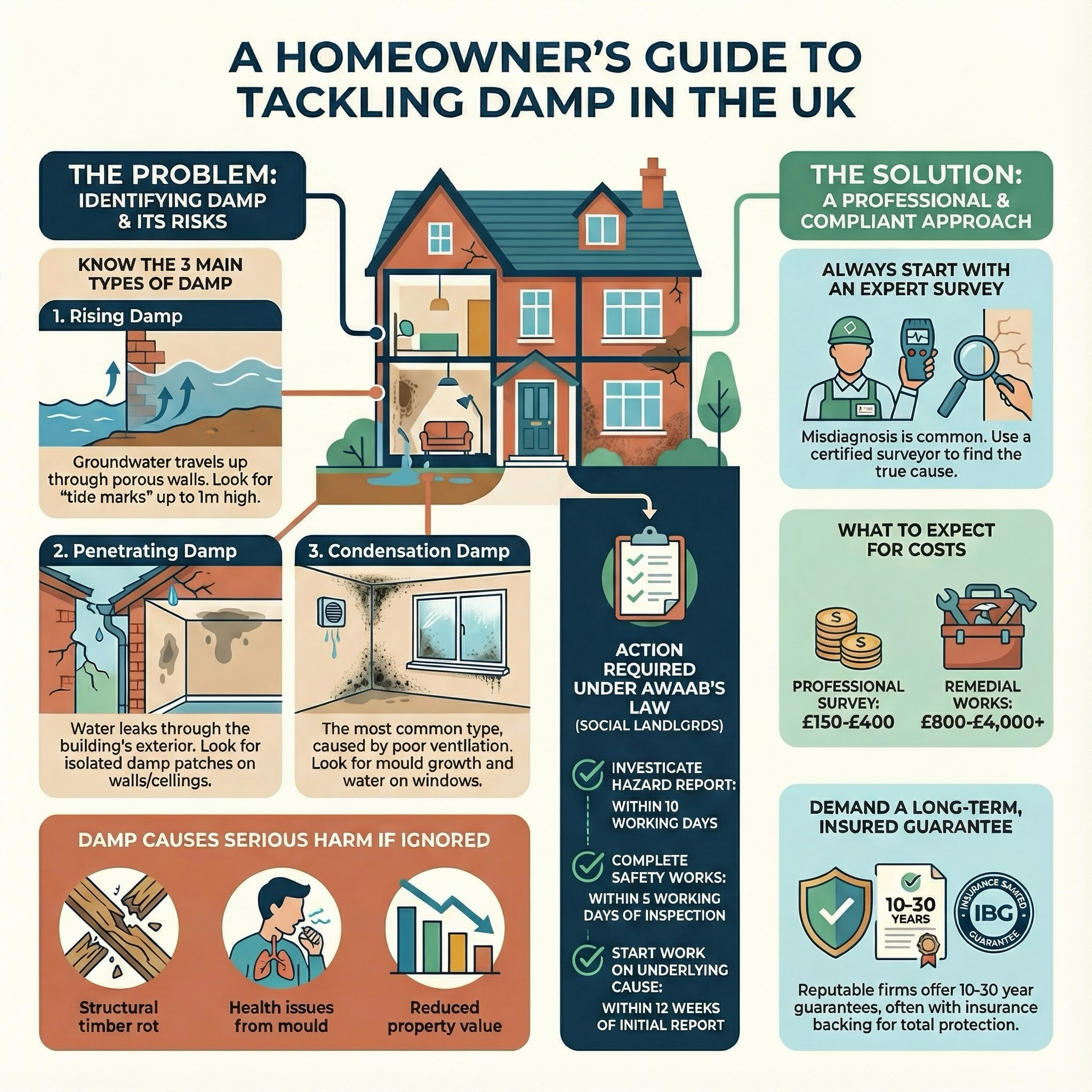
Damp Proofer explained
Damp showing above the DPC level is rarely rising damp — usually condensation, leak, or penetrating damp from above. Expect to pay £80–£2,500 for diagnosis and treatment depending on the true cause.
Diagnosis is the key step. Look UP from the damp patch to identify the source: water stain often originates at upper edge, then tracks down. Possible causes: leaking pipe in cavity, leaking roof/flashing, blocked gutter, perished window seal, perished pointing, defective flashing at extension roof junction, internal condensation, kitchen/bathroom moisture migration.
| Item | Low (£) | High (£) | Notes |
|---|---|---|---|
| Damp survey + cause identification | 120 | 400 | PCA-qualified |
| Pipe leak repair | 180 | 800 | Locate + fix + drying |
| Roof or flashing repair | 200 | 1,500 | Plus access |
| Window seal replacement | 120 | 400 | Per window |
| Pointing repair external | 80 | 500 | Affected area |
| Internal plaster + redecoration | 200 | 800 | Per area |
| Whole-house diagnosis treatment | 500 | 2,500 | Multiple causes |
Diagnosis: 1–2 hours. Single-source repair: 1–2 days. Drying after repair: 4–8 weeks. Re-plaster and decorate after.
Diagnosis: PCA-qualified surveyor. Specific repairs by relevant trade — plumber, roofer, glazier.
Independent PCA-qualified surveyor first. Then specialist trades for each fix. Co-ordinated approach saves time and cost.
No specific Building Regs for diagnosis. Repairs to roof, pointing, gutters may trigger Building Regs depending on scope.
Rising damp can reach 1m maximum theoretically. Above that, it's something else — usually penetrating damp, leak, or condensation.
Track UP from the visible damp patch. External inspection: pointing, render, gutters, roof tiles, flashings. Internal: pipes, kitchen/bathroom adjacent walls.
No — chemical DPC is for rising damp only (below 1m). For damp higher up, useless. If a contractor recommends it for damp at 1.5m, get a second opinion.
Usually perished window frame seal, defective pointing around the frame, or cracked sill. Fix at the source, not just internal plaster.
For elusive damp sources: yes — thermal imaging shows temperature differences indicating water. Costs £200–£700 for a survey.
Source fix: typically 1–2 days. Drying: 4–8 weeks. Re-plaster: 1–2 days after drying. Total: 6–10 weeks before redecoration.
This guide was written with AI assistance and is intended for general information only. Prices are estimates based on UK averages and may vary by region. Always get at least three quotes and consult a qualified professional before starting any work.
Ask follow-ups in plain English. The AI explains options, sequencing and what to ask the damp proofer — so you walk in informed.
Dry rot ( Serpula lacrymans ) is one of the most serious threats to UK homes. Unlike wet rot, dry rot has the unique ability to spread through masonry and plast...
READ GUIDE →GuideEmergency damp proofing is a critical intervention for UK homeowners facing sudden moisture ingress or structural failure. Left unchecked, damp can lead to timb...
READ GUIDE →GuideStructural waterproofing is the specialised process of protecting a building's foundations and below-ground spaces from groundwater ingress. For UK homeowners, ...
READ GUIDE →GuidePenetrating damp is a common headache for UK homeowners, often caused by water "soaking" through external walls into the property. Unlike rising damp, which cli...
READ GUIDE →GuideDamp is one of the most common issues facing UK homeowners, particularly given our wet climate and ageing housing stock. Whether you are buying a new property o...
READ GUIDE →GuideDamp is more than just an unsightly patch on the wall; it is a warning sign of underlying structural issues that can impact your health and your home's value. A...
READ GUIDE →