Instant
01 · Ask
Ask the AI a follow-up
Got more questions about rising Damp Treatment? Describe the bit you're unsure about — the AI explains options, sequencing and what to ask the damp proofer.

Chemical injection DPC and salt-resistant re-plaster — for genuine rising damp diagnosed by survey.
You've read the brief on rising Damp Treatment. Now lean on us to find the right damp proofer — and stay in control of the job.
Got more questions about rising Damp Treatment? Describe the bit you're unsure about — the AI explains options, sequencing and what to ask the damp proofer.
Costs, timelines, pitfalls and the right questions to ask before any damp proofer starts on rising Damp Treatment.
Itemised quotes from up to 3 local damp proofers on rising Damp Treatment — so you can compare like-for-like, not lump sums.
Ready when you are
Enter your postcode and get free quotes from local pros.
Four moves that separate a smooth job from a nightmare.
80% of "rising damp" surveys are wrong. Condensation, penetrating damp, leaking pipes, or salt contamination are the usual real culprits. Get independent diagnosis.
Treating symptoms not cause. Address ventilation and moisture source first.
Worthless if the contractor disappears. Insist on insurance-backed guarantee (GPI, IBG).
Salt-contaminated plaster keeps damp coming back. Always replace up to 1m.
Indicative UK ranges and what affects price.
By job type
Quote spread is typically ± 18% — always get 3 quotes.
Damp Proofer quick-view
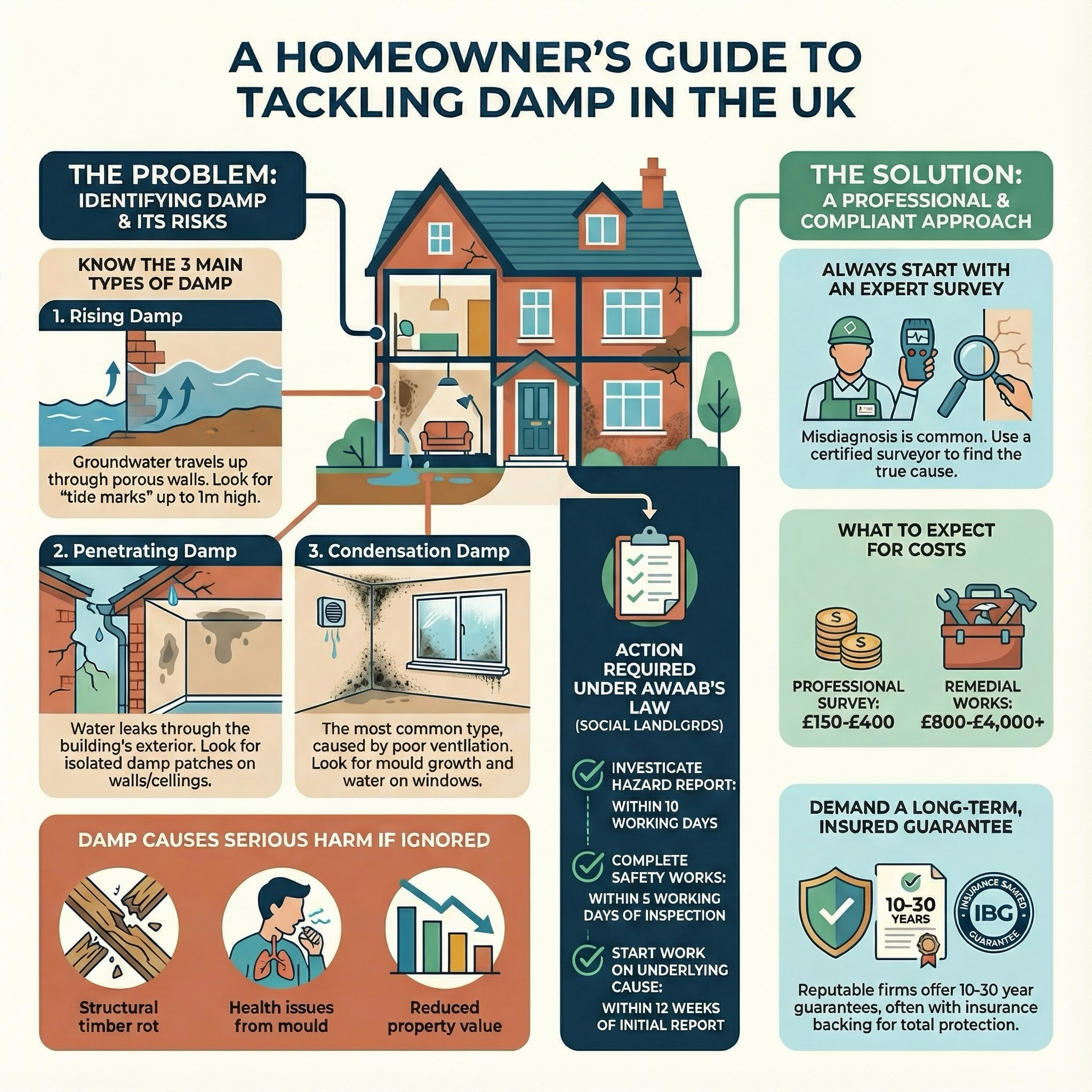
Damp Proofer explained
Rising damp is the most over-diagnosed problem in UK homes. Genuine rising damp is rare; most "rising damp" is actually condensation or penetrating damp. Expect to pay £1,200–£5,500 for genuine UK rising damp treatment depending on house size and complexity.
PCA-qualified surveyor diagnoses the cause (often via moisture meter, salt analysis, and sometimes drilled samples). True rising damp is treated with chemical DPC injection: holes drilled at mortar joints just above ground level, silicone-based damp-proof cream (Dryzone, Aquapol) injected, holes filled. Internal plaster removed up to 1m and replaced with salt-resistant render. Skirting boards replaced. Treatment normally warranted 20–30 years.
| Item | Low (£) | High (£) | Notes |
|---|---|---|---|
| Damp survey (PCA-qualified) | 120 | 400 | Independent diagnosis |
| Chemical DPC injection per metre | 50 | 120 | Dryzone, Aquapol |
| Re-plastering (salt-resistant) per m² | 50 | 120 | Limelite, Sika |
| Treatment one wall (typical) | 800 | 2,200 | Internal + external |
| Whole-house rising damp treatment | 2,500 | 8,500 | 4-bed terrace |
| External rendering repair | 20 | 60 | Per m² |
| Insurance-backed guarantee | 0 | 200 | For 20-year cover |
Single wall: 1–2 days plus 2–4 weeks for plaster to dry. Whole-house: 5–10 days plus drying. Re-decoration after drying: separate project.
Professional. PCA-qualified surveyor for diagnosis; specialist contractor for injection. DIY chemical cream available but proper diagnosis essential — treating non-existent rising damp wastes thousands.
PCA (Property Care Association) member. Independent surveyor (not the contractor doing the work) for unbiased diagnosis. Insist on insurance-backed guarantee (GPI, Quality Mark Protected). 20–30 year warranty in writing.
Listed buildings need consent before any damp treatment. PCA Code of Practice is the industry standard. Awaab's Law (from 2026) requires landlords to address damp within strict timeframes.
Yes — but it's much rarer than industry sells. Genuine rising damp affects only some pre-1875 properties without DPC. Most "rising damp" is misdiagnosed condensation or penetrating damp.
Tide marks up to 1m on the inside wall, salt deposits, peeling wallpaper at low level. Visible damp doesn't always mean rising — get PCA-qualified independent diagnosis.
Free surveys from contractors are sales tools — they always find work to do. Pay £120–£400 for an independent PCA-qualified surveyor who doesn't do the remedial work.
For genuine rising damp: yes — modern silicone creams (Dryzone) are proven. For misdiagnosed problems: no — chemical injection makes no difference because the cause is elsewhere.
Chemical DPC: 20–30 year warranty typical. Re-plastering: indefinite if dry. Underlying conditions need to remain controlled.
Yes — with valid treatment certificate and insurance-backed guarantee. Without certification, surveyors flag and buyers retreat.
This guide was written with AI assistance and is intended for general information only. Prices are estimates based on UK averages and may vary by region. Always get at least three quotes and consult a qualified professional before starting any work.
Ask follow-ups in plain English. The AI explains options, sequencing and what to ask the damp proofer — so you walk in informed.
Dry rot ( Serpula lacrymans ) is one of the most serious threats to UK homes. Unlike wet rot, dry rot has the unique ability to spread through masonry and plast...
READ GUIDE →GuideEmergency damp proofing is a critical intervention for UK homeowners facing sudden moisture ingress or structural failure. Left unchecked, damp can lead to timb...
READ GUIDE →GuideStructural waterproofing is the specialised process of protecting a building's foundations and below-ground spaces from groundwater ingress. For UK homeowners, ...
READ GUIDE →GuidePenetrating damp is a common headache for UK homeowners, often caused by water "soaking" through external walls into the property. Unlike rising damp, which cli...
READ GUIDE →GuideDamp is one of the most common issues facing UK homeowners, particularly given our wet climate and ageing housing stock. Whether you are buying a new property o...
READ GUIDE →GuideDamp is more than just an unsightly patch on the wall; it is a warning sign of underlying structural issues that can impact your health and your home's value. A...
READ GUIDE →