Instant
01 · Ask
Ask the AI a follow-up
Got more questions about timber Treatment for Damp? Describe the bit you're unsure about — the AI explains options, sequencing and what to ask the damp proofer.

Wood rot, woodworm or wet rot — timbers treated, replaced or strengthened where structurally needed.
You've read the brief on timber Treatment for Damp. Now lean on us to find the right damp proofer — and stay in control of the job.
Got more questions about timber Treatment for Damp? Describe the bit you're unsure about — the AI explains options, sequencing and what to ask the damp proofer.
Costs, timelines, pitfalls and the right questions to ask before any damp proofer starts on timber Treatment for Damp.
Itemised quotes from up to 3 local damp proofers on timber Treatment for Damp — so you can compare like-for-like, not lump sums.
Ready when you are
Enter your postcode and get free quotes from local pros.
Four moves that separate a smooth job from a nightmare.
Treating timber without fixing moisture source means rot returns. Always identify and fix water source.
Dry rot hyphae spread invisibly through brick walls. Visible area is tip of iceberg. Always have specialist assess full extent.
Cheap surface sprays don't penetrate. Use specialist brands with proven penetration.
Old worm holes don't always indicate active infestation. Specialist identifies fresh frass and recent damage.
Indicative UK ranges and what affects price.
By job type
Quote spread is typically ± 18% — always get 3 quotes.
Damp Proofer quick-view
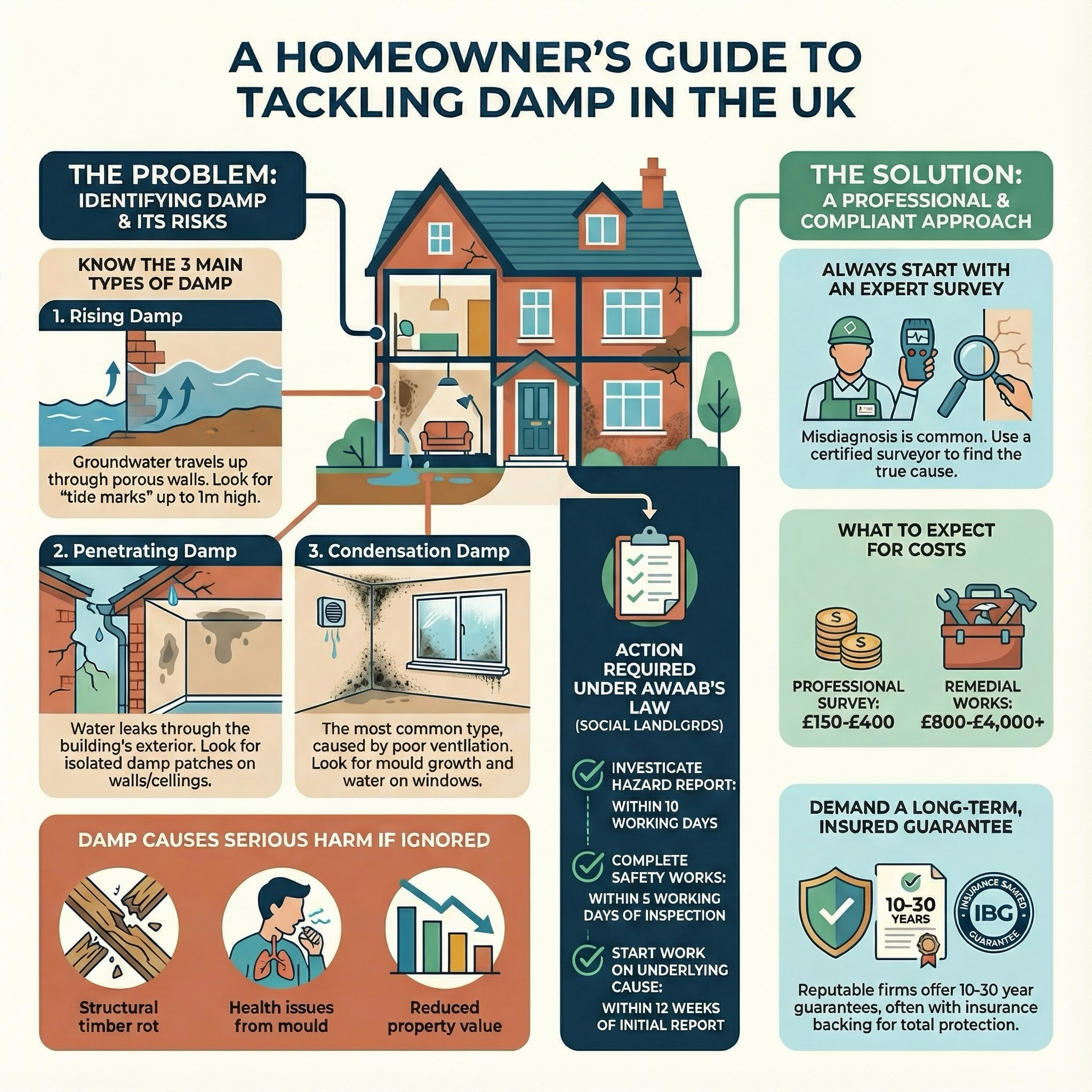
Damp Proofer explained
Damp wood is vulnerable to rot and woodworm. Untreated rot can spread structurally. Expect to pay £300–£4,500 for UK timber treatment depending on extent and rot type.
PCA timber & damp specialist diagnoses rot type: dry rot (Serpula lacrymans) spreads via fungal hyphae through brick — most serious. Wet rot (Coniophora) localised to wet wood only. Woodworm (Anobium) small holes, larvae tunnel through wood. Treatment: address moisture source first, remove affected timber, treat surrounding wood with preservative (Cuprinol, Soudal, Sika), structurally repair joists/lintels.
| Item | Low (£) | High (£) | Notes |
|---|---|---|---|
| Timber survey + report | 120 | 400 | PCA-qualified |
| Wet rot treatment per area | 200 | 800 | Localised work |
| Dry rot treatment per area | 600 | 3,500 | Extensive due to spread |
| Woodworm spray treatment per m² | 15 | 40 | Floor or roof timbers |
| Joist replacement (per joist) | 200 | 700 | Including sister-rafter |
| Lintel replacement | 500 | 2,500 | Structural work |
| Whole-house treatment | 1,500 | 8,500 | Multi-area dry rot |
| Insurance-backed guarantee | 200 | 500 | 20–30 year cover |
Wet rot localised: 1–3 days. Dry rot extensive: 1–4 weeks. Woodworm spray treatment: 1 day. Structural repairs: 1–2 weeks.
Diagnosis: PCA-qualified specialist. Treatment: specialist for dry rot (it spreads invisibly through brick). DIY OK for woodworm spray treatment if no structural damage.
PCA timber & damp member. Insurance-backed guarantee mandatory for dry rot work. Brand-name preservatives (Cuprinol, Soudal Soudaflex, Sika Permagard).
PCA Code of Practice for timber treatment. Listed buildings need consent. Pesticide regulations on preservatives. Some boron-based products require specific applicator certification.
Dry rot (Serpula lacrymans): fungus spreads through brick, attacks dry timber, most serious. Wet rot (Coniophora): localised to wet wood, easier to fix. Identification by specialist essential.
Dry rot: yes, aggressively — can travel meters through walls if moisture present. Wet rot: localised to wet area only.
Fresh exit holes (clean edges, light wood inside), powder (frass) at the hole, sometimes adult beetles visible May–August. Old infestation: dark holes, no fresh damage.
If moisture source addressed and proper treatment applied: yes, 20–30 year warranties typical. Inadequate moisture control = repeat.
Buildings insurance: rarely. Considered maintenance issue. Exception: sudden leak causing immediate rot may be covered.
Specialist heritage treatment using lime-friendly products. SPAB or PCA heritage member required.
This guide was written with AI assistance and is intended for general information only. Prices are estimates based on UK averages and may vary by region. Always get at least three quotes and consult a qualified professional before starting any work.
Ask follow-ups in plain English. The AI explains options, sequencing and what to ask the damp proofer — so you walk in informed.
Dry rot ( Serpula lacrymans ) is one of the most serious threats to UK homes. Unlike wet rot, dry rot has the unique ability to spread through masonry and plast...
READ GUIDE →GuideEmergency damp proofing is a critical intervention for UK homeowners facing sudden moisture ingress or structural failure. Left unchecked, damp can lead to timb...
READ GUIDE →GuideStructural waterproofing is the specialised process of protecting a building's foundations and below-ground spaces from groundwater ingress. For UK homeowners, ...
READ GUIDE →GuidePenetrating damp is a common headache for UK homeowners, often caused by water "soaking" through external walls into the property. Unlike rising damp, which cli...
READ GUIDE →GuideDamp is one of the most common issues facing UK homeowners, particularly given our wet climate and ageing housing stock. Whether you are buying a new property o...
READ GUIDE →GuideDamp is more than just an unsightly patch on the wall; it is a warning sign of underlying structural issues that can impact your health and your home's value. A...
READ GUIDE →