Instant
01 · Ask
Ask the AI a follow-up
Got more questions about timber Treatment Overview? Describe the bit you're unsure about — the AI explains options, sequencing and what to ask the damp proofer.

Woodworm, wet rot and dry rot — what each looks like, what each costs to treat properly.
You've read the brief on timber Treatment Overview. Now lean on us to find the right damp proofer — and stay in control of the job.
Got more questions about timber Treatment Overview? Describe the bit you're unsure about — the AI explains options, sequencing and what to ask the damp proofer.
Costs, timelines, pitfalls and the right questions to ask before any damp proofer starts on timber Treatment Overview.
Itemised quotes from up to 3 local damp proofers on timber Treatment Overview — so you can compare like-for-like, not lump sums.
Ready when you are
Enter your postcode and get free quotes from local pros.
Four moves that separate a smooth job from a nightmare.
Applying chemicals to rot without fixing the leaking gutter or damp-proof course will result in the rot returning.
Spraying over dust or old paint prevents the preservative from soaking into the wood grain.
Failing to check wall plates or timber ends embedded in damp masonry.
Not allowing sufficient drying time before pets or children re-enter the treated area.
Indicative UK ranges and what affects price.
By job type
Quote spread is typically ± 18% — always get 3 quotes.
Damp Proofer quick-view
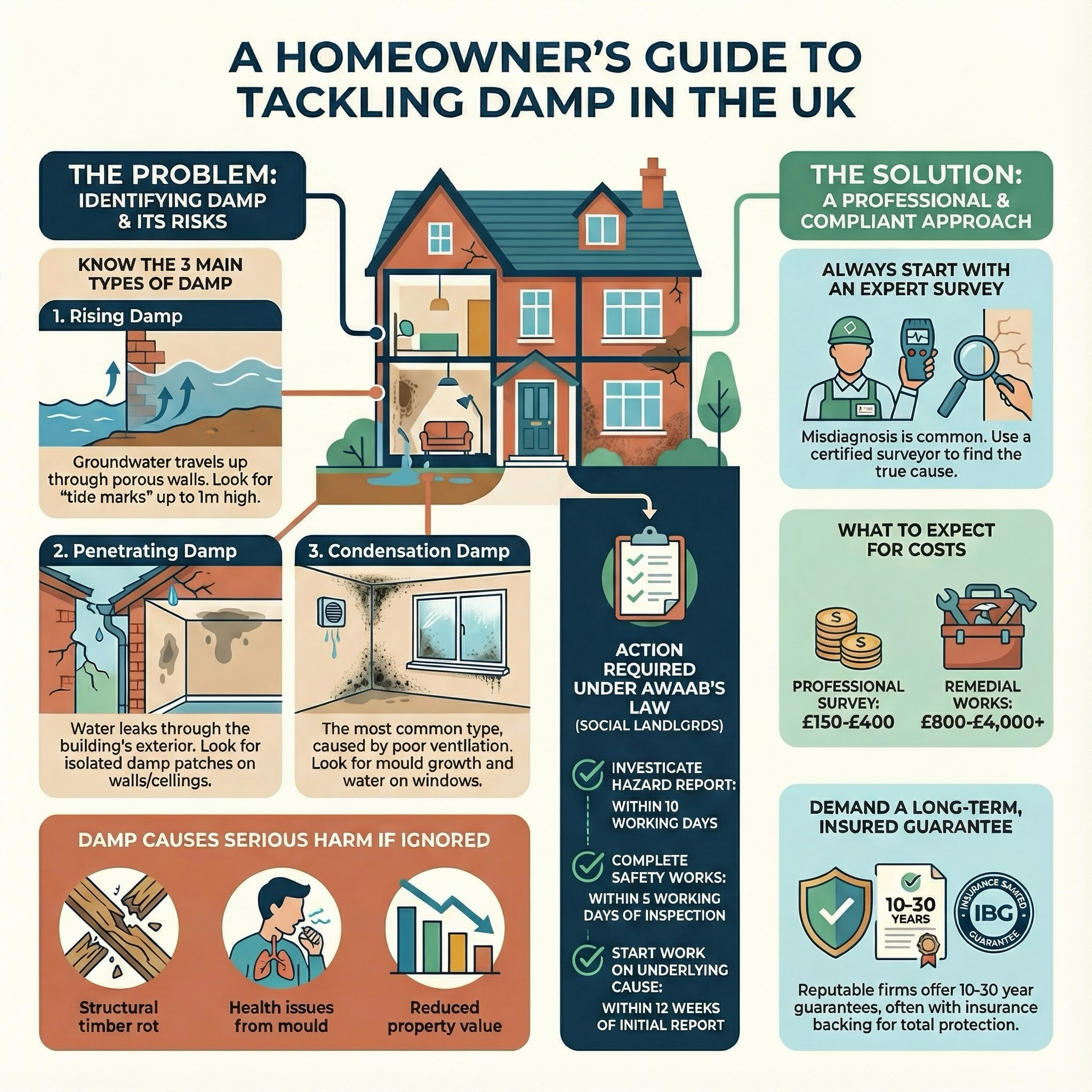
Damp Proofer explained
Professional timber treatment isn't just about a quick spray; it is a systematic process to identify moisture sources, eradicate infestations, and protect the structural integrity of your property for decades to come.
Prices for timber treatment vary significantly based on the scale of the infestation and whether structural repairs are required. All prices below include VAT at 20%.
| Item | Low £ | High £ | Notes |
|---|---|---|---|
| Specialist Timber Survey | £150 | £350 | Often refundable if you commission the work. |
| Woodworm Treatment (per room) | £400 | £750 | Includes lifting boards and spray treatment. |
| Dry Rot Treatment (localised) | £800 | £1,800+ | Higher cost due to masonry sterilisation. |
| Joist Replacement (per joist) | £250 | £450 | Includes labour and structural timber. |
| Whole Loft Woodworm Spray | £700 | £1,200 | Based on a standard 3-bed semi-detached. |
Costs are driven by the accessibility of the timber and the severity of the decay. Dry rot is significantly more expensive than wet rot because it can travel through masonry, requiring wall sterilisation.
While surface-level wood stains are a DIY task, structural timber treatment should be left to professionals. Incorrectly identifying Dry Rot as Wet Rot can lead to catastrophic structural failure, as Dry Rot requires specific chemical "barriers" in the surrounding walls.
Professional treatments usually come with a 20 to 30-year guarantee, which is essential for mortgage approvals and future home sales.
Modern water-based treatments are very safe once dry. Most specialists recommend staying out of the treated room for 1 to 8 hours, depending on the product used.
Wet rot stays confined to the damp area. Dry rot is much more dangerous as it can grow through bricks and mortar to find new wood to eat, spreading throughout a house.
Look for small round "flight holes" in the wood and "frass" (fine powdery sawdust) beneath the holes, which indicates active larvae.
Low-odour chemicals are now standard. There may be a faint "chemical" smell for 24 hours, but it dissipates quickly with good ventilation.
If a RICS valuer spots signs of damp or woodworm, most UK lenders will insist on a specialist PCA-registered report before approving your mortgage.
This guide was written with AI assistance and is intended for general information only. Prices are estimates based on UK averages and may vary by region. Always get at least three quotes and consult a qualified professional before starting any work.
Ask follow-ups in plain English. The AI explains options, sequencing and what to ask the damp proofer — so you walk in informed.
Dry rot ( Serpula lacrymans ) is one of the most serious threats to UK homes. Unlike wet rot, dry rot has the unique ability to spread through masonry and plast...
READ GUIDE →GuideEmergency damp proofing is a critical intervention for UK homeowners facing sudden moisture ingress or structural failure. Left unchecked, damp can lead to timb...
READ GUIDE →GuideStructural waterproofing is the specialised process of protecting a building's foundations and below-ground spaces from groundwater ingress. For UK homeowners, ...
READ GUIDE →GuidePenetrating damp is a common headache for UK homeowners, often caused by water "soaking" through external walls into the property. Unlike rising damp, which cli...
READ GUIDE →GuideDamp is one of the most common issues facing UK homeowners, particularly given our wet climate and ageing housing stock. Whether you are buying a new property o...
READ GUIDE →GuideDamp is more than just an unsightly patch on the wall; it is a warning sign of underlying structural issues that can impact your health and your home's value. A...
READ GUIDE →