Instant
01 · Ask
Ask the AI a follow-up
Got more questions about decking removal and driveway gravel addition? Describe the bit you're unsure about — the AI explains options, sequencing and what to ask the landscaper.

Old decking lifted and disposed, sub-base prepped and gravel laid — full transformation in 2-3 days.
You've read the brief on decking removal and driveway gravel addition. Now lean on us to find the right landscaper — and stay in control of the job.
Got more questions about decking removal and driveway gravel addition? Describe the bit you're unsure about — the AI explains options, sequencing and what to ask the landscaper.
Costs, timelines, pitfalls and the right questions to ask before any landscaper starts on decking removal and driveway gravel addition.
Itemised quotes from up to 3 local landscapers on decking removal and driveway gravel addition — so you can compare like-for-like, not lump sums.
Ready when you are
Enter your postcode and get free quotes from local pros.
Four moves that separate a smooth job from a nightmare.
Without proper edging, gravel will spill onto the pavement or into your lawn. Always insist on a robust border.
This happens when the MOT Type 1 sub-base is too thin or not compacted properly with a heavy-duty plate compactor.
Using a thin, "polythene" style sheet instead of a heavy-duty woven geotextile membrane allows weeds to pierce through from below.
Stones smaller than 10mm can get stuck in tyre treads, while stones larger than 20mm are difficult to walk on. 20mm is the industry standard for driveways.
Indicative UK ranges and a typical week-by-week schedule.
By job type
Quote spread is typically ± 18% — always get 3 quotes.
Mid-size garden redesign · week by week
Schedule slips on dependencies — pad each phase by 10–20% for real-world delays.
Landscaper quick-view
Landscaper explained
This project involves more than just swapping materials; it requires careful ground preparation to ensure the new driveway doesn't sink or become a haven for weeds. Whether you are looking to create space for a second car or simply want a lower-maintenance front garden, understanding the process and costs is essential for a successful renovation.
Prices for this project vary based on the size of the area, the type of gravel chosen (e.g., standard pea shingle vs. decorative Cotswold stone), and the volume of waste to be removed. The following table provides estimated costs for 2025/26, including VAT.
| Item | Low £ | High £ | Notes |
|---|---|---|---|
| Decking Removal & Disposal | £300 | £700 | Includes labour and skip hire/waste fees. |
| Sub-base Materials (MOT Type 1) | £45 | £65 | Per tonne; typically 1 tonne per 10m² at 50mm depth. |
| Decorative Gravel | £60 | £150 | Per bulk bag; price depends on stone rarity/colour. |
| Geotextile Membrane | £1.50 | £3.00 | Per square metre for professional-grade fabric. |
| Labour (Daily Rate) | £200 | £350 | Per person; most jobs require a team of two. |
| Total Project (Small Driveway) | £1,500 | £2,800 | Based on a single car space (~15m²). |
The primary cost drivers are waste disposal and site access. If your garden is tiered or has restricted access, manual handling will significantly increase the labour hours required. Choosing a premium "self-binding" gravel or bespoke edging will also push costs toward the higher end of the scale.
While removing a deck is a manageable DIY task for those with a crowbar and a saw, installing a driveway is physically demanding work that requires precision. A poorly laid sub-base will lead to ruts and "sinking" under the weight of a vehicle within months. Professionals also have access to plate compactors (wacker plates) and skip accounts, which are essential for a long-lasting finish.
Expert Tip: If you are using the area for a vehicle, never skip the sub-base. Laying gravel directly onto soil or sand will result in a muddy mess after the first heavy UK downpour.
Generally, no. Because gravel is a permeable surface that allows water to soak into the ground, it falls under 'Permitted Development' rights in the UK. However, if you live in a Conservation Area or a Listed Building, you should check with your local planning office first.
Angular chippings (like 20mm flint or granite) are best because they lock together when driven over. Avoid rounded 'pea shingle' for driveways, as the stones shift easily and feel like driving through marbles.
The best method is to use a gravel stabilisation grid (honeycomb cells) beneath the top layer. This keeps the stones in place and prevents ruts from forming, though it does add to the initial material cost.
Yes, gravel makes a distinct 'crunch' sound. Many UK homeowners view this as a security feature, as it acts as a natural alarm that alerts you to anyone approaching your house or vehicle.
Maintenance is minimal. You will need to rake the surface occasionally to keep it level and top up the gravel every 3–5 years as the stones break down or settle. Spraying a weed killer once or twice a year will handle any seeds that land on top of the stones.
No. You must remove the decking and the organic matter beneath it. If you leave wood or hollow spaces underground, the driveway will eventually collapse as the timber rots and the ground settles.
This guide was written with AI assistance and is intended for general information only. Prices are estimates based on UK averages and may vary by region. Always get at least three quotes and consult a qualified professional before starting any work.
Ask follow-ups in plain English. The AI explains options, sequencing and what to ask the landscaper — so you walk in informed.
Professional garden design is the blueprint for a successful outdoor transformation. It bridges the gap between a vague idea and a functional, beautiful space t...
READ GUIDE →GuideA crisp, well-defined lawn edge is often the difference between a garden that looks "done" and one that looks truly professional. In the UK, our damp climate an...
READ GUIDE →GuideA level garden is the essential foundation for almost every outdoor improvement, from installing a new lawn or patio to erecting a summerhouse. Beyond aesthetic...
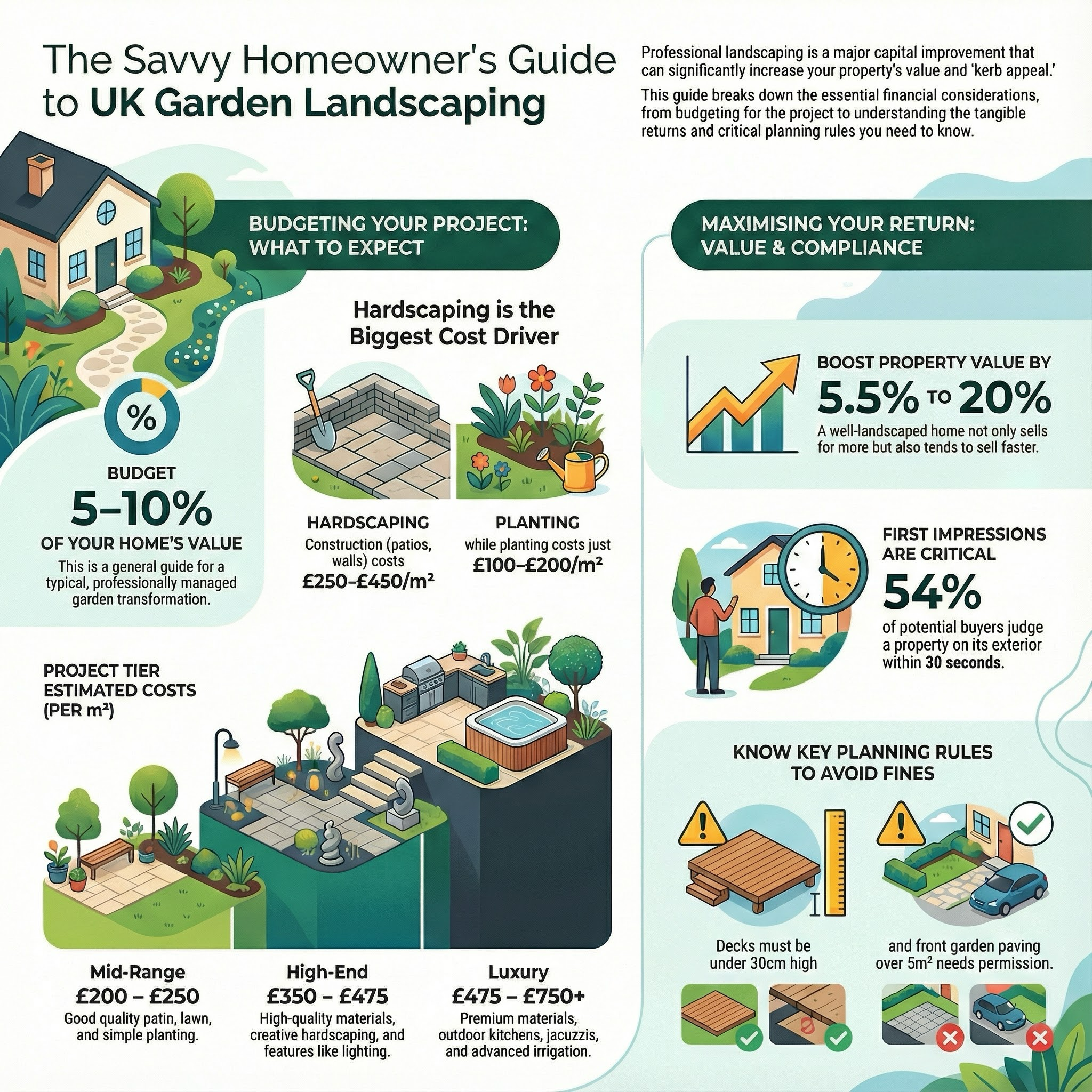
READ GUIDE →GuideProfessional landscaping is one of the most effective ways to increase your home’s kerb appeal and market value, often adding up to 20% to a UK property's price...
READ GUIDE →GuideRevitalising your outdoor space often starts with the basics: a lush, level lawn and a clean, stable patio. In the UK, our damp winters and variable summers tak...
READ GUIDE →GuideProfessional landscaping and garden design involve much more than just planting flowers or mowing a lawn. It is the process of modifying the visible features of...
READ GUIDE →