Instant
01 · Ask
Ask the AI a follow-up
Got more questions about garden planting consultancy? Describe the bit you're unsure about — the AI explains options, sequencing and what to ask the landscaper.

On-site visit by a horticulturist or designer — planting plan, sourcing and seasonal calendar.
You've read the brief on garden planting consultancy. Now lean on us to find the right landscaper — and stay in control of the job.
Got more questions about garden planting consultancy? Describe the bit you're unsure about — the AI explains options, sequencing and what to ask the landscaper.
Costs, timelines, pitfalls and the right questions to ask before any landscaper starts on garden planting consultancy.
Itemised quotes from up to 3 local landscapers on garden planting consultancy — so you can compare like-for-like, not lump sums.
Ready when you are
Enter your postcode and get free quotes from local pros.
Four moves that separate a smooth job from a nightmare.
Planting sun-lovers in deep shade or moisture-seekers in dry soil is the most common cause of plant death.
Planting directly into compacted builder’s rubble or heavy clay without proper conditioning.
Failing to address "wet feet" which rots the roots of most ornamental garden plants.
Assuming "low maintenance" means "no maintenance"—all new plants require specific watering regimes for the first 12-18 months.
Indicative UK ranges and a typical week-by-week schedule.
By job type
Quote spread is typically ± 18% — always get 3 quotes.
Mid-size garden redesign · week by week
Schedule slips on dependencies — pad each phase by 10–20% for real-world delays.
Landscaper quick-view
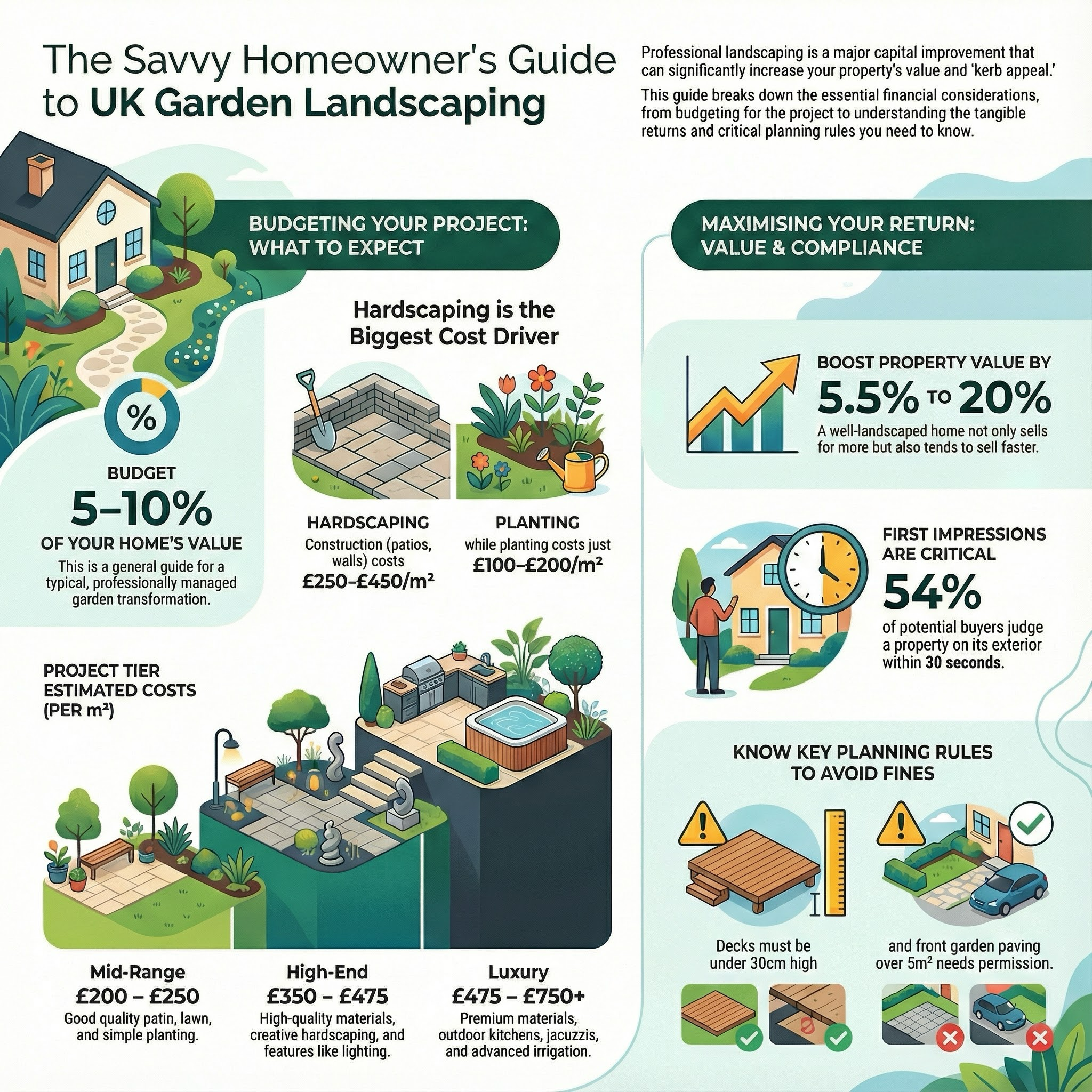
Landscaper explained
For UK homeowners, this service bridges the gap between basic gardening and full-scale landscape architecture. By investing in professional advice, you avoid the "trial and error" costs of replacing plants that fail to survive in the wrong conditions.
The cost of planting consultancy varies significantly based on the size of the garden and whether you require a simple verbal consultation or a full technical drawing. Prices below include VAT at 20%.
| Item | Low £ | High £ | Notes |
|---|---|---|---|
| Initial Consultation Visit | £100 | £250 | Usually 1-2 hours on-site with verbal advice. |
| Detailed Planting Plan | £350 | £1,200 | Scaled drawings and full plant lists. |
| Soil Analysis Report | £60 | £150 | Laboratory testing for nutrients and pH. |
| Plant Sourcing Fee | £150 | £500 | Admin fee for procuring trade-quality stock. |
| Hourly Consultancy Rate | £50 | £95 | For ongoing supervision or ad-hoc advice. |
Factors such as your location (London and the South East typically command higher rates) and the complexity of the terrain will influence the final quote. Most consultants offer tiered packages to suit different budgets.
While any homeowner can plant a shrub, a professional consultant understands the long-term "architecture" of a garden. They prevent the common mistake of overcrowding, which leads to stunted growth and disease. If you are investing thousands in new specimens, professional guidance is essential to protect that investment. Professionals also have access to trade nurseries, often securing larger or more unusual specimens not found in retail stores.
In the UK, anyone can call themselves a garden consultant, so it is vital to check their credentials and experience.
Top Tip: Always ask if the consultant receives a commission from nurseries. Transparent consultants will usually pass trade discounts directly to you or charge a flat procurement fee.
Autumn and early Spring are the best times. This allows the consultant to plan ahead of the main growing seasons and ensures plants can be established while the soil is moist and warm.
Yes. A gardener typically focuses on maintenance (mowing, weeding), whereas a consultant focuses on the technical design, plant health, and long-term vision of the space.
Absolutely. This is one of the most common requests. A consultant will select slow-growing, hardy species that provide maximum impact with minimal pruning or deadheading.
Most consultants provide a "failure to thrive" guarantee for the first season, provided you have followed their specific watering and aftercare instructions.
A garden designer often handles "hard landscaping" (paving, walls, structures), while a planting consultant specialises specifically in the "soft landscaping" (the plants, soil, and ecology).
This guide was written with AI assistance and is intended for general information only. Prices are estimates based on UK averages and may vary by region. Always get at least three quotes and consult a qualified professional before starting any work.
Ask follow-ups in plain English. The AI explains options, sequencing and what to ask the landscaper — so you walk in informed.
Professional garden design is the blueprint for a successful outdoor transformation. It bridges the gap between a vague idea and a functional, beautiful space t...
READ GUIDE →GuideA crisp, well-defined lawn edge is often the difference between a garden that looks "done" and one that looks truly professional. In the UK, our damp climate an...
READ GUIDE →GuideA level garden is the essential foundation for almost every outdoor improvement, from installing a new lawn or patio to erecting a summerhouse. Beyond aesthetic...
READ GUIDE →GuideProfessional landscaping is one of the most effective ways to increase your home’s kerb appeal and market value, often adding up to 20% to a UK property's price...
READ GUIDE →GuideRevitalising your outdoor space often starts with the basics: a lush, level lawn and a clean, stable patio. In the UK, our damp winters and variable summers tak...
READ GUIDE →GuideProfessional landscaping and garden design involve much more than just planting flowers or mowing a lawn. It is the process of modifying the visible features of...
READ GUIDE →