Instant
01 · Ask
Ask the AI a follow-up
Got more questions about decorative Mural Installation? Describe the bit you're unsure about — the AI explains options, sequencing and what to ask the painter / decorator.

Hand-painted feature wall or full-room mural — by a specialist mural artist.
You've read the brief on decorative Mural Installation. Now lean on us to find the right painter / decorator — and stay in control of the job.
Got more questions about decorative Mural Installation? Describe the bit you're unsure about — the AI explains options, sequencing and what to ask the painter / decorator.
Costs, timelines, pitfalls and the right questions to ask before any painter / decorator starts on decorative Mural Installation.
Itemised quotes from up to 3 local painter / decorators on decorative Mural Installation — so you can compare like-for-like, not lump sums.
Ready when you are
Enter your postcode and get free quotes from local pros.
Four moves that separate a smooth job from a nightmare.
Painting over damp or flaking plaster will cause the mural to peel within months.
A mural that looks great in daylight may look muddy or "flat" under warm LED evening lights if the artist hasn't accounted for it.
Trying to pack too much detail into a small space can make a room feel cluttered and smaller than it is.
Failing to apply a topcoat in high-traffic areas (like hallways) leads to scuff marks that are impossible to clean without damaging the art.
Indicative UK ranges and what affects price.
By job type
Quote spread is typically ± 18% — always get 3 quotes.
Painter / Decorator quick-view
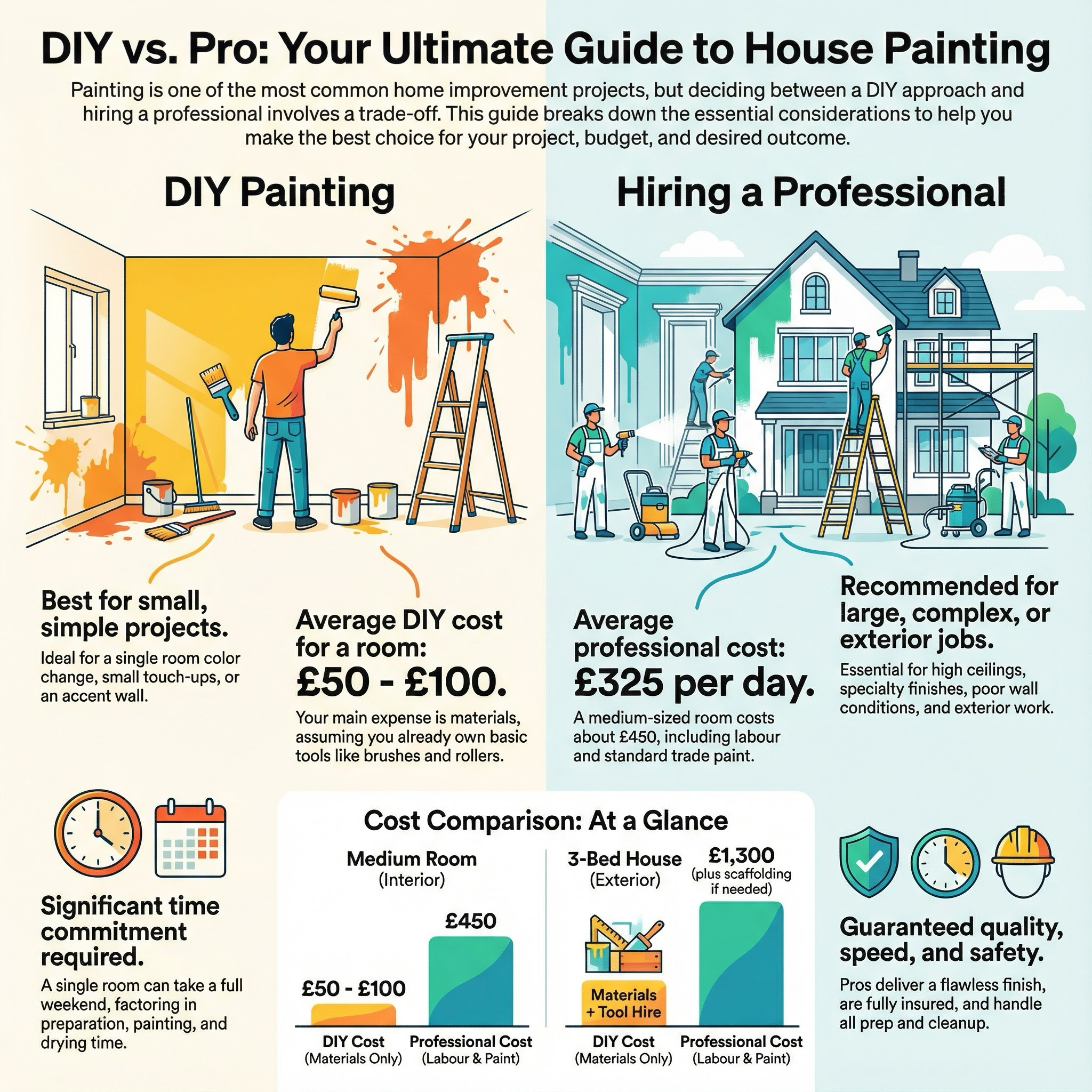
Painter / Decorator explained
For UK homeowners, commissioned murals have become a popular way to add character and value to a property. By hiring a specialist painter or mural artist, you ensure the finish is durable, the proportions are correct, and the materials used are suitable for your specific wall type.
Mural pricing varies significantly based on the artist's experience and the level of detail required. Most professionals charge either a daily rate or a fixed price per project rather than a standard square-metre rate.
| Item | Low £ | High £ | Notes |
|---|---|---|---|
| Consultation & Sketching | £150 | £400 | Includes digital mock-ups and revisions. |
| Small Feature (e.g., Nursery Accent) | £450 | £850 | Simple designs, 1-2 days work. |
| Medium Full-Wall Mural | £900 | £1,800 | Moderate detail, 3-5 days work. |
| Large/Intricate Artwork | £2,000 | £5,000+ | High detail, ceilings, or large commercial spaces. |
| Materials (Paints & Sealants) | £80 | £250 | Artist-grade acrylics or specialist emulsions. |
Factors affecting the price include the height of the wall (requiring scaffolding), the condition of the existing plaster, and whether the design requires specialist finishes like gold leaf or textured plasters.
While a DIY mural can be a fun weekend project, achieving a professional "gallery-grade" finish is difficult without formal training. Professional muralists understand perspective, colour theory, and how different light sources will affect the finished piece throughout the day.
Hiring a professional ensures the mural is scaled correctly for the room's dimensions—a common DIY mistake is creating a design that feels "lost" or overwhelming on a large wall.
If the work involves high ceilings or stairwells, professional painters will have the necessary reach equipment and insurance to work safely at height, which is a significant risk for DIYers.
It is highly recommended to paint on a smooth, plastered surface. Painting over wallpaper is risky as the moisture in the mural paint can cause the wallpaper glue to fail, ruining the artwork. Textured walls can be painted, but it may limit the level of fine detail achievable.
If the artist has applied a protective varnish, you can gently wipe the wall with a soft, damp microfibre cloth. Avoid using harsh chemical cleaners or abrasive sponges, as these will strip the pigment or the protective layer.
Murals are not permanent. If you decide to change your decor, the wall can be lightly sanded, primed with a high-opacity "stain-blocker" primer, and painted over with standard emulsion.
No, most modern mural paints are water-based and low-odour. However, there will be some noise and the artist will need clear access to the space. It is usually best to keep children and pets out of the room until the paint is fully dry.
Yes, but the artist must use specialist moisture-resistant paints and a heavy-duty waterproof sealant to prevent the humidity from causing the paint to bubble or mould to grow behind the pigment.
This guide was written with AI assistance and is intended for general information only. Prices are estimates based on UK averages and may vary by region. Always get at least three quotes and consult a qualified professional before starting any work.
Ask follow-ups in plain English. The AI explains options, sequencing and what to ask the painter / decorator — so you walk in informed.
Professional decorating is about far more than simply changing a room's colour. It is a critical maintenance task that protects your home’s internal surfaces, i...
READ GUIDE →GuideA damaged or sagging ceiling is more than just an eyesore; it can be a safety risk and a sign of underlying issues like leaks or structural movement. Whether yo...
READ GUIDE →GuideTimber windows are a hallmark of British architecture, offering a level of character and aesthetic warmth that modern uPVC struggles to replicate. However, the ...
READ GUIDE →GuideProfessional paint spraying has become the gold standard for UK homeowners seeking a flawless, factory-grade finish. Unlike traditional brushing or rolling, spr...
READ GUIDE →GuideRefreshing your home’s exterior is about more than just curb appeal; it is the primary defence against the British weather. A high-quality exterior paint job se...
READ GUIDE →GuideRefreshing your living room is one of the most impactful home improvements you can undertake. As the heart of the British home, this space endures significant f...
READ GUIDE →