Instant
01 · Ask
Ask the AI a follow-up
Got more questions about wallpaper Installation and Removal? Describe the bit you're unsure about — the AI explains options, sequencing and what to ask the painter / decorator.

Strip old paper, prep walls, hang new — single feature wall or whole room.
You've read the brief on wallpaper Installation and Removal. Now lean on us to find the right painter / decorator — and stay in control of the job.
Got more questions about wallpaper Installation and Removal? Describe the bit you're unsure about — the AI explains options, sequencing and what to ask the painter / decorator.
Costs, timelines, pitfalls and the right questions to ask before any painter / decorator starts on wallpaper Installation and Removal.
Itemised quotes from up to 3 local painter / decorators on wallpaper Installation and Removal — so you can compare like-for-like, not lump sums.
Ready when you are
Enter your postcode and get free quotes from local pros.
Four moves that separate a smooth job from a nightmare.
Often caused by trapped air or failing to let the paper "soak" for the correct time before hanging.
If the room is too hot or the paper is over-stretched during hanging, gaps will appear between drops as the paste dries.
Usually occurs when the first drop isn't perfectly plumb (vertical), causing the error to magnify across the wall.
Using thin wallpaper on a dark or stained wall without lining paper first can lead to "ghosting" of the old surface.
Indicative UK ranges and what affects price.
By job type
Quote spread is typically ± 18% — always get 3 quotes.
Painter / Decorator quick-view
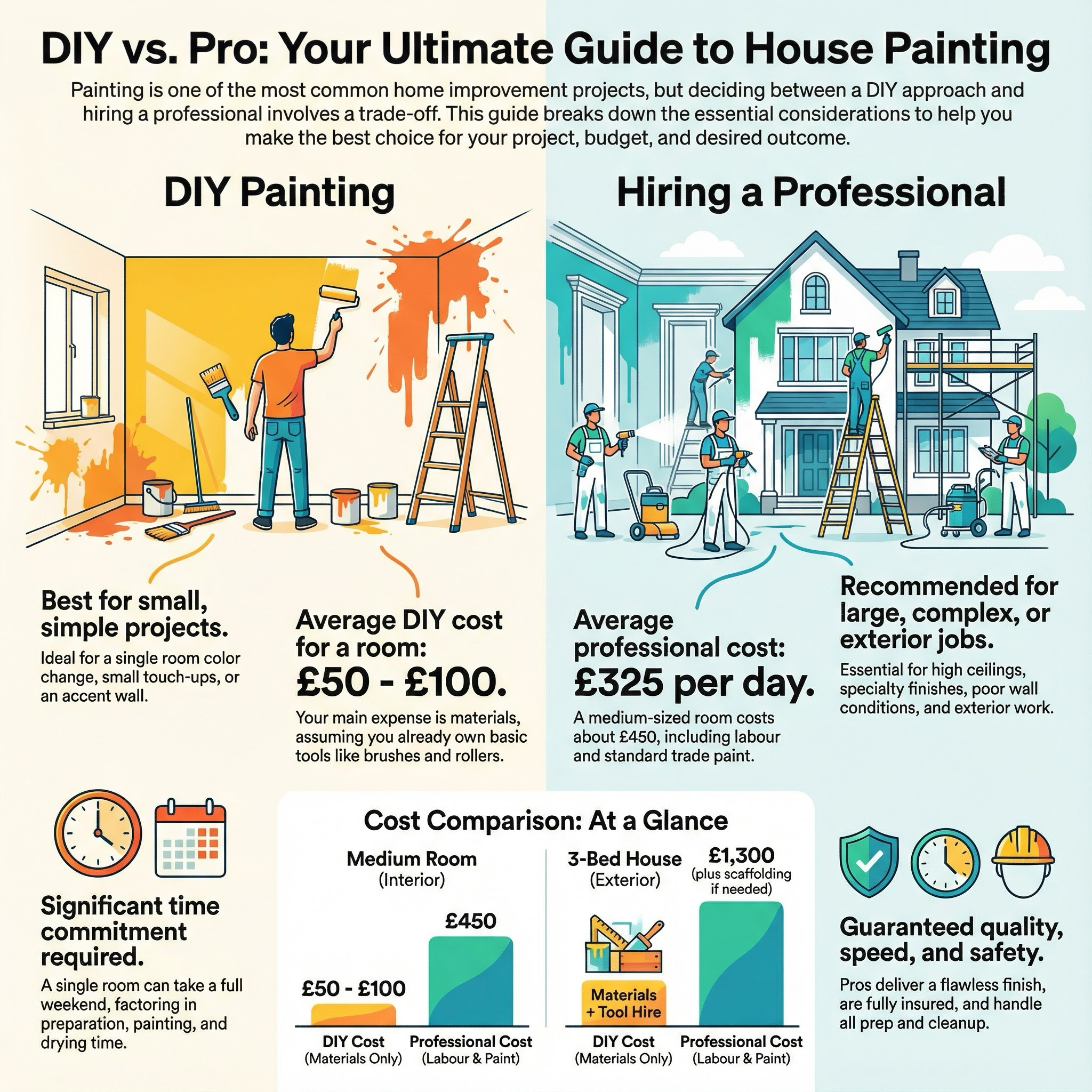
Painter / Decorator explained
For many UK homeowners, the daunting task of removal—often involving layers of stubborn Victorian paper or woodchip—is the primary hurdle. Professional decorators bring the right equipment and patience to ensure your walls are perfectly primed, preventing common issues like peeling seams or unsightly bubbles.
| Item | Low £ | High £ | Notes |
|---|---|---|---|
| Stripping Wallpaper (per room) | £180 | £350 | Depends on number of layers and presence of woodchip. |
| Labour per day (London/SE) | £250 | £400 | Highly skilled decorators in high-demand areas. |
| Labour per day (Regional) | £180 | £280 | Standard rates for the Midlands, North, and Wales. |
| Installation (per roll) | £35 | £70 | Excludes the cost of the wallpaper itself. |
| Feature Wall (Labour only) | £150 | £250 | Standard 3-4 roll wall with minimal prep. |
| Lining Paper & Paste | £40 | £80 | Basic materials for an average 12sqm room. |
Prices vary significantly based on the type of paper you choose. Hand-printed papers or heavy vinyls require more time and specialist adhesives, whereas standard "paste-the-wall" products are quicker to install. Always clarify if the quote includes "making good" the plasterwork after stripping.
Professional decorators often charge more for removing woodchip wallpaper, as it frequently hides poor-quality plaster and takes twice as long to steam off.
Stripping wallpaper is a task many homeowners choose to tackle themselves to save money. While labour-intensive, it requires little technical skill beyond patience. However, hanging the new paper is a different story. Achieving perfectly invisible seams and exact pattern matches around awkward corners, radiators, and bay windows requires significant experience.
If you are using expensive designer rolls (upwards of £80 per roll), the cost of a mistake far outweighs the price of hiring a professional. While there are no specific UK statutory regulations like Gas Safe for wallpapering, a professional ensures the work meets the British Standard for painting and decorating (BS 6150).
Questions to ask:
While not always mandatory, lining paper is highly recommended for UK homes with older plaster. It smooths out imperfections, prevents the decorative paper from shrinking, and provides a uniform porosity for the adhesive.
Yes, provided the paint is sound and not flaking. Glossy surfaces must be sanded to create a "key," and the wall should be cleaned with sugar soap and "sized" before hanging.
This is usually due to insufficient paste at the edges or "sizing" not being applied to the wall. It can also happen if the room has high humidity or damp issues near the ceiling line.
You must measure the width and height of each wall. Most UK rolls are 53cm wide and 10m long. Always allow an extra 10-15% for the "pattern repeat" and potential mistakes; it is vital that all rolls come from the same "batch number" to ensure colour consistency.
Yes, but you must use specialist "splash-proof" or vinyl wallpapers designed for high-humidity environments. Standard paper will eventually peel or develop mould in these rooms.
This guide was written with AI assistance and is intended for general information only. Prices are estimates based on UK averages and may vary by region. Always get at least three quotes and consult a qualified professional before starting any work.
Ask follow-ups in plain English. The AI explains options, sequencing and what to ask the painter / decorator — so you walk in informed.
Professional decorating is about far more than simply changing a room's colour. It is a critical maintenance task that protects your home’s internal surfaces, i...
READ GUIDE →GuideA damaged or sagging ceiling is more than just an eyesore; it can be a safety risk and a sign of underlying issues like leaks or structural movement. Whether yo...
READ GUIDE →GuideTimber windows are a hallmark of British architecture, offering a level of character and aesthetic warmth that modern uPVC struggles to replicate. However, the ...
READ GUIDE →GuideProfessional paint spraying has become the gold standard for UK homeowners seeking a flawless, factory-grade finish. Unlike traditional brushing or rolling, spr...
READ GUIDE →GuideRefreshing your home’s exterior is about more than just curb appeal; it is the primary defence against the British weather. A high-quality exterior paint job se...
READ GUIDE →GuideRefreshing your living room is one of the most impactful home improvements you can undertake. As the heart of the British home, this space endures significant f...
READ GUIDE →