Instant
01 · Ask
Ask the AI a follow-up
Got more questions about block Paving Patio — Cost, Patterns & UK Install? Describe the bit you're unsure about — the AI explains options, sequencing and what to ask the patios.

Block paving patio — basket-weave, herringbone or stretcher bond. Proper sub-base, edged and jointed.
You've read the brief on block Paving Patio — Cost, Patterns & UK Install. Now lean on us to find the right patios — and stay in control of the job.
Got more questions about block Paving Patio — Cost, Patterns & UK Install? Describe the bit you're unsure about — the AI explains options, sequencing and what to ask the patios.
Costs, timelines, pitfalls and the right questions to ask before any patios starts on block Paving Patio — Cost, Patterns & UK Install.
Itemised quotes from up to 3 local patioss on block Paving Patio — Cost, Patterns & UK Install — so you can compare like-for-like, not lump sums.
Ready when you are
Enter your postcode and get free quotes from local pros.
Four moves that separate a smooth job from a nightmare.
— kiln-dried sand needs topping up every 12–18 months unless polymeric.
— open sand joints. Polymeric or resin compound prevents them.
— poor sub-base. The most common DIY mistake.
— herringbone in particular needs string lines to stay true.
Indicative UK ranges and a typical week-by-week schedule.
By job type
Quote spread is typically ± 18% — always get 3 quotes.
30 m² patio install · week by week
Schedule slips on dependencies — pad each phase by 10–20% for real-world delays.
Patios quick-view
Patios explained
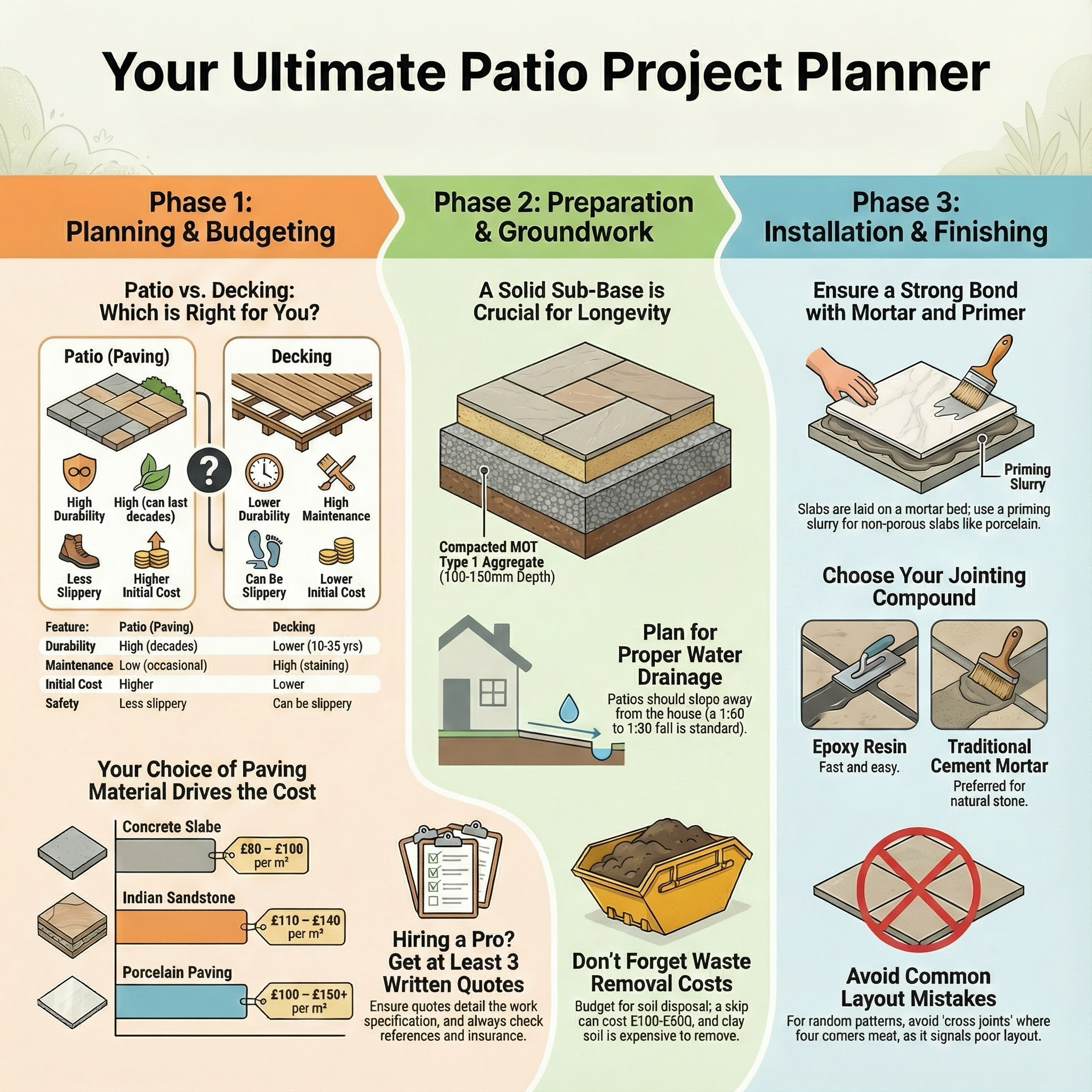
Block paving is the UK's most installed paving product — affordable, hard-wearing, and available in dozens of colours and patterns. Better known for driveways, it works equally well as a patio surface, especially in areas that need to handle furniture, foot traffic, and the occasional barrowload. This guide covers what block paving actually costs as a patio in 2026, the popular UK patterns, and the install detail that decides whether your patio lasts 10 years or 30.
Marshalls, Brett, and Tobermore are the dominant UK manufacturers, all with broadly similar specs at slightly different price points.
| Item | Low £ | High £ | Notes |
|---|---|---|---|
| Standard concrete blocks (per m²) | 15 | 30 | Brindle, charcoal, buff most common |
| Premium / textured blocks (per m²) | 30 | 55 | Tumbled, aged, premium ranges |
| Sub-base & sand (per m²) | 15 | 25 | Plus edge restraints |
| Labour (per m²) | 30 | 55 | Patterns add labour cost |
| Standard block install (20 m²) | 1,200 | 2,200 | Stretcher bond, simple shape |
| Premium install (20 m²) | 1,900 | 3,400 | Herringbone, textured blocks |
Block paving is one of the most cost-effective patio finishes per m² — typically 30–50% cheaper than natural stone for a similar finished area.
Block paving is one of the more DIY-friendly options — blocks are light, jointing is just sand, and small mistakes can usually be lifted and re-laid. A confident DIYer can manage a 10–15 m² patio with one helper over a long weekend. Beyond that, hiring saves time without dramatically increasing cost.
45° herringbone is the all-round favourite — strong, attractive, hides minor cuts. Stretcher bond is the most affordable. Basketweave suits traditional homes.
Yes — without them blocks creep outward over years and the whole patio loosens. Concrete-haunched kerbs or proprietary edge restraints are essential.
20–30 years with normal maintenance. The surface may need lifting and re-laying once in that time if the sub-base settles.
Optional. Sealing protects colour and locks in joint sand but needs reapplying every 2–3 years. Many owners skip it and accept the patina.
Yes if the concrete is sound and at the right level — saves excavation cost. Use a thin screed bed (30 mm) on the concrete.
No — clay pavers (true bricks) are kiln-fired and harder-wearing, but 2–3× more expensive. Concrete blocks are dyed and pressed.
This guide was written with AI assistance and is intended for general information only. Prices are estimates based on UK averages and may vary by region. Always get at least three quotes and consult a qualified professional before starting any work.
Ask follow-ups in plain English. The AI explains options, sequencing and what to ask the patios — so you walk in informed.
A well-installed patio is one of the most effective ways to add value and functional living space to a UK home. Given our unpredictable climate, a durable, leve...
READ GUIDE →GuideA professionally installed patio is more than just a place for a summer BBQ; it is a functional extension of your home that can significantly increase property ...
READ GUIDE →GuideA well-designed patio is more than just a flat surface for a garden table; it is an extension of your home’s living space. In the UK, professional patio design ...
READ GUIDE →GuidePatio and Garden Maintenance Overview Refreshes patio surfaces, restores tidy garden hard‑landscapes and gets sliding/French doors running smoothly. Skill level...
READ GUIDE →GuideResin bonding is an increasingly popular choice for UK homeowners looking to revitalise tired concrete or tarmac patios without the upheaval of a full excavatio...
READ GUIDE →GuideEverything UK homeowners need to know about Indian sandstone patios — costs per m², install steps, sealing, and how to choose a trusted installer.
READ GUIDE →