Instant
01 · Ask
Ask the AI a follow-up
Got more questions about porcelain Patio — Cost, Finishes & UK Install? Describe the bit you're unsure about — the AI explains options, sequencing and what to ask the patios.

Vitrified porcelain patio tiles — 20mm thick, frost-proof, virtually maintenance-free for UK weather.
You've read the brief on porcelain Patio — Cost, Finishes & UK Install. Now lean on us to find the right patios — and stay in control of the job.
Got more questions about porcelain Patio — Cost, Finishes & UK Install? Describe the bit you're unsure about — the AI explains options, sequencing and what to ask the patios.
Costs, timelines, pitfalls and the right questions to ask before any patios starts on porcelain Patio — Cost, Finishes & UK Install.
Itemised quotes from up to 3 local patioss on porcelain Patio — Cost, Finishes & UK Install — so you can compare like-for-like, not lump sums.
Ready when you are
Enter your postcode and get free quotes from local pros.
Four moves that separate a smooth job from a nightmare.
— almost always missing slurry primer. Won't bond without it.
— chop-saw cuts. Wet-saw only.
— choose R11-rated anti-slip texture, not polished.
— using sand-cement mortar; porcelain needs flexible resin or polymer-modified product.
Indicative UK ranges and a typical week-by-week schedule.
By job type
Quote spread is typically ± 18% — always get 3 quotes.
30 m² patio install · week by week
Schedule slips on dependencies — pad each phase by 10–20% for real-world delays.
Patios quick-view
Patios explained
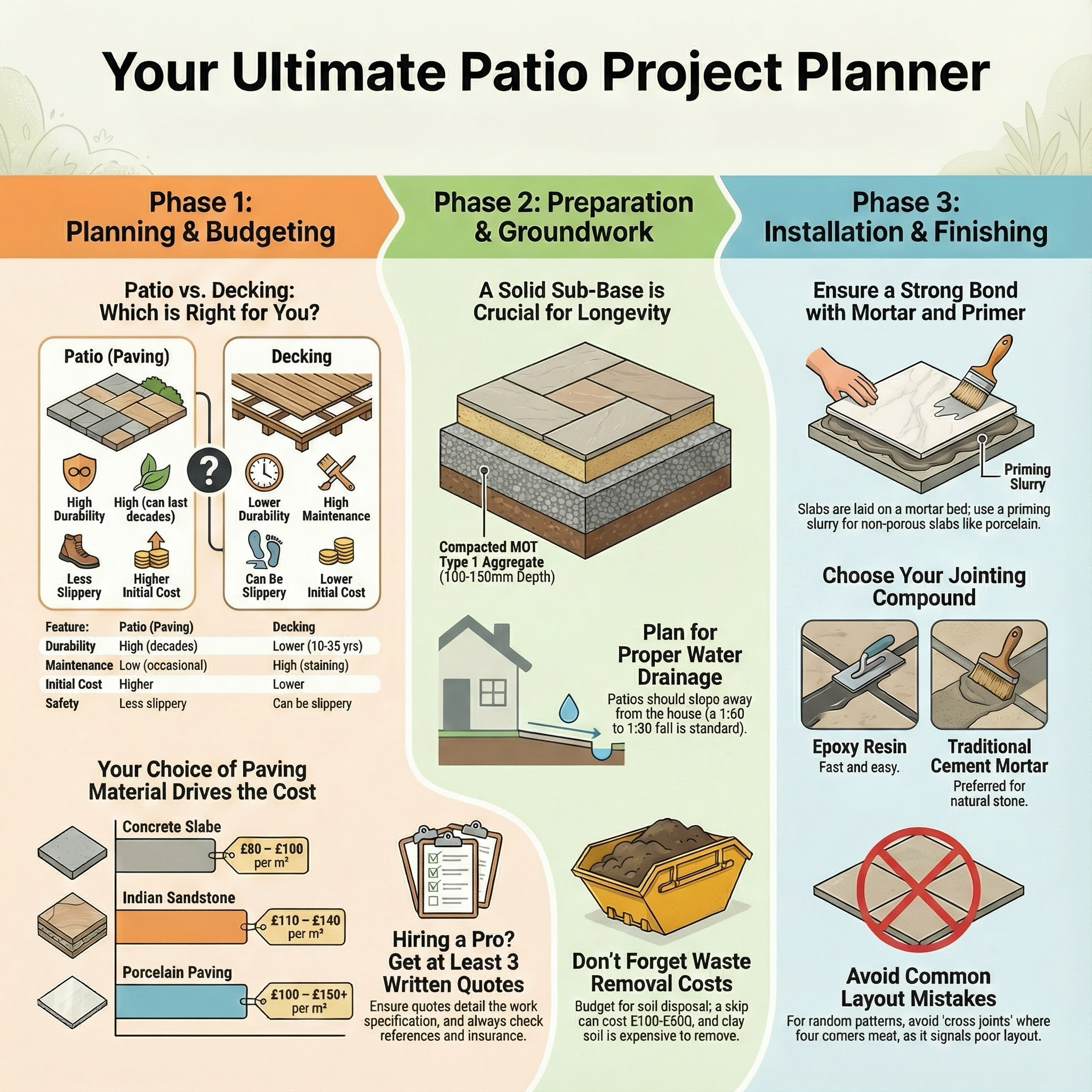
Porcelain has overtaken sandstone as the UK's most-installed new patio material — and for once, the hype is justified. It's effectively non-porous, frost-proof, stain-proof, and looks like whatever stone, wood, or concrete you want it to. This guide covers what a finished porcelain patio costs in 2026, the install detail that catches DIYers out, and the finishes that work in real UK gardens.
The trade-off is upfront cost and installation difficulty — porcelain is harder to cut and needs the right adhesive — so finding an installer who has actually done it before matters more than with sandstone.
| Item | Low £ | High £ | Notes |
|---|---|---|---|
| 20 mm porcelain slabs (per m²) | 40 | 90 | UK trade pricing, varies by finish |
| Premium porcelain (per m²) | 90 | 140 | Italian/Spanish brands |
| Sub-base, concrete & primer (per m²) | 25 | 40 | Slurry primer is non-negotiable |
| Labour (per m²) | 55 | 85 | Higher than sandstone — harder to cut |
| Porcelain install total (20 m²) | 2,400 | 4,400 | Standard back garden |
Premium porcelain costs more for one reason: better surface graphics. Cheap porcelain looks like cheap porcelain (repetitive patterns); good porcelain genuinely passes for natural stone or aged timber.
Porcelain is one of the harder materials for DIYers. Cutting requires a wet diamond blade; the slurry primer step is unfamiliar; and getting the bedding right is fussier than mortar. Most credible installers will lay porcelain — but ask specifically because half-trained crews still try to use plain mortar (which fails within a year).
For maintenance, durability, and predictability — yes. For character and the feel of a real garden — natural stone still wins for many. It depends what you want.
20 mm is the UK outdoor standard. Indoor tiles (8–10 mm) are too thin and crack outside.
No. It's effectively non-porous. Only the joints need maintenance.
No. Outdoor-rated porcelain has a water absorption rate below 0.5% — far below the level that freeze-thaw can damage.
Sometimes — if the old patio is structurally sound and at the right level. More commonly, removing the old material and starting fresh is cheaper than working around it.
Around 200 mm total: 100 mm sub-base, 40–50 mm concrete bed, 20 mm porcelain. Plan your level against door thresholds carefully.
This guide was written with AI assistance and is intended for general information only. Prices are estimates based on UK averages and may vary by region. Always get at least three quotes and consult a qualified professional before starting any work.
Ask follow-ups in plain English. The AI explains options, sequencing and what to ask the patios — so you walk in informed.
A well-installed patio is one of the most effective ways to add value and functional living space to a UK home. Given our unpredictable climate, a durable, leve...
READ GUIDE →GuideA professionally installed patio is more than just a place for a summer BBQ; it is a functional extension of your home that can significantly increase property ...
READ GUIDE →GuideA well-designed patio is more than just a flat surface for a garden table; it is an extension of your home’s living space. In the UK, professional patio design ...
READ GUIDE →GuidePatio and Garden Maintenance Overview Refreshes patio surfaces, restores tidy garden hard‑landscapes and gets sliding/French doors running smoothly. Skill level...
READ GUIDE →GuideResin bonding is an increasingly popular choice for UK homeowners looking to revitalise tired concrete or tarmac patios without the upheaval of a full excavatio...
READ GUIDE →GuideEverything UK homeowners need to know about Indian sandstone patios — costs per m², install steps, sealing, and how to choose a trusted installer.
READ GUIDE →