Instant
01 · Ask
Retail, restaurant or office?
Different specs, different regs. Describe the unit and intended use, the AI tells you scope.

Retail fit-outs, display units, counters and commercial interiors — fast turnaround, costed by phase.
Read the brief on lease terms, building control and milestone payments — then let Three local shop fitters quote.
Different specs, different regs. Describe the unit and intended use, the AI tells you scope.
Lease reinstatement clauses, Building Regs (commercial), Equality Act 2010, fire safety risk assessment. Know the rules.
Three local fitters quote on the same drawing — strip-out, fit-out, M&E — so you compare cleanly.
Ready when you are
Enter your postcode and get free quotes from local pros.
Four moves that separate a smooth job from a nightmare.
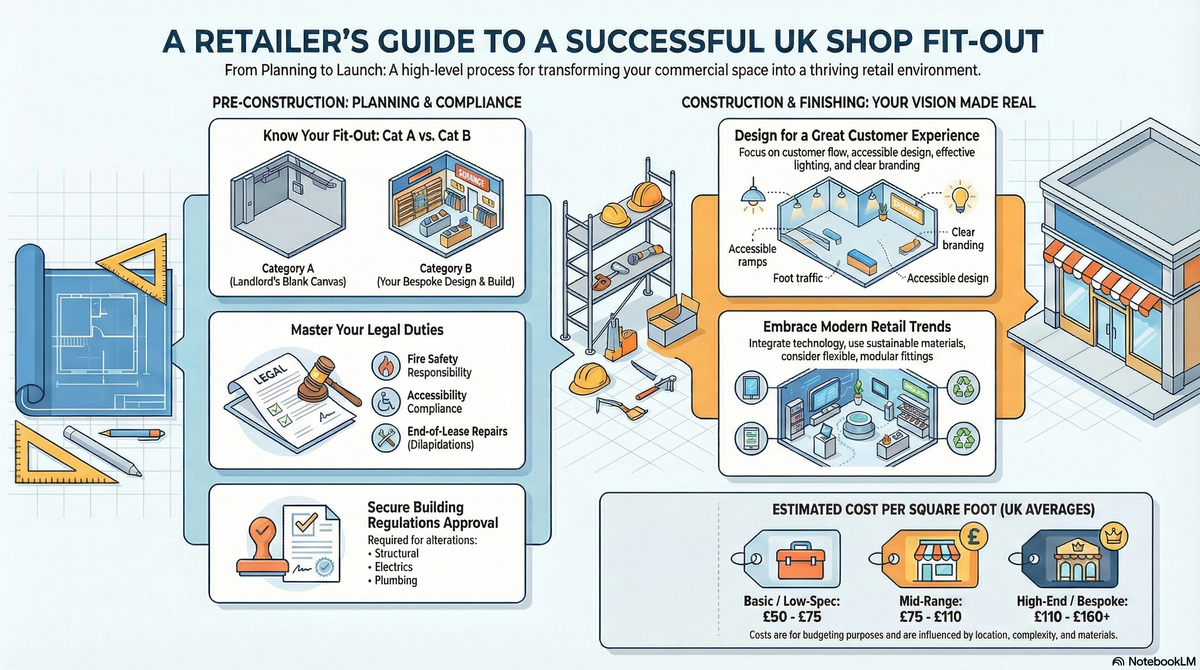
Reinstatement clauses in the lease determine what you can install. Read your lease (or get a solicitor to) before designing the fit-out.
Knocking through, mezzanine, change of use — Building Control sign-off is mandatory. Skip it and you can't open.
Commercial fit-outs must comply with the Equality Act 2010 (accessibility) and Regulatory Reform (Fire Safety) Order 2005. Penalties for non-compliance are heavy.
Never pay more than 25% upfront. Milestone payments (strip-out, first-fix, snags) keep both sides honest.
Indicative UK ranges and what affects price.
By job type
Quote spread is typically ± 18% — always get 3 quotes.
Visual breakdown of costs, timelines and the questions you should be asking.
Shop Fitting quick-view
Shop Fitting explained
Everything you need to know before hiring a shop fitting.
Shop fitters are specialist contractors who transform empty shells or tired retail units into vibrant, functional commercial spaces. While their name suggests high-street retail, their expertise extends to salons, cafes, showrooms, and even high-end home-based studios or galleries.
A professional shop fitter manages a complex blend of bespoke joinery, electrical installation, lighting design, and structural partitioning. They are the essential link between a design concept and a physical space that is safe, compliant, and optimised for customer flow.
For UK business owners, hiring a shop fitter ensures that every square inch of a commercial property is utilised effectively. They provide the technical skill to install heavy-duty display units, secure counters, and durable flooring that can withstand the rigours of high daily footfall.
A shop fitting project is typically a fast-paced operation designed to minimise business downtime. The process generally follows these key stages:
While DIY might seem tempting for small decorative changes, a full commercial fit-out requires a professional touch to ensure longevity and safety. Shop fitters understand the unique demands of a commercial environment, using materials that are far more durable than standard residential products.
Crucially, professional shop fitters ensure your project complies with UK Building Regulations and Fire Safety Standards. This includes ensuring correct fire exits, emergency lighting, and non-combustible materials are used where required. They also navigate the complexities of CDM 2015 (Construction, Design and Management) regulations, which apply to all construction work in the UK.
Hiring a specialist also gives you access to project management. They coordinate various trades—plumbers, electricians, and floor layers—ensuring the project stays on schedule. In the commercial world, a delay of even a few days can result in significant lost revenue, making a professional’s efficiency invaluable.
The cost of shop fitting varies significantly depending on the level of finish, the size of the unit, and whether you require bespoke cabinetry or off-the-shelf fixtures. Below are estimated costs for common shop fitting services in the UK for 2025/26.
| Service | Low £ | High £ | Notes |
|---|---|---|---|
| Basic Shell Fit-out (per sqm) | £500 | £1,200 | Includes flooring, lighting, and painting. |
| Bespoke Service Counter | £1,800 | £6,500+ | Price depends on materials (e.g., Corian, timber). |
| Partition Wall Installation (per m) | £80 | £150 | Stud walls with plasterboard and skim. |
| Commercial Flooring (per sqm) | £35 | £95 | High-traffic vinyl, resin, or commercial carpet. |
| Suspended Ceiling (per sqm) | £30 | £60 | Including grid and standard acoustic tiles. |
| Full Retail Fit-out (Small Unit) | £15,000 | £45,000 | Complete refurb for a boutique or cafe. |
Several factors will influence your final quote, including the age of the building (older buildings often require more remedial work), the complexity of the bespoke joinery, and whether the work needs to be carried out overnight or during weekends to avoid closing the business.
Choosing the right partner is critical to the success of your business. You need a contractor who understands your industry and can work within your timeline. Follow these steps to find the best fit:
Questions to ask before hiring:
Generally, internal shop fitting does not require planning permission. However, if you are changing the "Use Class" of the building (e.g., from a shop to a restaurant), installing a new shop front, or adding external signage and lighting, you will likely need to apply for permission from your local council.
A small boutique or salon fit-out usually takes between 3 to 6 weeks. Larger or more complex projects involving structural changes or extensive bespoke joinery can take 8 to 12 weeks. A professional shop fitter will provide a detailed timeline during the tender process.
It is possible, but it depends on the scale of the work. Many shop fitters offer "phased" fit-outs or night shifts to ensure you can keep trading. However, for major structural work or flooring, a full closure is usually safer and more cost-effective as it allows the trades to work faster.
A Category A fit-out brings a space up to a basic functional standard (flooring, basic lighting, painted walls). A Category B fit-out is the final stage where the space is customised to your specific brand, including furniture, bespoke counters, branded signage, and kitchenettes.
Describe the job in plain English. The AI asks a few smart questions, then tells you whether a shop fitting is the right call, what it should cost, and what to ask before they start.
For UK independent retailers and boutique owners, the transition from a traditional till to an integrated digital register is a pivotal step in modernising a bu...
READ GUIDE →GuideFor UK small business owners and retailers, an Electronic Point of Sale (EPOS) system is the heartbeat of the operation. Far more than a simple cash register, a...
READ GUIDE →GuideCommercial office fit-out cost. UK pricing.
READ GUIDE →GuideFor UK small business owners and those running retail or hospitality ventures from home, a reliable Point of Sale (PoS) system is the heartbeat of the operation...
READ GUIDE →GuideRestaurant fit-out cost. UK pricing.
READ GUIDE →GuideRetail shop fitting and refurbishment. UK costs.
READ GUIDE →GuideModern retail is no longer just about shelves and stock. To compete in the current UK market, a physical store must provide a seamless, tech-driven experience t...
READ GUIDE →GuideIntegrating a modern Electronic Point of Sale (EPOS) system is a critical step in any retail or hospitality shop-fitting project. Beyond just a cash register, a...
READ GUIDE →