Instant
01 · Ask
Ask the AI a follow-up
Got more questions about spray Foam Insulation? Describe the bit you're unsure about — the AI explains options, sequencing and what to ask the insulation.

Open-cell or closed-cell spray foam — for awkward voids, lofts and timber frames. BBA-certified products only.
You've read the brief on spray Foam Insulation. Now lean on us to find the right insulation — and stay in control of the job.
Got more questions about spray Foam Insulation? Describe the bit you're unsure about — the AI explains options, sequencing and what to ask the insulation.
Costs, timelines, pitfalls and the right questions to ask before any insulation starts on spray Foam Insulation.
Itemised quotes from up to 3 local insulations on spray Foam Insulation — so you can compare like-for-like, not lump sums.
Ready when you are
Enter your postcode and get free quotes from local pros.
Four moves that separate a smooth job from a nightmare.
If foam is sprayed directly onto roof felt without a gap, moisture can be trapped, causing rafters to decay.
Some lenders are wary of spray foam; ensure your installer follows the latest 2023 RICS protocols to avoid valuation issues.
Creating an "airtight" house without increasing ventilation can lead to indoor condensation and mould.
If the area isn't properly masked, foam can bond permanently to cables, pipes, and stored items.
Indicative UK ranges and what affects price.
By job type
Quote spread is typically ± 18% — always get 3 quotes.
Insulation quick-view
Insulation explained
While it offers some of the best thermal resistance on the market, it is a specialist product that requires careful installation. For UK homeowners, the priority is ensuring the installation meets building regulations and does not negatively impact the property's mortgageability or structural integrity.
The cost of spray foam insulation varies depending on whether you choose open-cell (breathable and flexible) or closed-cell (rigid and better for structural strength) foam. Prices below include VAT and professional installation for 2025/26.
| Item | Low £ | High £ | Notes |
|---|---|---|---|
| Open-Cell Foam (per m²) | £35 | £60 | Best for lofts and timber frames. |
| Closed-Cell Foam (per m²) | £55 | £95 | Higher R-value; adds structural rigidity. |
| Standard 3-Bed Semi (Loft) | £2,800 | £4,500 | Full roof pitch application. |
| Spray Foam Removal | £2,500 | £4,000 | Required if poorly installed or for mortgages. |
Factors affecting the price include the thickness of the foam required to meet U-value targets, the height of the roof, and the amount of preparation or repair work needed for the existing structure.
This is strictly a professional-only job. While small "DIY kits" exist for sealing gaps around windows, whole-house spray foam requires specialist rigs to mix chemicals at specific temperatures and pressures. Incorrect mixing can lead to toxic off-gassing, while poor application can trap moisture against timbers, leading to rot. Furthermore, most UK mortgage lenders will only accept installations carried out by certified professionals with a valid warranty.
It can if it was installed poorly or without documentation. However, if installed by a BBA-certified professional with a condensation risk assessment and proper ventilation, most lenders will now accept it. Always check with your lender before proceeding.
Open-cell is flexible, breathable, and better for lofts as it allows timbers to move. Closed-cell is rigid, waterproof, and provides more insulation per inch, but it can trap moisture if used in the wrong application.
There is a chemical odour during application and curing. This should completely dissipate within 24 to 48 hours if the area is well-ventilated. If a smell persists, it may indicate an improper chemical mix.
No. Cables should be routed through conduit or kept clear of the foam to prevent overheating. A professional installer will identify and protect your wiring before spraying.
It is more expensive but provides a much tighter air seal and doesn't degrade or sag over time. It is particularly useful for "room-in-roof" lofts where space for traditional insulation is limited.
This guide was written with AI assistance and is intended for general information only. Prices are estimates based on UK averages and may vary by region. Always get at least three quotes and consult a qualified professional before starting any work.
Ask follow-ups in plain English. The AI explains options, sequencing and what to ask the insulation — so you walk in informed.
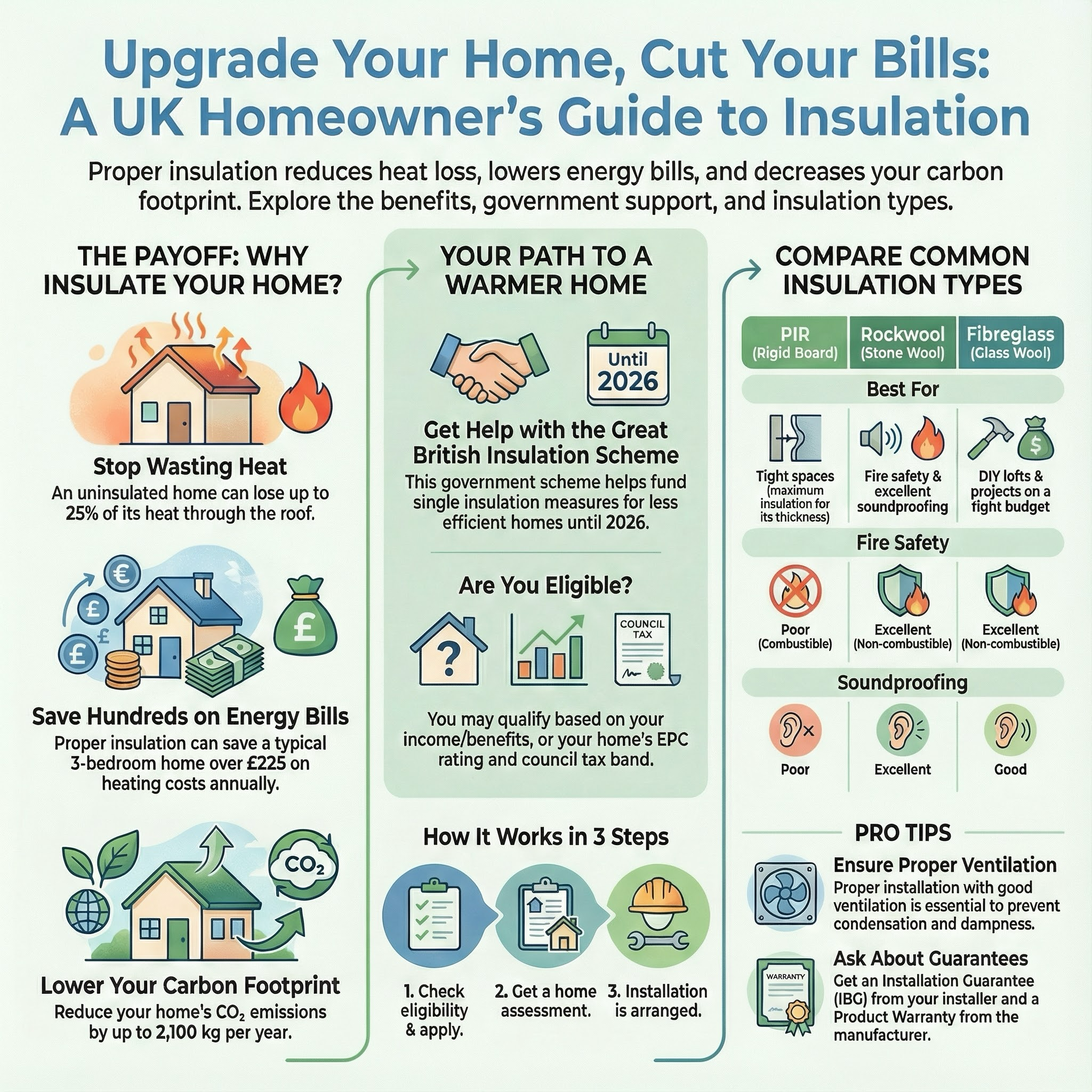
UK homes lose approximately 25% of their heat through an uninsulated roof. Installing high-quality insulation is one of the most effective ways to lower your en...
READ GUIDE →GuideWhether you are dealing with noisy neighbours in a terraced house or trying to create a quiet home office, professional soundproofing is a transformative invest...
READ GUIDE →GuideSuspended timber floors are a common feature in UK homes built before the 1950s. While they provide necessary ventilation for the building's structure, they are...
READ GUIDE →GuideCavity wall insulation is one of the most cost-effective ways to improve your home’s energy efficiency. By filling the gap between your inner and outer walls, y...
READ GUIDE →GuideAcoustic panels have transitioned from professional recording studios into the heart of modern UK homes. As open-plan living and hard flooring become more preva...
READ GUIDE →GuideInternal wall insulation (IWI) is a transformative upgrade for the millions of UK homes built with solid walls, typically those constructed before 1930. Unlike ...
READ GUIDE →