Instant
01 · Ask
Ask the AI a follow-up
Got more questions about ant Infestation Treatment? Describe the bit you're unsure about — the AI explains options, sequencing and what to ask the pest control.

What ant treatment costs in 2026 — by extent, species and follow-up visit policy.
You've read the brief on ant Infestation Treatment. Now lean on us to find the right pest control — and stay in control of the job.
Got more questions about ant Infestation Treatment? Describe the bit you're unsure about — the AI explains options, sequencing and what to ask the pest control.
Costs, timelines, pitfalls and the right questions to ask before any pest control starts on ant Infestation Treatment.
Itemised quotes from up to 3 local pest controls on ant Infestation Treatment — so you can compare like-for-like, not lump sums.
Ready when you are
Enter your postcode and get free quotes from local pros.
Four moves that separate a smooth job from a nightmare.
Spraying visible ants only kills the "workers." If the queen survives, the colony will simply produce more ants.
Even after treatment, leaving crumbs or sugary spills will attract new colonies from neighbouring gardens.
Ants are attracted to damp wood and leaky pipes; failing to fix a leak often leads to a repeat infestation.
Homeowners often wipe away professional gel baits thinking they are dirt, which stops the treatment from working.
Indicative UK ranges and what affects price.
By job type
Quote spread is typically ± 18% — always get 3 quotes.
Pest Control quick-view
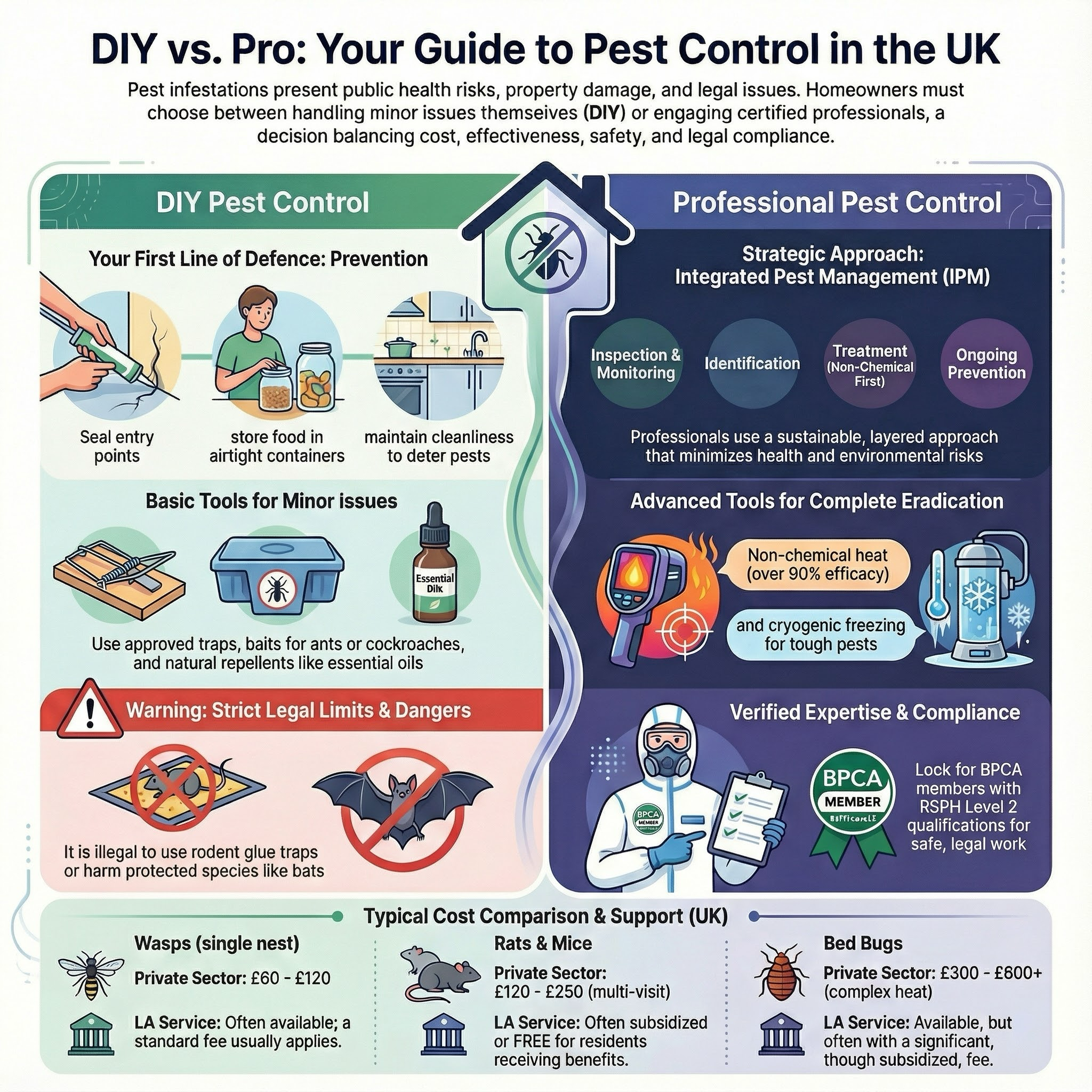
Pest Control explained
Professional treatment goes beyond off-the-shelf sprays. It involves identifying the specific species, locating the nest, and using commercial-grade baits that the workers carry back to the queen to ensure the entire colony is eradicated at the source.
Most professional ant treatments in the UK are charged as a fixed-price package covering the initial visit and a follow-up. Costs vary based on your location and the severity of the infestation.
| Item | Low £ | High £ | Notes |
|---|---|---|---|
| Standard Call-out & Survey | £60 | £90 | Often deducted from the total treatment cost. |
| Single Room Treatment | £120 | £180 | Includes baiting and residual spray. |
| Full House & Perimeter | £200 | £350 | Multi-room treatment plus external barrier. |
| Pharaoh Ant Specialist Kit | £250 | £450 | Requires multiple visits and specific hormone baits. |
Prices generally include VAT and all professional-use chemicals. Factors that increase the price include the size of the property, the need for specialist equipment to reach lofts or crawl spaces, and the number of follow-up visits required for stubborn species.
For a few garden ants in the summer, supermarket sprays or boiling water on an outdoor nest may suffice. However, if ants are appearing in kitchens or bathrooms during winter, you likely have an internal nest that DIY products cannot reach.
Warning: Never use DIY sprays on Pharaoh ants. This species reacts to "threats" by splintering into multiple new colonies (a process called budding), making the infestation significantly worse.
Professional technicians have access to high-concentration baits and growth regulators that are not available to the general public. If your infestation is persistent or involves tropical species, professional help is essential to avoid wasting money on ineffective retail products.
Professional treatments are safe for pets once they have dried (usually 1-2 hours). Your technician will advise you to keep pets out of the room during application and ensure fish tanks are covered and pumps turned off.
This is actually a good sign. Professional baits are designed to be attractive; you may see an increase in activity for 24-48 hours as ants flock to the bait to take it back to the nest.
Flying ants are standard garden ants in their mating phase. While alarming, they usually only last a few days. Professional treatment of the ground nests is the only way to prevent their return the following year.
In the UK, most ants are harmless to structures. However, if you have a significant infestation of Carpenter ants (which is rare but possible), they can tunnel through damp timber, potentially weakening joists over long periods.
Usually, yes. To treat effectively, the technician will need access to the corners of cupboards and skirting boards. You should store food in sealed containers or move it to a different room during the process.
This guide was written with AI assistance and is intended for general information only. Prices are estimates based on UK averages and may vary by region. Always get at least three quotes and consult a qualified professional before starting any work.
Ask follow-ups in plain English. The AI explains options, sequencing and what to ask the pest control — so you walk in informed.
Discovering a rat problem in your UK home is more than just an unpleasant surprise; it is a genuine risk to your property’s integrity and your family’s health. ...
READ GUIDE →GuideA fly infestation in a UK home is more than just a seasonal nuisance; it is a significant hygiene risk. Flies are known carriers of bacteria such as Salmonella ...
READ GUIDE →GuideDiscovering signs of rats in your home is more than just a nuisance; it is a significant health and safety risk. Rats can gnaw through electrical cables, damage...
READ GUIDE →GuideGrey squirrels are more than just a garden nuisance; they are a significant threat to the structural integrity and safety of UK homes. Once they gain access to ...
READ GUIDE →GuideDomestic Pest and Vermin Control Guide Scope of Works Inspect lofts, sub‑floors, kitchens and exterior for signs, entry points and species identification . Prod...
READ GUIDE →GuideFinding maggots in your home is a distressing experience for any UK homeowner. These larvae, typically from houseflies or blowflies, are not just unsightly; the...
READ GUIDE →