Instant
01 · Ask
Ask the AI a follow-up
Got more questions about bed bug control? Describe the bit you're unsure about — the AI explains options, sequencing and what to ask the pest control.

Bed bug treatment — heat, chemical or steam. Multiple visits often needed for full eradication.
You've read the brief on bed bug control. Now lean on us to find the right pest control — and stay in control of the job.
Got more questions about bed bug control? Describe the bit you're unsure about — the AI explains options, sequencing and what to ask the pest control.
Costs, timelines, pitfalls and the right questions to ask before any pest control starts on bed bug control.
Itemised quotes from up to 3 local pest controls on bed bug control — so you can compare like-for-like, not lump sums.
Ready when you are
Enter your postcode and get free quotes from local pros.
Four moves that separate a smooth job from a nightmare.
If the room isn't decluttered and bedding isn't laundered as instructed, the treatment will likely fail.
Treating only the bed and ignoring the sofa or curtains allows the population to rebound.
Bringing back "hitchhikers" from the original source (like a workplace or a regular travel route) after the home is cleared.
Using the same chemical repeatedly can lead to resistant strains; pros will rotate "modes of action" to prevent this.
Indicative UK ranges and what affects price.
By job type
Quote spread is typically ± 18% — always get 3 quotes.
Pest Control quick-view
Pest Control explained
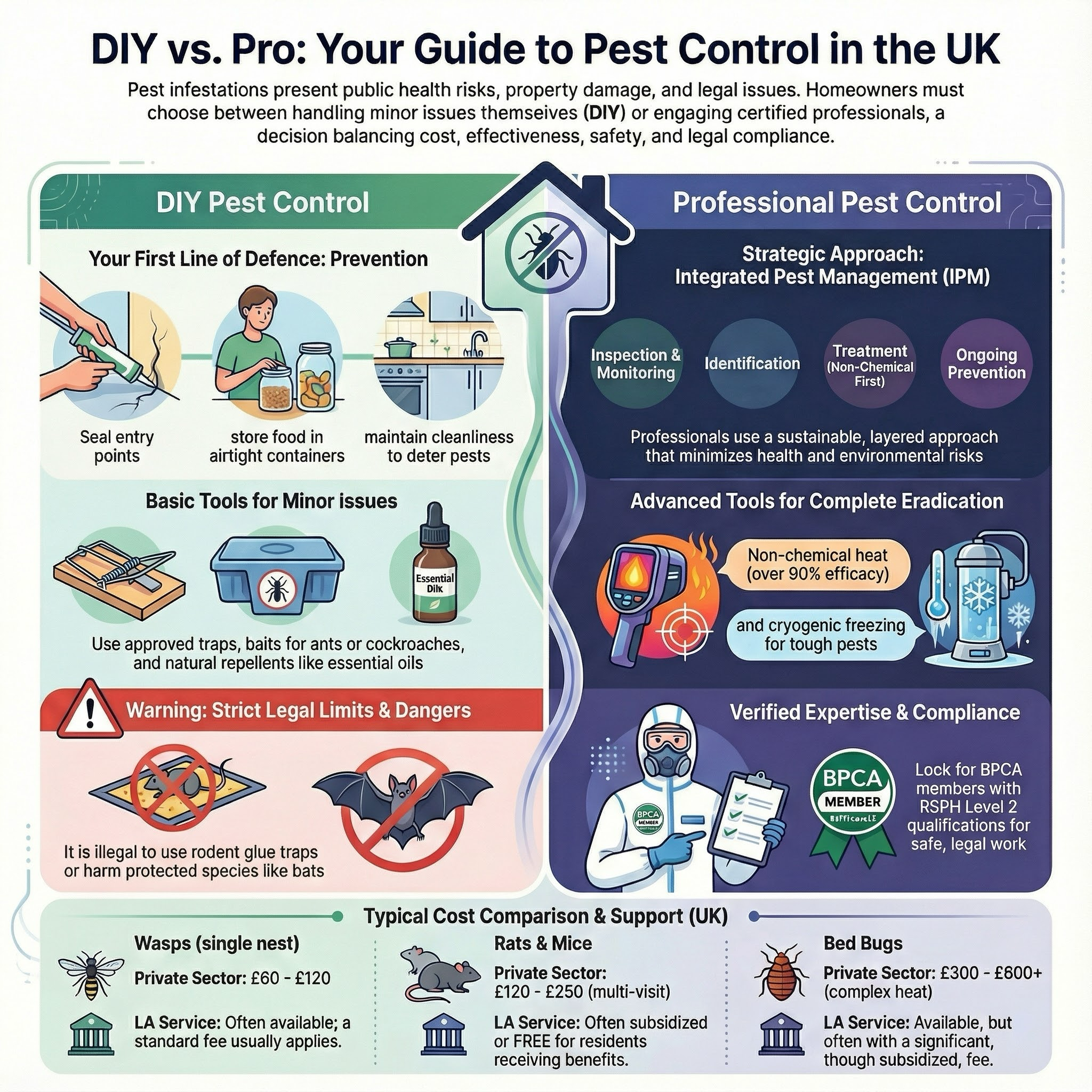
A professional bed bug treatment is essential to break the breeding cycle. Attempting to handle a significant infestation alone often leads to the bugs spreading to other rooms or neighbouring properties, increasing the eventual cost of removal.
| Item | Low £ | High £ | Notes |
|---|---|---|---|
| Initial Inspection/Survey | £70 | £150 | Often waived if you book the treatment. |
| Chemical Treatment (per room) | £150 | £300 | Usually requires 2-3 visits for full control. |
| Whole-Room Heat Treatment | £500 | £1,200 | Highly effective single-day treatment. |
| Full 3-Bed House (Chemical) | £450 | £900 | Includes multiple visits and follow-ups. |
| Emergency/Out-of-Hours Callout | £120 | £250 | Premium for weekends or late nights. |
Prices vary based on your location in the UK, with London and the South East typically seeing higher rates. The primary cost drivers are the number of rooms affected and the chosen method; heat treatment is more expensive upfront but often requires only one visit.
While DIY sprays are available in hardware stores, they are rarely effective against established infestations. Bed bugs have developed significant resistance to many over-the-counter pyrethroids, and amateur application often causes the bugs to retreat deeper into walls or furniture.
Professional pest controllers have access to restricted, professional-use-only insecticides and high-powered heat equipment that is far more effective than domestic alternatives.
In the UK, using professional-grade biocides requires specific training. Hiring a pro ensures the chemicals are applied safely, particularly in homes with children, pets, or vulnerable adults.
In most cases, no. Professional treatments and high-quality bed bug-proof encasements can salvage an expensive mattress. Only heavily infested or damaged items may need disposal.
Heat treatment is faster and more eco-friendly as it kills eggs instantly. However, it is significantly more expensive and provides no "residual" protection if new bugs are introduced the next day.
Yes, provided you follow the technician's instructions. Usually, pets must be removed from the property for 4–6 hours until the treated surfaces are completely dry.
Bed bugs are flat, oval, and brownish; they leave dark ink-like spots on sheets. Fleas are tiny, jump, and are usually found around ankles or on pets. A pro can identify the species instantly.
Chemicals often don't kill the eggs. The second visit is timed to kill the "newborn" bugs after they hatch but before they are old enough to lay more eggs.
This guide was written with AI assistance and is intended for general information only. Prices are estimates based on UK averages and may vary by region. Always get at least three quotes and consult a qualified professional before starting any work.
Ask follow-ups in plain English. The AI explains options, sequencing and what to ask the pest control — so you walk in informed.
Discovering a rat problem in your UK home is more than just an unpleasant surprise; it is a genuine risk to your property’s integrity and your family’s health. ...
READ GUIDE →GuideA fly infestation in a UK home is more than just a seasonal nuisance; it is a significant hygiene risk. Flies are known carriers of bacteria such as Salmonella ...
READ GUIDE →GuideDiscovering signs of rats in your home is more than just a nuisance; it is a significant health and safety risk. Rats can gnaw through electrical cables, damage...
READ GUIDE →GuideGrey squirrels are more than just a garden nuisance; they are a significant threat to the structural integrity and safety of UK homes. Once they gain access to ...
READ GUIDE →GuideDomestic Pest and Vermin Control Guide Scope of Works Inspect lofts, sub‑floors, kitchens and exterior for signs, entry points and species identification . Prod...
READ GUIDE →GuideFinding maggots in your home is a distressing experience for any UK homeowner. These larvae, typically from houseflies or blowflies, are not just unsightly; the...
READ GUIDE →