Instant
01 · Ask
Ask the AI a follow-up
Got more questions about bed bug inspection? Describe the bit you're unsure about — the AI explains options, sequencing and what to ask the pest control.

Suspect bed bugs? — full inspection with mattress, frame and bedroom check. Treatment plan if found.
You've read the brief on bed bug inspection. Now lean on us to find the right pest control — and stay in control of the job.
Got more questions about bed bug inspection? Describe the bit you're unsure about — the AI explains options, sequencing and what to ask the pest control.
Costs, timelines, pitfalls and the right questions to ask before any pest control starts on bed bug inspection.
Itemised quotes from up to 3 local pest controls on bed bug inspection — so you can compare like-for-like, not lump sums.
Ready when you are
Enter your postcode and get free quotes from local pros.
Four moves that separate a smooth job from a nightmare.
Technicians cannot inspect properly if rooms are heavily cluttered or beds are built-in with no access to the rear.
Homeowners often mistake carpet beetles or "booklice" for bed bugs, leading to incorrect and costly treatments.
In flats, bugs often travel through wall voids; failing to inspect common walls can lead to re-infestation.
Moving bedding or furniture before the inspector arrives can disturb the bugs and hide the evidence.
Indicative UK ranges and what affects price.
By job type
Quote spread is typically ± 18% — always get 3 quotes.
Pest Control quick-view
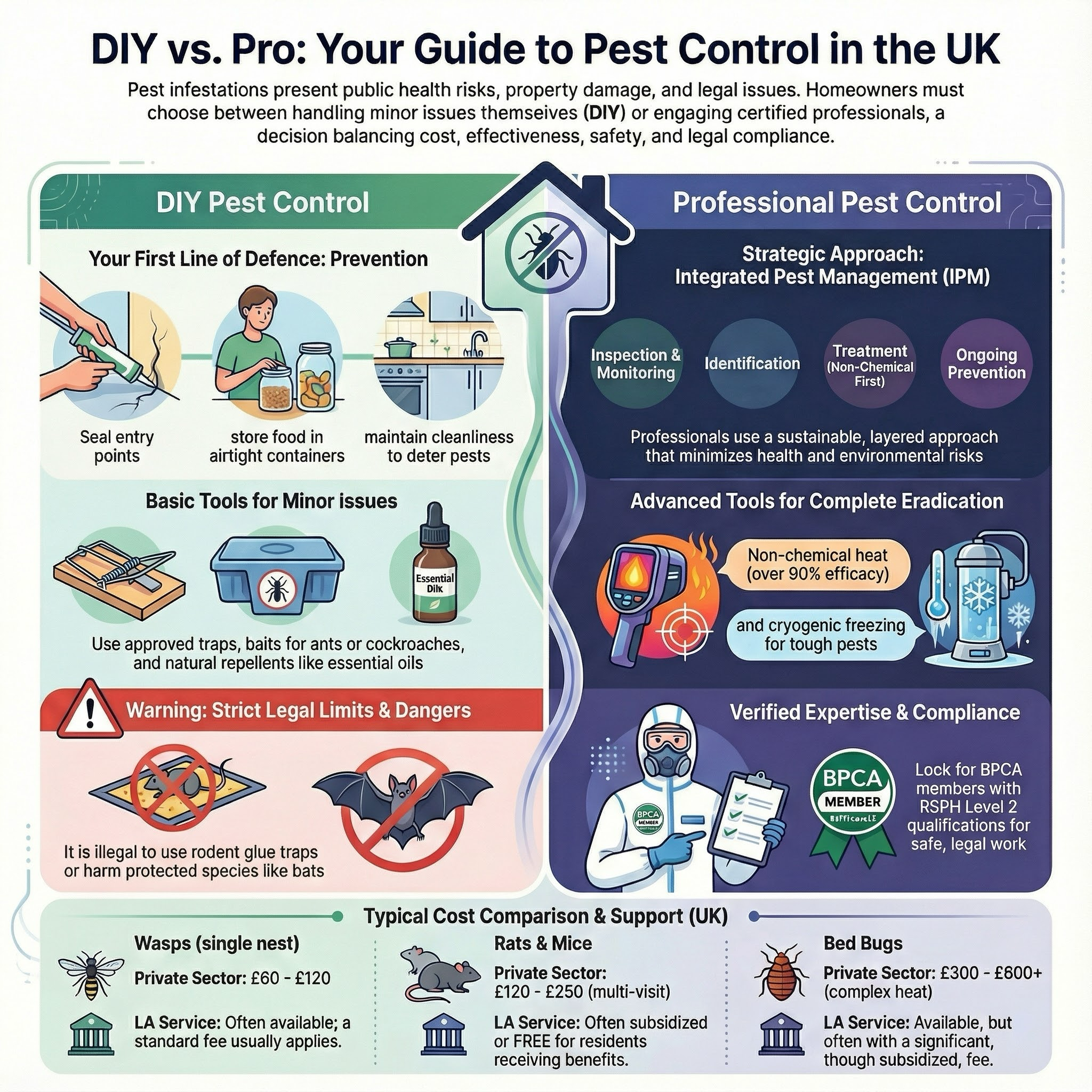
Pest Control explained
Identifying these pests early is crucial because they are notoriously difficult to spot with the naked eye and can hide in the smallest crevices. A thorough inspection confirms whether you have an active infestation or if the issue is a different pest, such as carpet beetles or fleas.
| Item | Low £ | High £ | Notes |
|---|---|---|---|
| Standard Visual Inspection | £100 | £250 | Typical 2-3 bedroom semi-detached home. |
| Canine (Dog) Inspection | £200 | £450 | Highly accurate for large or cluttered homes. |
| Call-out Fee / Survey Only | £60 | £120 | Often deducted if treatment is booked. |
| Passive Monitors (Set of 4) | £20 | £50 | Long-term monitoring after the visit. |
Prices vary based on your location in the UK and the size of the property. Expect to pay a premium in London and the South East, or if the property is heavily cluttered, requiring more time to inspect.
While you can look for signs yourself, bed bugs are masters of disguise. Professional technicians are trained to spot "instars" (nymphs) which are nearly transparent and easily missed by the untrained eye.
Professional inspection is highly recommended to avoid wasting money on ineffective DIY chemicals that can actually cause bed bugs to scatter further into the building structure.
In most cases, no. Modern heat treatments and professional-grade insecticides can salvage expensive mattresses. A high-quality bed bug encasement is usually a better investment than a new mattress.
Do not move anything out of the room, as this can spread the bugs. Leave the bed made as it usually is, but ensure the technician has clear floor space to move around the perimeter of the bed.
Yes. A visual inspection does not involve heavy chemical use, so it is perfectly safe for you, your children, and your pets to be present.
Absolutely not. Bed bugs are attracted to blood and CO2, not dirt. They are found in five-star hotels and pristine homes just as often as anywhere else.
A visual inspection relies on a human eye seeing physical evidence. A canine inspection uses a dog's nose to "smell" live bugs or viable eggs, which is often more accurate for very early-stage infestations.
This guide was written with AI assistance and is intended for general information only. Prices are estimates based on UK averages and may vary by region. Always get at least three quotes and consult a qualified professional before starting any work.
Ask follow-ups in plain English. The AI explains options, sequencing and what to ask the pest control — so you walk in informed.
Discovering a rat problem in your UK home is more than just an unpleasant surprise; it is a genuine risk to your property’s integrity and your family’s health. ...
READ GUIDE →GuideA fly infestation in a UK home is more than just a seasonal nuisance; it is a significant hygiene risk. Flies are known carriers of bacteria such as Salmonella ...
READ GUIDE →GuideDiscovering signs of rats in your home is more than just a nuisance; it is a significant health and safety risk. Rats can gnaw through electrical cables, damage...
READ GUIDE →GuideGrey squirrels are more than just a garden nuisance; they are a significant threat to the structural integrity and safety of UK homes. Once they gain access to ...
READ GUIDE →GuideDomestic Pest and Vermin Control Guide Scope of Works Inspect lofts, sub‑floors, kitchens and exterior for signs, entry points and species identification . Prod...
READ GUIDE →GuideFinding maggots in your home is a distressing experience for any UK homeowner. These larvae, typically from houseflies or blowflies, are not just unsightly; the...
READ GUIDE →