Instant
01 · Ask
Ask the AI a follow-up
Got more questions about bedbug treatment? Describe the bit you're unsure about — the AI explains options, sequencing and what to ask the pest control.

Single-room or whole-house bedbug treatment — chemical, heat or steam, by an SPACA-accredited firm.
You've read the brief on bedbug treatment. Now lean on us to find the right pest control — and stay in control of the job.
Got more questions about bedbug treatment? Describe the bit you're unsure about — the AI explains options, sequencing and what to ask the pest control.
Costs, timelines, pitfalls and the right questions to ask before any pest control starts on bedbug treatment.
Itemised quotes from up to 3 local pest controls on bedbug treatment — so you can compare like-for-like, not lump sums.
Ready when you are
Enter your postcode and get free quotes from local pros.
Four moves that separate a smooth job from a nightmare.
If the homeowner doesn't follow the prep guide (e.g., leaving clutter on the floor), the treatment will likely fail as the chemicals cannot reach the bugs.
Moving pillows or clothes from an infested room to a "clean" room before treatment often spreads the infestation throughout the house.
Treating the bedroom but ignoring the sofa where the "hitchhiker" first landed will lead to immediate re-infestation.
Using the same chemical repeatedly can lead to resistance; professionals should rotate different types of insecticides.
Indicative UK ranges and what affects price.
By job type
Quote spread is typically ± 18% — always get 3 quotes.
Pest Control quick-view
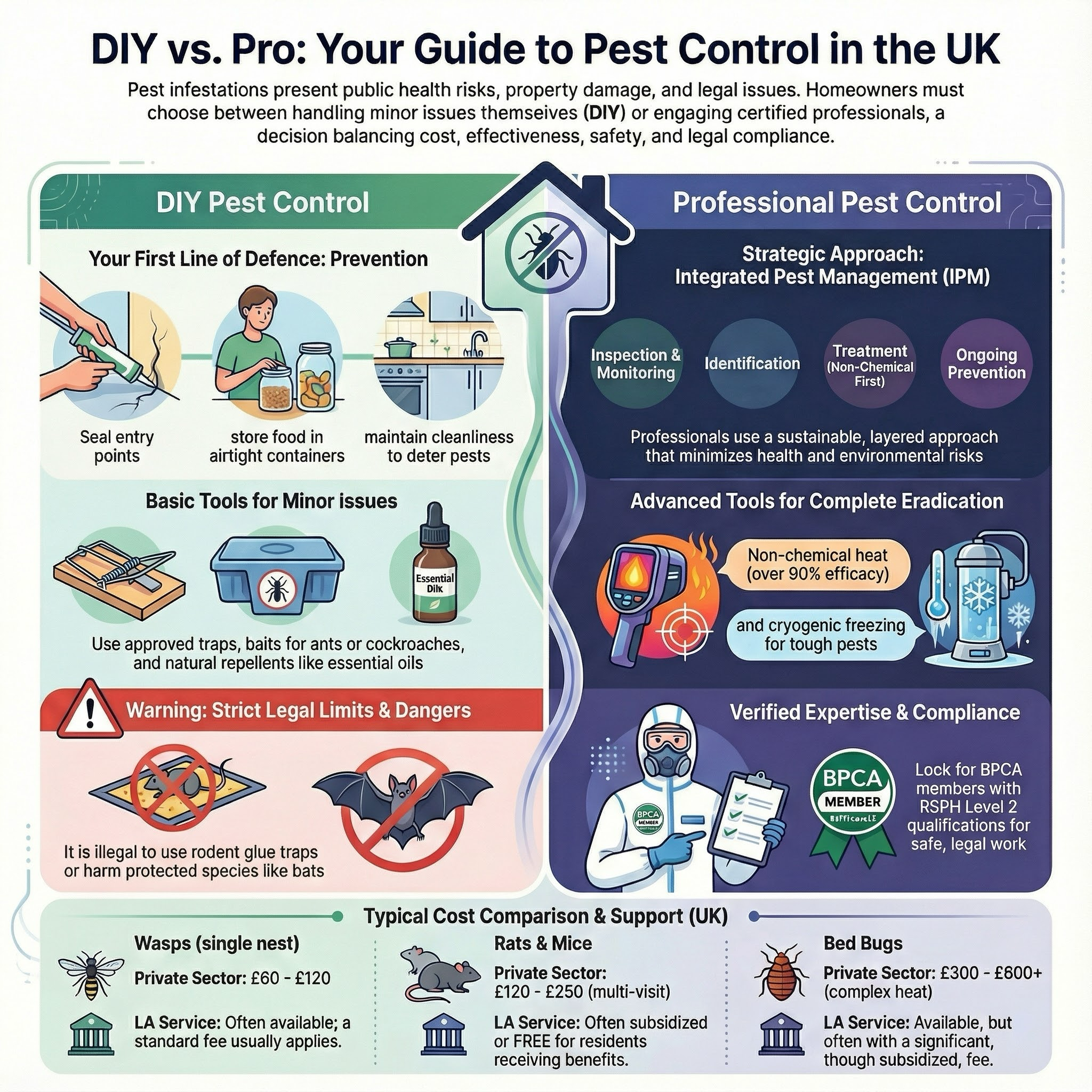
Pest Control explained
Eradicating an infestation requires a systematic, professional approach. Because bedbugs have developed resistance to many common insecticides, a "spray and pray" DIY method rarely works and often drives the insects deeper into the structure of your home.
The cost of bedbug treatment in the UK varies significantly depending on the size of the property and the method used. Heat treatment is more expensive upfront but often requires only one visit, whereas chemical treatments are cheaper per visit but require multiple applications.
| Item | Low £ | High £ | Notes |
|---|---|---|---|
| Initial Inspection/Call-out | £60 | £120 | Often deducted from the total if you proceed. |
| Chemical Treatment (per room) | £100 | £200 | Usually requires 2-3 visits for full eradication. | £350 | £650 | Includes multiple visits and residual sprays. |
| Heat Treatment (Single Room) | £400 | £700 | Highly effective; kills eggs in one go. |
| Whole House Heat Treatment | £800 | £1,500+ | Based on a standard 3-bed semi-detached home. |
| Mattress Encasements | £30 | £80 | Specialist bite-proof covers to salvage mattresses. |
Prices generally include VAT. Factors affecting the final quote include the level of clutter in the home, the geographic location (London premiums apply), and whether furniture disposal is required.
Professional treatment is strongly recommended for bedbugs. While you can buy sprays in hardware stores, these are often too weak to kill the entire colony. Bedbugs are masters of hiding in tiny cracks that DIYers miss, and many populations in the UK are now resistant to the pyrethroids found in off-the-shelf products.
Professional pest controllers have access to "professional use only" chemicals and industrial heating equipment that are far more effective than consumer alternatives.
In most cases, no. Professional steam treatments and high-quality "bedbug-proof" encasements can salvage an expensive mattress. Only dispose of furniture if it is structuraly damaged or if the infestation is so deep that the professional deems it untreatable.
Yes, provided you follow the technician's instructions. You will typically need to keep pets (especially cats and fish) out of the treated area for 4 to 6 hours until the product has completely dried and the rooms have been ventilated.
Chemical treatments do not kill eggs. You may experience bites as the eggs hatch and the nymphs crawl over the residual insecticide. This is why a second visit is mandatory to catch the new generation before they can reproduce.
No. The property will reach temperatures exceeding 50°C, which is unsafe for humans, pets, and even some houseplants or electronics. You will need to vacate the property for the entire day.
Not at all. Bedbugs are attracted to blood and CO2, not dirt or waste. They are found in five-star hotels and clean homes alike. Clutter simply makes them harder to treat, but it doesn't cause them.
Yes. A 60°C wash or 30 minutes in a hot tumble dryer will kill bedbugs and their eggs. This is a crucial part of the preparation process to ensure you don't re-infest treated areas.
This guide was written with AI assistance and is intended for general information only. Prices are estimates based on UK averages and may vary by region. Always get at least three quotes and consult a qualified professional before starting any work.
Ask follow-ups in plain English. The AI explains options, sequencing and what to ask the pest control — so you walk in informed.
Discovering a rat problem in your UK home is more than just an unpleasant surprise; it is a genuine risk to your property’s integrity and your family’s health. ...
READ GUIDE →GuideA fly infestation in a UK home is more than just a seasonal nuisance; it is a significant hygiene risk. Flies are known carriers of bacteria such as Salmonella ...
READ GUIDE →GuideDiscovering signs of rats in your home is more than just a nuisance; it is a significant health and safety risk. Rats can gnaw through electrical cables, damage...
READ GUIDE →GuideGrey squirrels are more than just a garden nuisance; they are a significant threat to the structural integrity and safety of UK homes. Once they gain access to ...
READ GUIDE →GuideDomestic Pest and Vermin Control Guide Scope of Works Inspect lofts, sub‑floors, kitchens and exterior for signs, entry points and species identification . Prod...
READ GUIDE →GuideFinding maggots in your home is a distressing experience for any UK homeowner. These larvae, typically from houseflies or blowflies, are not just unsightly; the...
READ GUIDE →